Solvent Extraction Plant Manufacturer for Oilseeds and Oil Cakes
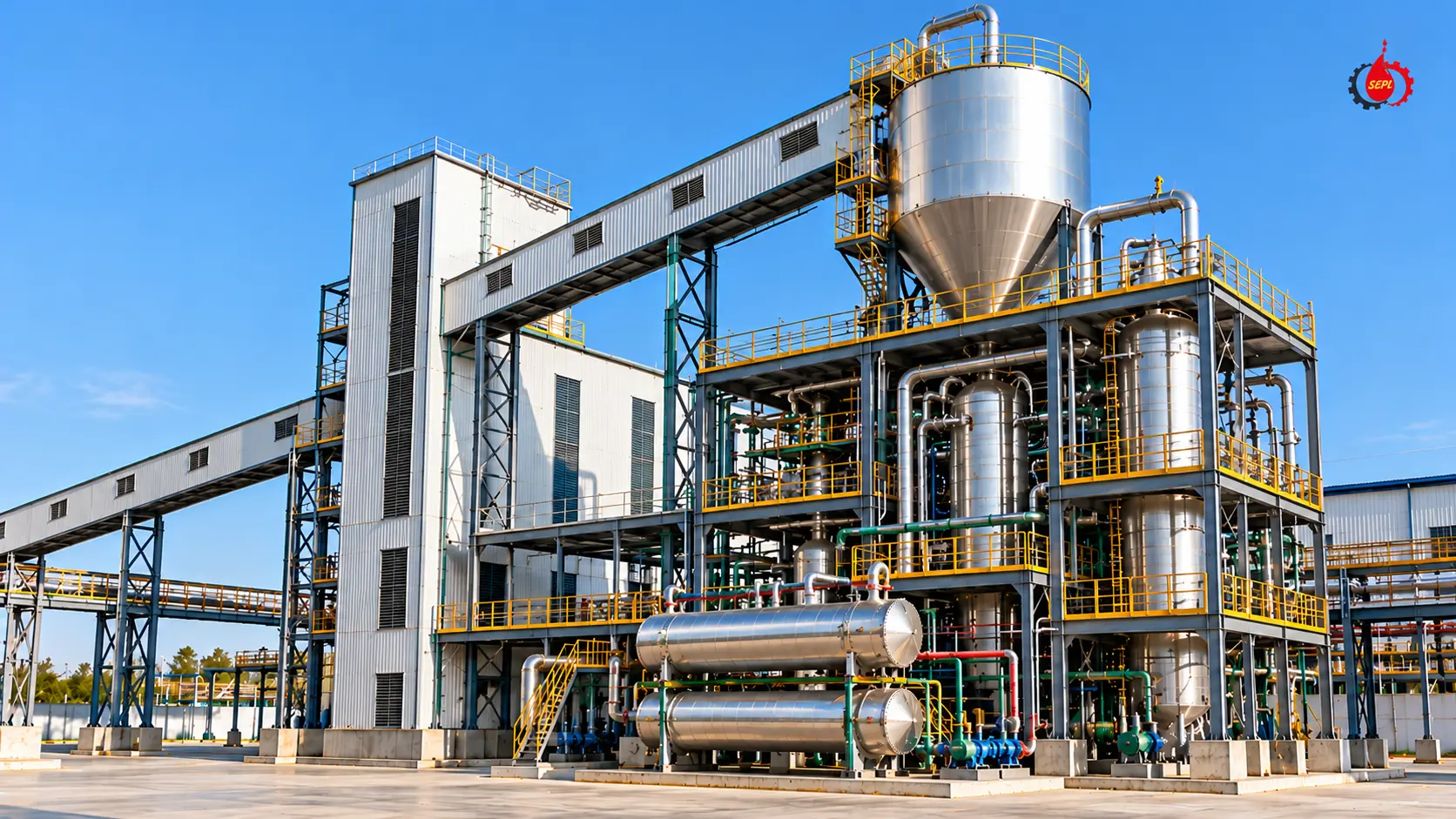
Super Techno Engineers is a solvent extraction plant manufacturer based in Dhuri, Punjab. We design and build plants that recover oil from prepared oilseed flakes and expeller cake using food-grade hexane, together with the equipment that removes the solvent and recycles it.
Every plant produces two saleable outputs: crude oil ready for refining and de-oiled meal for the feed industry. Our work covers process design, equipment manufacturing, installation, commissioning and spares support for edible oil solvent extraction plants.
REQUEST A QUOTE →What Is a Solvent Extraction Plant?
A solvent extraction plant dissolves oil out of oil-bearing material with a solvent. It then separates the solvent from both the oil and the meal so the solvent can be used again. The standard solvent is food-grade hexane.
Pressing alone leaves a lot of oil behind: even powerful expellers rarely bring press cake below 3–5% oil. A well-run extraction plant takes the meal below 1%. Low-oil seeds such as soybean go straight to extraction. High-oil seeds are pressed first, and the cake is then extracted.
Compare solvent extraction vs oil expeller.
Oil Recovery
Recovers oil remaining in prepared oilseed material, cake or flakes.
Efficient Extraction
Uses a solvent to dissolve oil from the prepared material for separation.
Solvent Recovery
Separates and recovers the solvent so it can be reused in the process.
How Does a Solvent Extraction Plant Works
A continuous process that efficiently separates oil from oilseeds using solvent extraction technology.
1. Preparing the Seed or Cake
Raw material is cleaned, conditioned to the right moisture and temperature, and flaked so the solvent can reach the oil cells.
Seeds above roughly 23% oil, such as mustard, groundnut and sunflower, are usually pre-pressed. Rice bran must be stabilized and pelleted soon after milling, because its oil starts breaking down quickly.
Learn More →2. Extraction
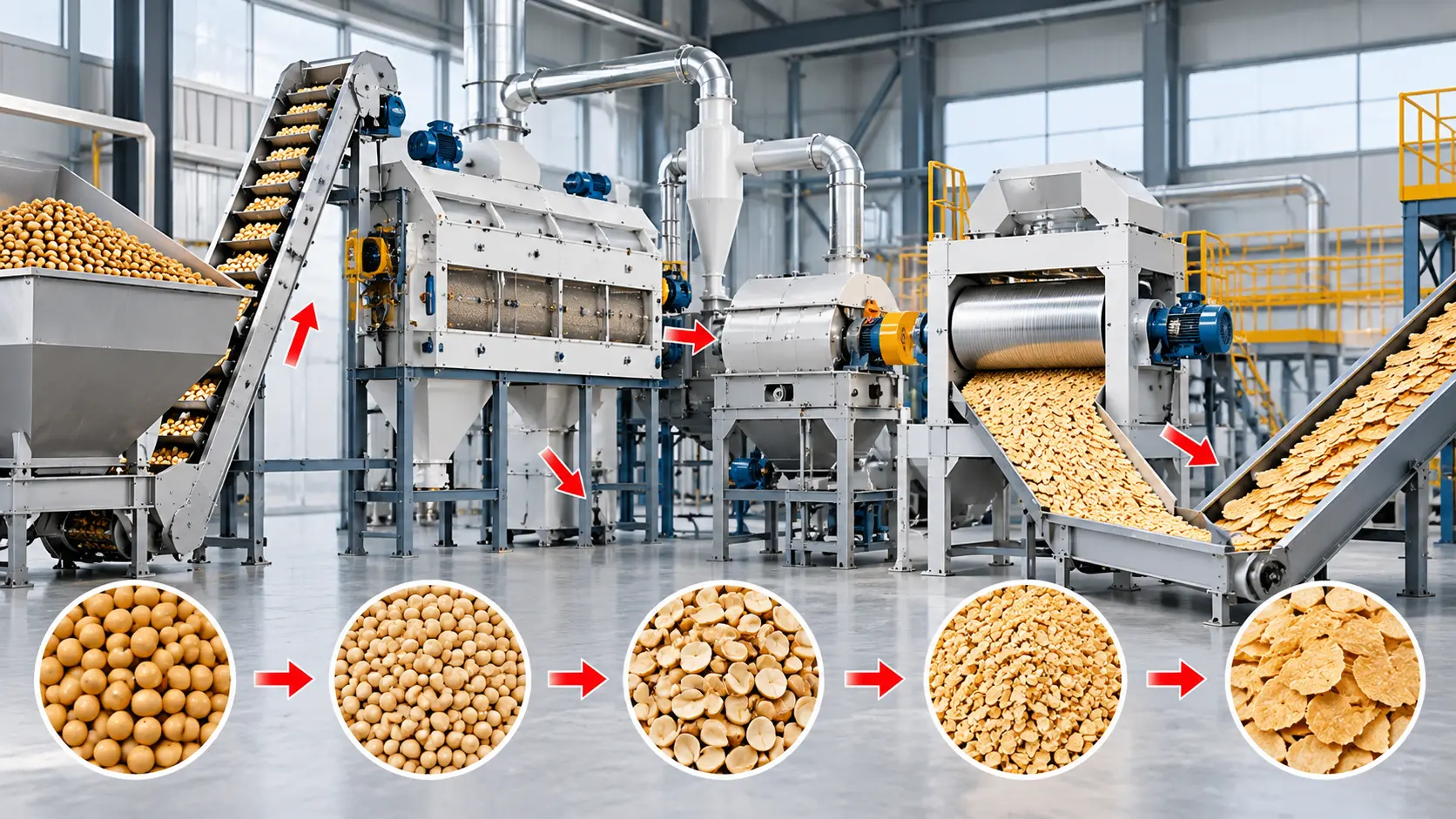
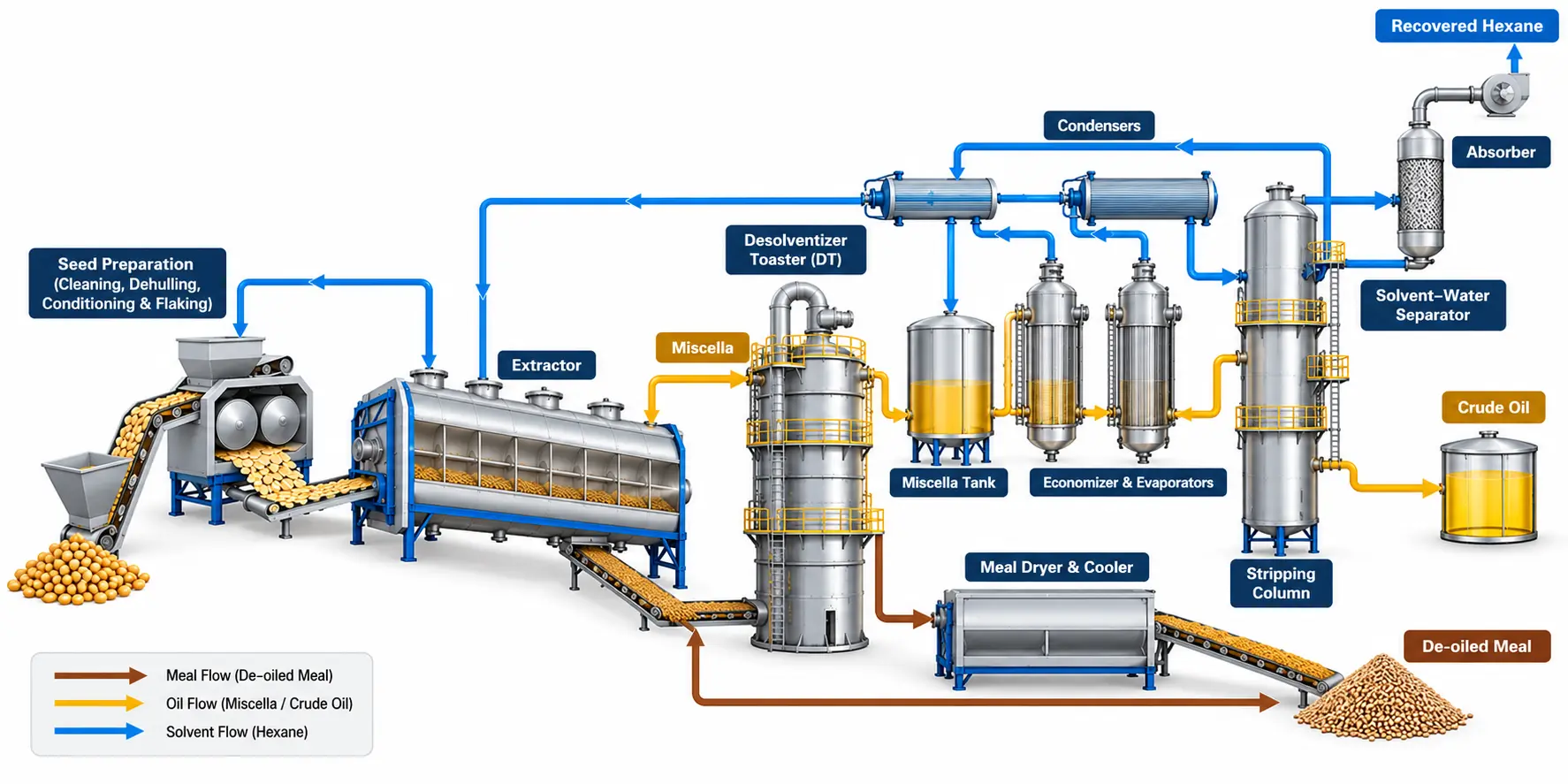
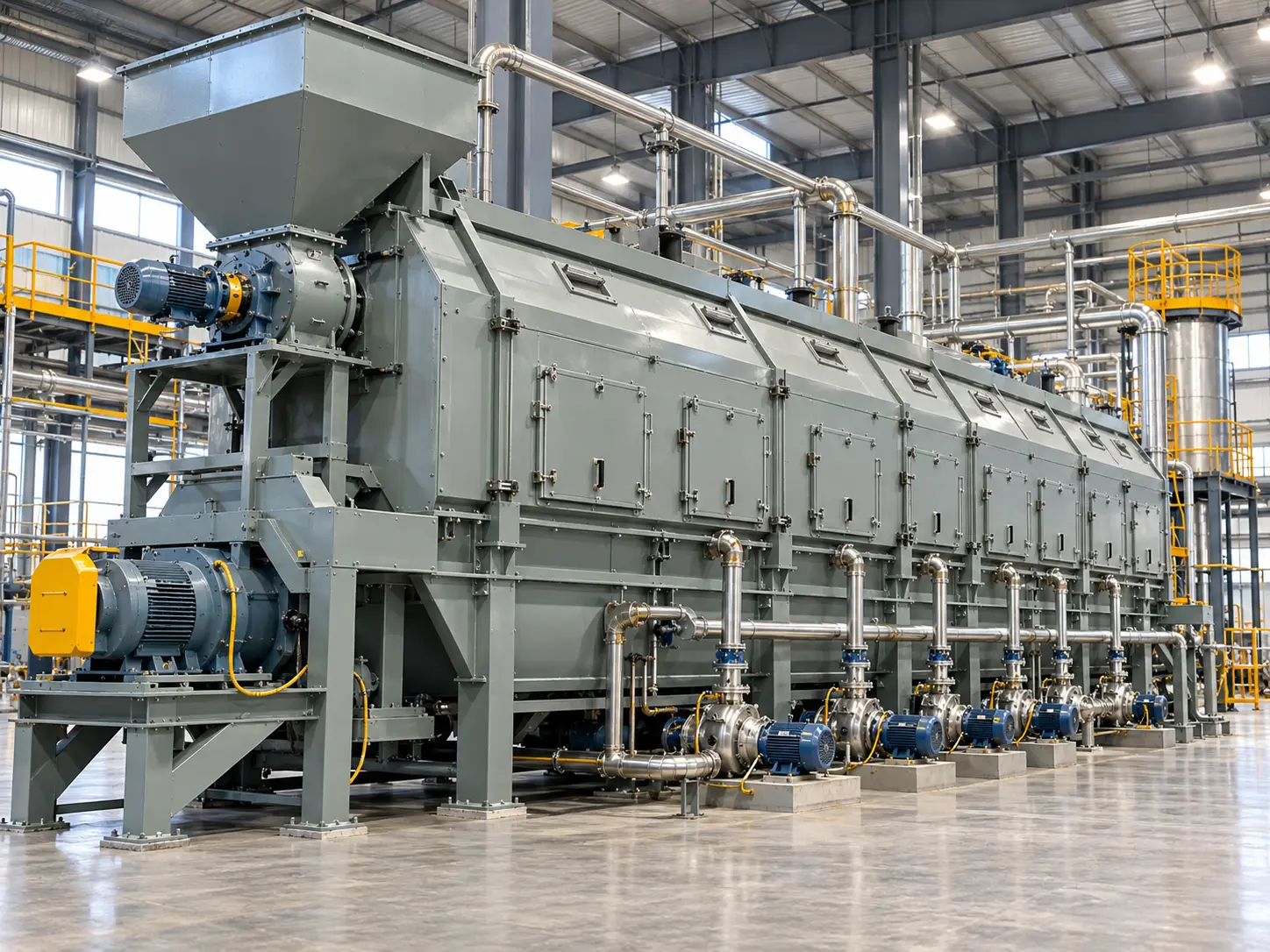
Prepared material moves slowly through the continuous extractor while hexane is sprayed over the bed in stages. The flow is counter-current: the freshest solvent meets the most exhausted material. The oil-rich solution, called miscella, is drawn off where incoming material holds the most oil. The extractor runs under slight vacuum so hexane vapour stays inside.
View Extractor Details →3. Desolventizing, Toasting, Drying and Cooling the Meal
Spent material leaves the extractor holding about 25–35% solvent by weight. In the desolventizer toaster (DT) , direct and indirect steam drive off the hexane. For soybean, toasting also reduces anti-nutritional factors such as trypsin inhibitors. A meal dryer and cooler then brings the de-oiled cake to safe storage moisture and temperature.
Learn More →4. Miscella Distillation
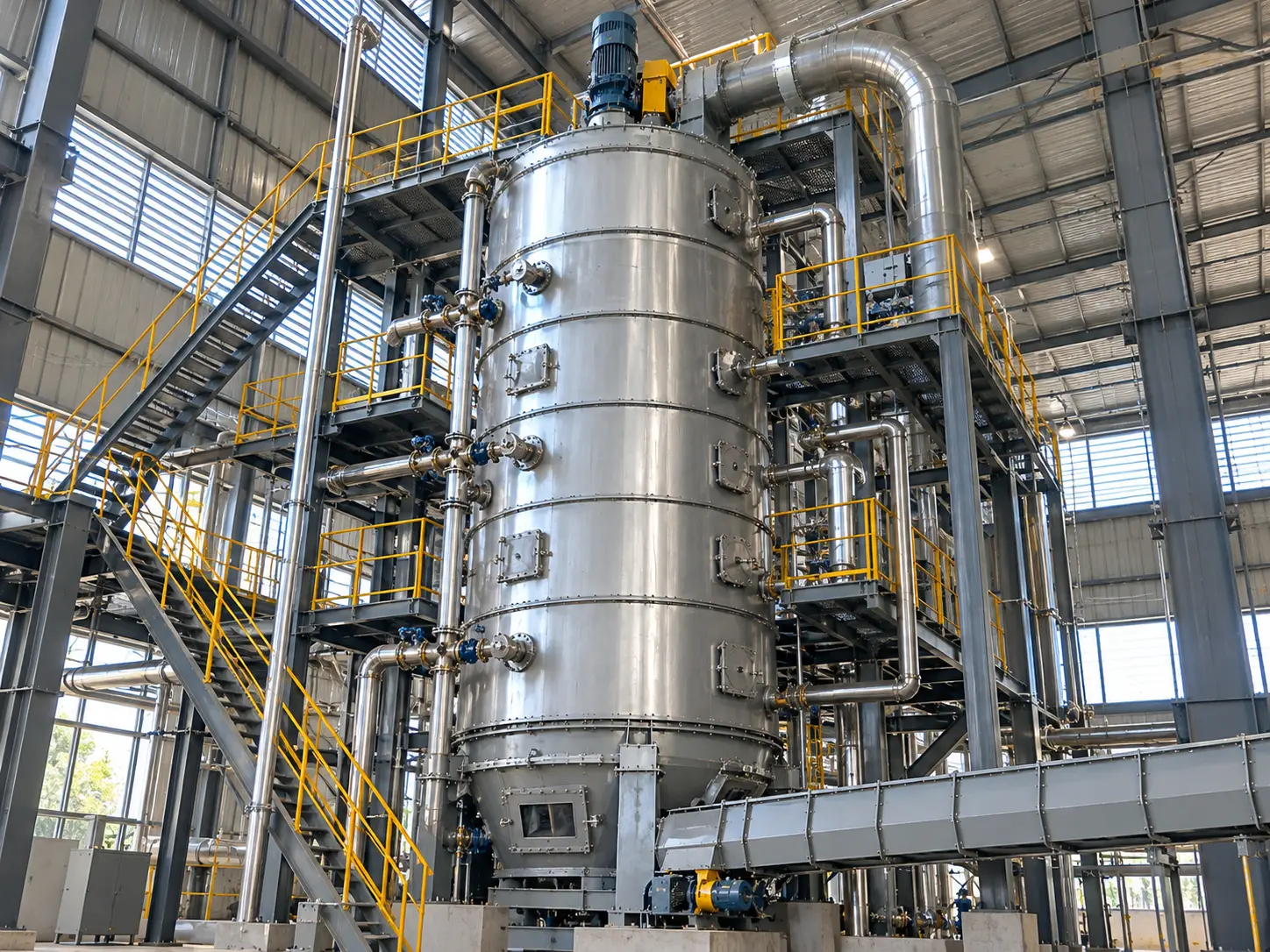
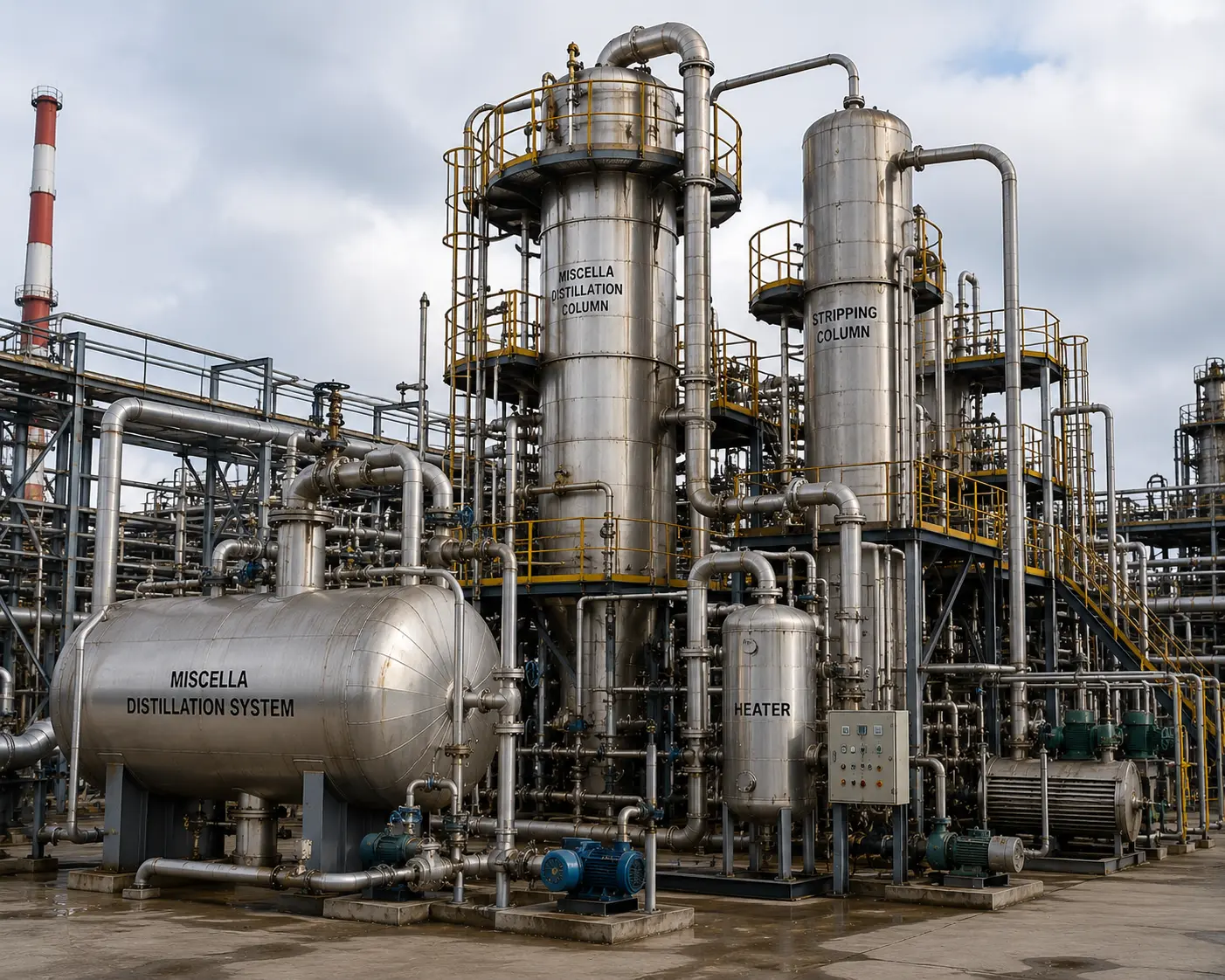
Miscella is filtered and preheated in an economizer using hot vapours from the DT. Evaporators then boil off most of the hexane. A stripping column working under vacuum with live steam removes the final traces, leaving solvent-free crude oil for the refinery.
Learn More →5. Solvent Recovery and Vent Control
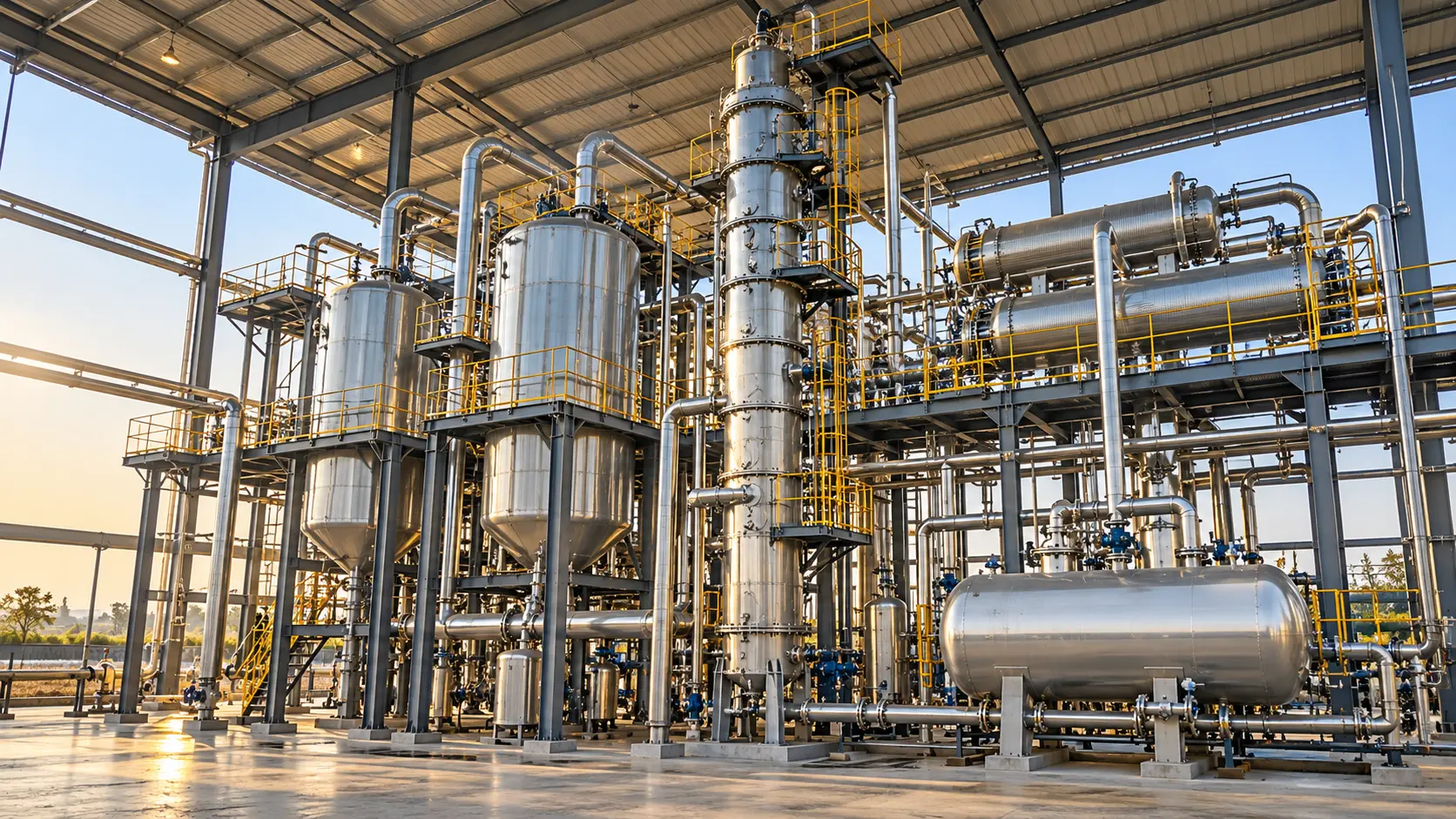
Vapours from the DT and distillation sections are condensed in solvent condensers . A solvent–water separator returns hexane to the extractor. A mineral oil absorption unit captures the last traces from vent air. Read more about the hexane recovery system .
Learn More →Main Equipment in a Solvent Extraction Plant
Each circuit uses dedicated solvent extraction machinery. Capacity and material of construction are specific to each machine and are fixed during process design.
| Section | Equipment | What It Does |
|---|---|---|
| Feeding and conveying | Moves material in and out while keeping hexane vapour sealed. | |
| Extraction | Washes prepared material with hexane to form miscella. | |
| Meal | Strips solvent from meal, then toasts, dries and cools it. | |
| Oil | Cleans miscella and separates hexane from oil. | |
| Solvent | Condenses vapour for reuse; heats solvent and miscella. |
Equipment configuration, capacity and construction materials are determined during process design to suit the plant's operating requirements.
Raw Materials We Process
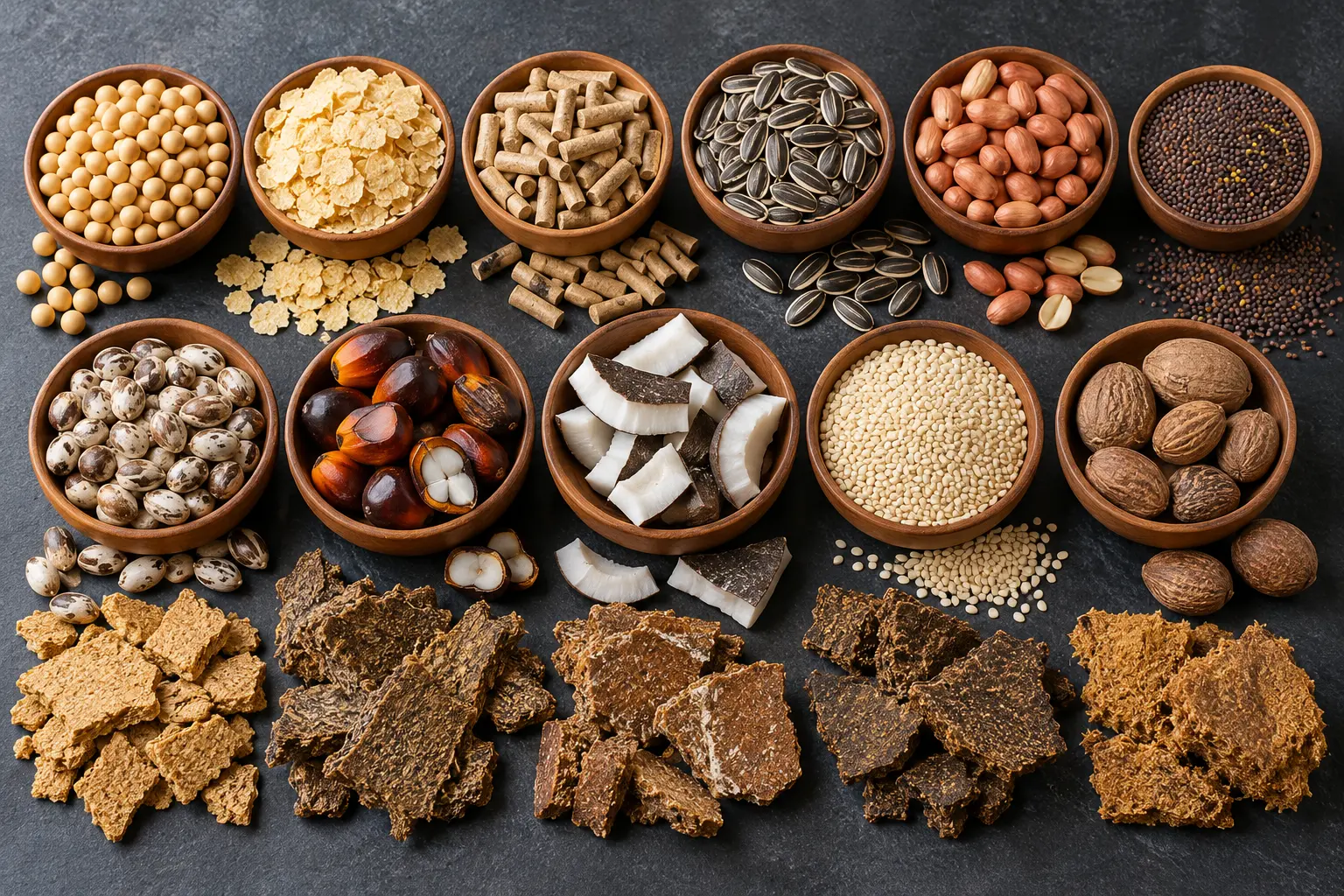
Each oilseed needs its own preparation route, so we configure the plant around your raw material.
| Raw Material | Typical Feed to the Extractor | Plant Page |
|---|---|---|
| Soybean | Flakes (direct extraction) | Soybean solvent extraction plant ↗ |
| Rice Bran | Stabilized pellets | Rice bran solvent extraction plant ↗ |
| Cottonseed | Flakes or pre-pressed cake | Cottonseed solvent extraction plant ↗ |
| Sunflower Seed | Pre-pressed cake | Sunflower seed solvent extraction plant ↗ |
| Groundnut (Peanut) | Pre-pressed cake | Groundnut solvent extraction plant ↗ |
| Mustard, Rapeseed, Canola | Pre-pressed cake | Mustard Rapeseed Canola |
| Palm Kernel | Pre-pressed cake | Palm kernel solvent extraction plant ↗ |
| Coconut (Copra) | Pre-pressed cake | Coconut and copra solvent extraction plant ↗ |
| Sesame Seed | Pre-pressed cake | Sesame seed solvent extraction plant ↗ |
| Shea Nut | Pre-pressed cake | Shea butter (sheanut) solvent extraction plant ↗ |
| Mahua, Neem | Pre-pressed cake | Mahua Neem |
Batch and Continuous Plant Options
Choose the extraction process that fits your raw material, production volume and operating requirements.
Batch Extraction Plant
A batch extractor processes material in fixed loads. Each charge is soaked, drained and re-soaked in a sealed vessel before the next load goes in.
Why Choose Batch Processing?
- ✓ Lower initial investment
- ✓ Simple operation
- ✓ Easier switching between different seeds
- ✓ Suitable for smaller volumes and seasonal supply
Continuous Extraction Plant
A continuous plant moves material through the extractor without stopping, supporting consistent production for ongoing, high-volume operations.
Why Choose Continuous Processing?
- ✓ Steadier oil recovery
- ✓ Lower labour per tonne
- ✓ Designed for high production volumes
- ✓ Suitable for year-round throughput
Choose the Right Plant Capacity
Compare your expected production volume, raw material availability and operating schedule before selecting an extraction system.
Turnkey Project Scope
Complete engineering, equipment supply and commissioning solutions for new oil milling facilities and existing extraction lines.
As a turnkey solvent extraction plant supplier, we can deliver a new oil milling plant setup or an extraction section for an existing press line. Our scope covers:
Process Engineering & Planning
Process engineering, plant layout and equipment selection tailored to your project requirements.
Equipment Manufacturing
Manufacturing of the main extraction, desolventizing and distillation equipment.
Installation & Commissioning
Supply, installation and commissioning of the plant at your site.
After-Sales Technical Support
Technical assistance and solvent extraction plant spares after start-up.
Crude oil from the plant can feed directly into an edible oil refinery plant .
What to Share When Requesting a Quotation
Share the following details with our team so we can better understand your requirements and prepare a suitable proposal for your solvent extraction plant project.
Raw Material Details
Raw material and its form (seed, flakes or expeller cake), with oil and moisture content.
Required Capacity
Required capacity in TPD and operating days per year.
Existing Equipment
Details of existing preparation or pressing equipment.
Oil and Meal Specifications
Your required oil and meal specifications.
Site and Utilities
Site location, layout and available steam, power and water.
Project Type
Whether you need a new plant, an expansion or a replacement section.
Every Detail Helps Us Plan Better
Clear information about your raw material, capacity, equipment and site helps our team assess your requirements and prepare a more relevant project proposal.
Have a project in mind? Let’s discuss your requirements.
Performance, Safety and Compliance Factors
Results depend on raw material and design, so ask every manufacturer to state these figures for your feed and capacity.
Residual Oil in Meal
Ask for the expected residual oil content in the de-oiled meal for your specific raw material and operating capacity.
Hexane Loss
Request the expected hexane loss per tonne of material processed to assess solvent consumption and operating costs.
Utility Consumption
Compare steam, power and cooling water consumption per tonne to understand the plant's utility requirements.
Solvent Residue & Meal Quality
Check residual solvent in meal and crude oil, along with meal quality indicators such as urease activity for soybean.
Hexane Safety & Regulatory Compliance
Hexane is highly flammable. The extraction area needs vapour-tight equipment, flameproof electricals, gas detection and safe separation distances.
In India, bulk hexane storage may require a licence under the Petroleum Rules, 2002. Confirm the applicable requirements with the relevant authority and plan for licensing and safe storage during the project design stage.
Before finalising your plant: obtain written performance guarantees based on your raw material, planned capacity and agreed operating conditions.
How to Choose a Solvent Extraction Plant Manufacturer
Evaluate the manufacturer's technical expertise, equipment quality, project scope and long-term support before making your investment.
Make an Informed Investment
A reliable manufacturer should demonstrate relevant project experience, provide clear performance commitments and explain exactly what is included in the plant delivery.
Compare technical capability, not just the initial equipment quotation.
Relevant Industry Experience
Look for experience with your oilseed at a similar capacity, with reference sites you can contact.
In-House Equipment Fabrication
Check whether the manufacturer fabricates the extractor, DT and distillation equipment in-house.
Written Performance Guarantees
Make sure agreed performance figures are documented in the contract rather than relying on verbal promises.
Clearly Defined Project Scope
Confirm the scope covers civil works, electrical systems, utilities and commissioning responsibilities.
Spares & After-Sales Service
Confirm spare parts availability and the expected service response after plant start-up.
Compare Manufacturers with Confidence
Explore our detailed guide to evaluating solvent extraction plant manufacturers in India.
Why Work With Super Techno Engineers?
Choose an engineering partner for your solvent extraction and edible oil processing requirements. Explore our manufacturing capabilities, equipment range and project support.
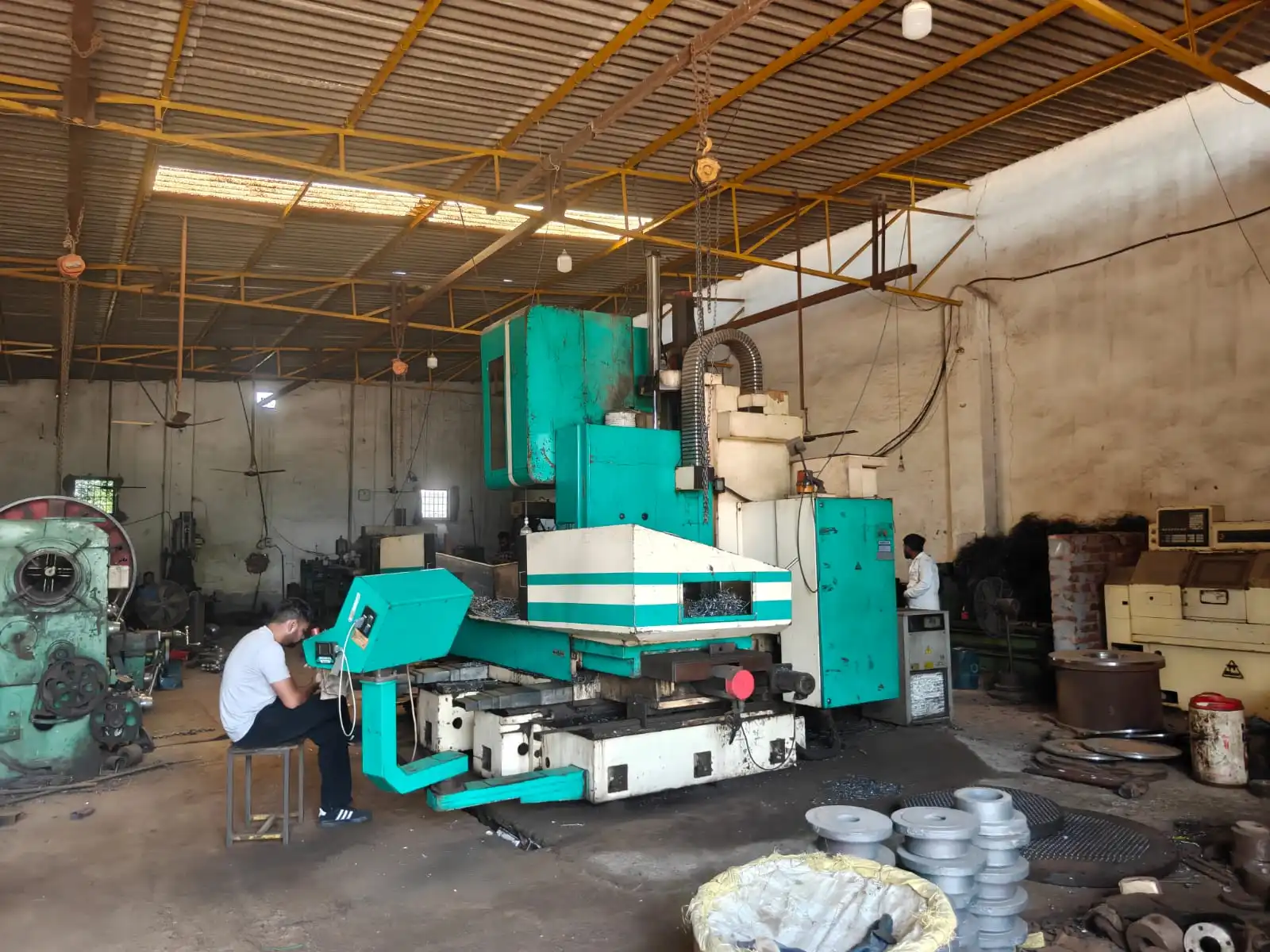
Manufacturing Facility in Dhuri, Punjab
Manufacturing facility for core solvent extraction systems and associated equipment.
Solvent Extraction, Refinery & Spares
One supplier for solvent extraction equipment, edible oil refinery systems and spare parts.
ISO 9001:2015 Certification
Confirmation required: Confirm certification status, certificate number and validity before publishing this claim.
Company Experience
Confirmation required: Confirm the company's founding year and total years in business.
Projects & Industry Experience
Confirmation required: Confirm project names, oilseed types, plant capacities, locations and countries served.
Frequently Asked Questions
Find answers to common questions about solvent extraction plants, oil recovery, plant costs and processing different oilseeds.
01 What is a solvent extraction plant?
It is an industrial plant that uses a solvent, usually food-grade hexane, to dissolve oil from prepared oilseed flakes or expeller cake. It produces crude oil and de-oiled meal, and recovers the solvent in a closed loop for reuse.
02 Which solvent is used in a solvent extraction plant?
Food-grade hexane is commonly used for edible oilseeds. It dissolves vegetable oil easily, does not mix with water and boils at about 69°C, allowing it to be separated from oil and meal through appropriate recovery processes for reuse.
03 How much oil is extracted from 100 kg of soybean?
Roughly 17–19 kg of crude oil may be obtained from 100 kg of soybeans under suitable processing conditions. Soybeans contain about 18–20% oil, and an efficient plant may leave around 0.5% oil in the meal. Actual yield depends on the seed's oil content, moisture and preparation quality.
04 How much does a solvent extraction plant cost in India?
There is no standard price. Cost depends on capacity, raw material, batch or continuous design, whether seed preparation and pressing are included, automation level, materials of construction, and civil, utility and licensing scope.
05 Is oil from a solvent extraction plant safe to eat?
Solvent-extracted oil must undergo appropriate desolventization and refining before consumption, as required by applicable food safety standards. In India, applicable FSSAI requirements govern refining and residual hexane limits. Confirm the current requirements for the specific oil and product before making compliance claims.
06 Can one solvent extraction plant process different oilseeds?
Often yes, within equipment and process limitations. The extraction and solvent recovery sections may handle several materials, but preparation requirements differ. Soybean is commonly flaked for direct extraction, high-oil seeds may be pressed first, and rice bran generally needs suitable stabilization and preparation. Share every material you plan to process so the plant configuration can be assessed.
Planning a Solvent Extraction Plant?
Share your raw material, capacity and project requirements with our team.