
Palm Oil Refinery Plant
A Complete Palm Oil Refining Plant Built to Convert Crude Oil into Stable, RBD Palm Oil Plant Output at Scale
As a trusted Palm Oil Refinery Plant Manufacturer, Super Techno Engineers Private Limited designs and supplies complete systems that turn crude palm oil into a stable, RBD Palm Oil Plant output ready for the edible oil market. Straight from the mill, crude palm oil still carries free fatty acids, gums, phospholipids, and natural color pigments that keep it from being edible on its own. Our Palm Oil Refinery Process addresses each of these impurities in sequence, degumming, deacidification, bleaching, and deodorization, bringing FFA in the finished oil down to under 0.1% so every batch leaves the plant at a consistent, market-ready standard.
Every Palm Oil Processing Plant we build can be configured as a batch, semi-continuous, or fully continuous line, sized to run reliably around the clock. The bleaching and deodorization stages work as an integrated unit within the Palm Oil Refining Machine setup, and where required, we add a Palm Oil Fractionation Plant section so the refined oil can be split further into Palm Olein and Palm Stearin. This flexibility lets a single facility serve multiple product markets, while our engineering approach keeps overall Palm Oil Refinery Plant Cost predictable from design through commissioning.
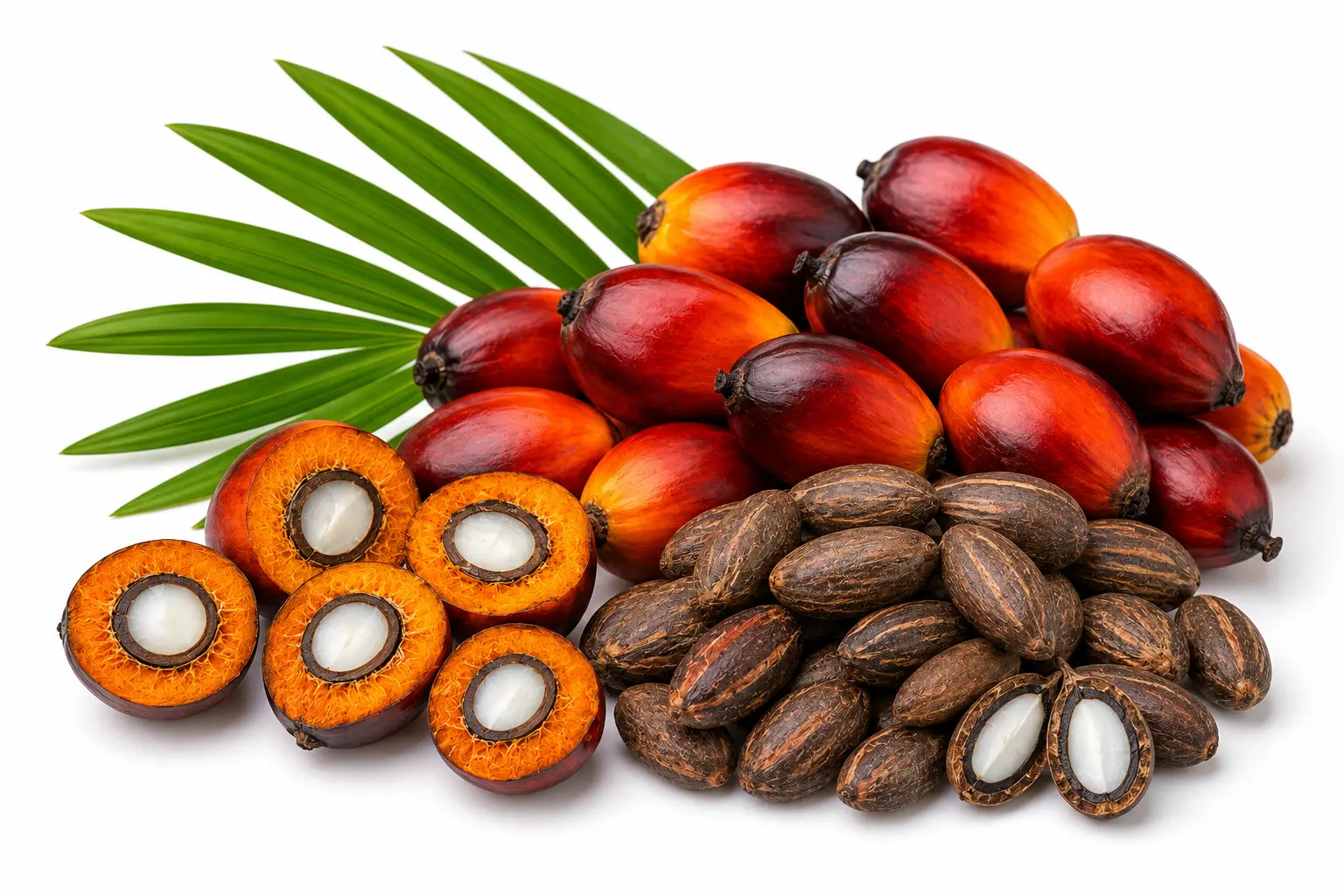 Palm Oil Refinery Plant
verified Features of Palm Oil Refinery Plant
- check_circle Purpose-built for crude palm oil's naturally higher FFA levels, with a dedicated degumming and deacidification section fitted as standard.
- check_circle Choice of physical or chemical refining route within the same Palm Oil Refining Plant, selected based on your feed oil quality and target output.
- check_circle Vacuum bleaching vessels engineered to adsorb maximum pigment and impurity load while keeping bleaching earth usage to a minimum.
- check_circle Multi-tray deodorizer that relies on high-vacuum steam distillation to clear out FFA, odor, and volatile compounds in a single pass.
- check_circle Optional Palm Oil Fractionation Plant section that splits refined output into Palm Olein and Palm Stearin without needing a separate facility.
- check_circle Heat recovery built between process stages, cutting down steam and fuel demand across the entire Palm Oil Refinery Process.
- check_circle Full PLC control over temperature, vacuum, and flow rate at every point in the line, part of every Palm Oil Refining Machine we supply.
stars Advantages
- check Reduces FFA in the finished oil to under 0.1%, hitting the quality mark required for commercial RBD Palm Oil Plant output.
- check Keeps oil loss low through the deacidification and bleaching stages, so more of your crude oil input converts into saleable product.
- check Adding the optional Palm Oil Fractionation Plant section lets you turn refined oil into Palm Olein and Palm Stearin, both sold as higher-value products.
- check Thermal energy recovery between process stages holds steam and fuel usage down per tonne processed.
- check Automation across the Palm Oil Refining Plant cuts both utility spend and labour requirement per tonne refined.
- check Available from 50 TPD to 1500 TPD, so plant capacity scales with your production needs without a full redesign, keeping Palm Oil Refinery Plant Cost aligned with your budget.
Palm Oil Refinery Process
A Palm Oil Refinery Plant doesn't clean crude oil in one shot, it works through it stage by stage, with each step targeting a specific impurity that would otherwise show up as poor taste, dull color, or a shorter shelf life. Here's the full Palm Oil Refinery Process our plants follow, from crude feed to finished RBD Palm Oil Plant output:
Pre-Treatment
Incoming crude palm oil is heated and dosed with phosphoric acid, which conditions the phospholipids and gums so they separate cleanly in the degumming step that follows.
Degumming
The conditioned oil enters the degumming section, where gums and phosphatides are pulled out. Removing them here protects the equipment further down the line and keeps bleaching and deodorization running efficiently.
Neutralization / Deacidification
The degummed oil moves to deacidification, where free fatty acids are stripped out. Our Palm Oil Refining Machine can run this two ways: physical refining uses high-vacuum steam distillation at high temperature, while chemical refining relies on caustic soda reacting with the FFAs to form soapstock, separated out by centrifuge.
Bleaching
Activated bleaching earth is mixed into the deacidified oil under vacuum and controlled heat, pulling out color pigments, leftover soap, trace metals, and oxidation by-products. Filtration then leaves behind a clear, light-colored oil.
Deodorization
The bleached oil passes into the deodorizer, where high-vacuum steam distillation at elevated temperature clears out the last of the FFA, odor, and flavor compounds. What comes out is neutral, stable, RBD-grade oil.
Fractionation (Optional)
If your Palm Oil Processing Plant needs separated products, refined oil is cooled under controlled crystallization and filtered through our Palm Oil Fractionation Plant section, splitting it into solid Palm Stearin and liquid Palm Olein for different downstream uses.
Filtration & Storage
A final polish filtration step precedes storage or packing, leaving the oil ready for dispatch to edible oil or industrial buyers.
Refining Methods for Palm Oil Refinery Plant
The right Palm Oil Refinery Process depends on what goes into the plant and what you want coming out. Super Techno Engineers configures every Palm Oil Refining Plant around your crude oil quality and target product mix, with four proven setups to choose from:
thermostat 1️⃣ Physical Refining
Deacidification happens through high-temperature, high-vacuum steam distillation rather than chemical treatment. For palm oil, this is the go-to method, it handles the higher FFA content typical of crude palm oil with less effluent and lower oil loss than the chemical route.
science 2️⃣ Chemical Refining (Alkali Refining)
Caustic soda is added to react with free fatty acids, forming soapstock that's separated out by centrifuge. This route gives finer control over neutralization, useful when feed oil FFA varies or the target product calls for it.
call_split 3️⃣ Refining with Fractionation
A Palm Oil Fractionation Plant unit is added downstream of refining, splitting the oil into liquid Palm Olein and solid Palm Stearin. This setup suits processors who want both an edible oil product and an industrial-grade product from one line.
all_inclusive 4️⃣ Combined Physical Refining + Fractionation
Physical refining feeds directly into an integrated fractionation section, skipping intermediate storage. Fewer handling steps mean less product loss, giving processors a single continuous run from crude palm oil to finished RBD Olein and Stearin.
Specifications
Our Palm Oil Refinery Plant is available in multiple configurations to match your crude oil throughput. Below are the standard technical specifications:
| Parameter | Standard Value / Details |
|---|---|
| Plant Capacity | 50 TPD - 1500 TPD (Tonnes Per Day) |
| Feed Material | Crude Palm Oil (CPO) |
| Refining Method | Physical or Chemical Refining (depending on choice) |
| Free Fatty Acid (FFA) in Refined Oil | Below 0.1% |
| Moisture in Refined Oil | Below 0.1% |
| Construction Material | Carbon Steel / Stainless Steel (for product-contact parts) |
* Standard configurations are listed above; modifications and customizations are available based on individual client requirements.
Frequently Asked Questions
Find answers to common queries about our Palm Oil Refinery Plant.
Q1. Should I go with physical or chemical refining for my palm oil?
expand_more
That comes down to your crude oil's FFA level and what you're aiming to produce. Physical refining, run through high-vacuum steam distillation, is the standard choice for palm oil since it copes well with higher FFA content and produces less effluent. Chemical refining suits cases where you want tighter control over the neutralization step.
Q2. What happens to the oil before it enters the refinery line?
expand_more
Crude palm oil is first heated and dosed with phosphoric acid to condition the phospholipids and gums inside it. Skipping this pre-treatment would make the impurities much harder to separate once degumming starts.
Q3. What happens to the oil once deodorization is done?
expand_more
It runs through a final polish filtration, then either goes straight to storage tanks or gets packed for dispatch. If you've opted for fractionation, it's routed to the crystallization section first.
Q4. How well does the bleaching and deodorization stage actually perform?
expand_more
The vacuum bleaching vessels are built to pull maximum pigment and impurity load while using as little bleaching earth as possible, and the multi-tray deodorizer's high-vacuum steam distillation consistently gets finished-oil FFA under 0.1%.
Q5. Is RBD palm oil just crude palm oil under a different name?
expand_more
No, they're quite different. Crude palm oil (CPO) is the raw output from milling, still loaded with FFA, gums, and other impurities. RBD palm oil has been through degumming, deacidification, bleaching, and deodorization, ending up stable, neutral in taste, and ready for edible use.
Q6. Can this plant connect to a facility we already have?
expand_more
Yes, our systems can be tied into an existing oil mill or extraction setup. As a Palm Oil Refinery Plant Manufacturer, our engineering team reviews your current setup and designs the piping, storage, and utility connections needed to integrate it smoothly.
Enquiry Now
(Please fill the form below)