
Canola Oil Refinery Plant Process
Engineered to transform crude canola oil into refined, bleached, and deodorized (RBD) oil, trusted by clients across India and global markets for high-performance canola oil refining solutions.
Our Canola Oil Refinery Plant is designed to convert crude canola oil, sourced from pressing or solvent extraction, into market-ready RBD oil. Crude canola oil naturally carries gums, free fatty acids, colour pigments, and odour compounds that make it unfit for direct sale. Using a precisely controlled canola oil degumming plant, canola oil neutralization plant, canola oil bleaching plant, and canola oil deodorization plant working in sequence, our refinery reduces FFA to below 0.1% and delivers clear, neutral-tasting, long-shelf-life oil.
At the heart of this Canola Oil Refinery Plant is a carefully regulated deodorization section that operates under high vacuum at 230 to 250°C, stripping odour and residual acidity through steam distillation. The end result is safe, stable RBD canola oil suited for cooking oil, margarine, and industrial use.
Whether you're looking for a Canola Oil Processing Plant, a standalone canola oil refining machine, or a complete turnkey Canola Oil Refinery Plant, Super Techno Engineers builds systems engineered to deliver consistent performance, backed by reliable canola oil refinery plant manufacturer expertise developed through years of engineering experience.
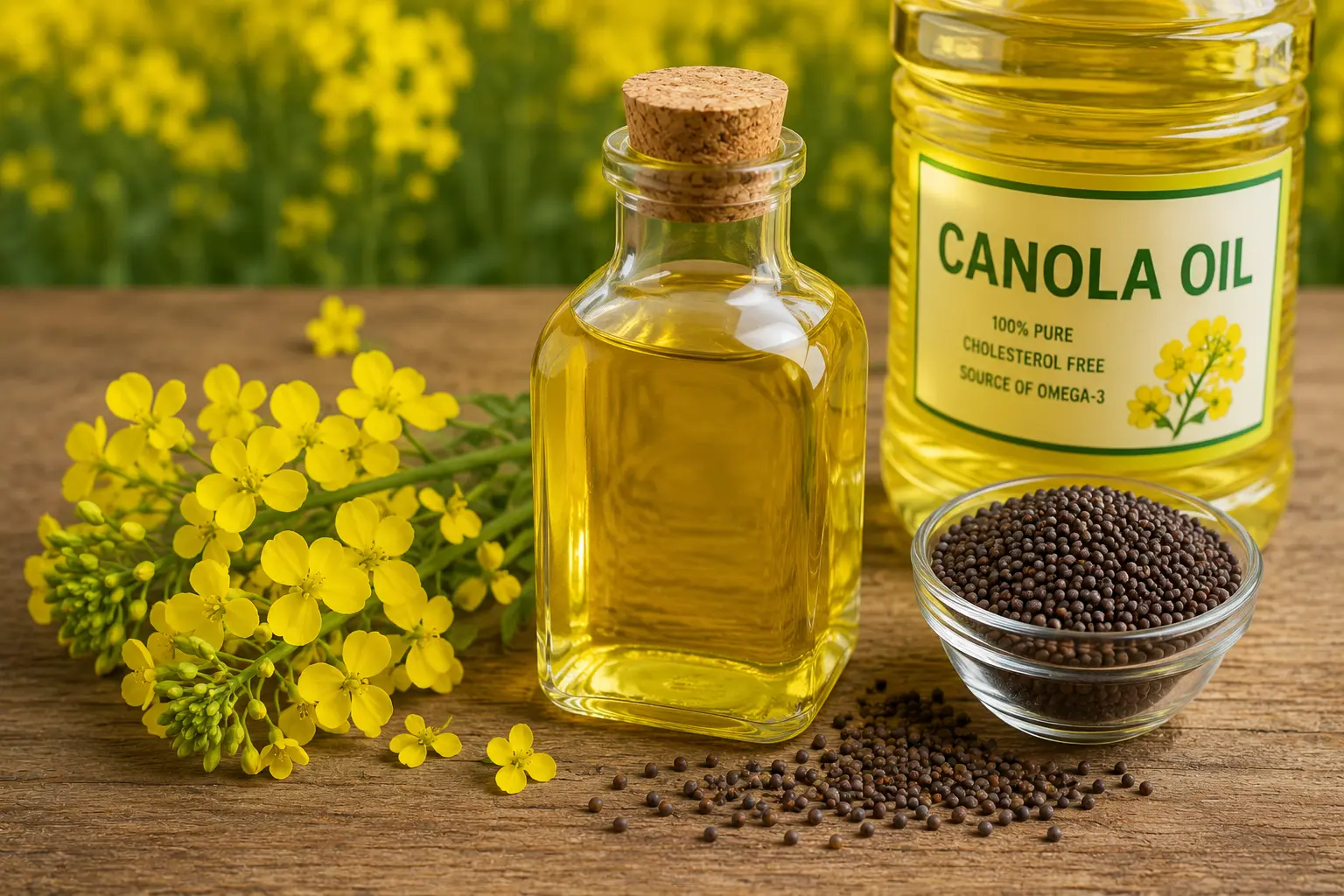 Canola Oil Refinery Plant Unit
verified Features of Canola Oil Refinery Plant
- check_circle Deep degumming system engineered specifically for canola oil's naturally high non-hydratable phospholipid content.
- check_circle Purpose-built neutralization section that carefully regulates caustic dosing to minimize neutral oil loss.
- check_circle Multi-stage vacuum bleaching that delivers consistently light-coloured, oxidation-resistant oil ahead of deodorization.
- check_circle High-vacuum steam deodorization system that reduces FFA to below 0.1%, standard across every unit built by our team, a trusted canola oil refinery plant manufacturer.
stars Advantages
- check Drives consistent RBD oil quality, keeping final FFA content reliably under 0.1%.
- check Produces neutral-tasting, light-coloured, long-shelf-life canola oil suitable for direct packaging or blending.
- check Runs on a highly automated setup, helping reduce both utility costs and manual labor requirements, an important factor when reviewing canola oil refinery plant cost across suppliers.
How Our Canola Oil Refining Process Works
Step-by-step breakdown of our highly efficient refining process.
Degumming
Crude canola oil is treated with water, acid, or enzymes to hydrate phospholipids, which are then separated out using a high-speed centrifuge in our canola oil degumming plant.
Neutralization
Degummed oil is treated with a calculated dose of caustic soda to convert free fatty acids into soap stock, which is removed by centrifugal separation in our canola oil neutralization plant.
Washing & Drying
Neutralized oil is washed with hot water to remove residual soap traces, then dried under vacuum to eliminate moisture before bleaching.
Bleaching
Dried oil is heated under vacuum and mixed with activated bleaching earth in our canola oil bleaching plant, adsorbing colour pigments, trace metals, and residual impurities.
Filtration
Spent bleaching earth is filtered out using leaf filters or filter presses, leaving behind clear, light-coloured oil ready for deodorization.
Deodorization
Bleached oil passes through our canola oil deodorization plant, where high-temperature (230 to 250°C), high-vacuum steam distillation strips away odour compounds and residual FFA.
Final Output
The process yields refined, bleached, and deodorized (RBD) canola oil, neutral in taste and colour, ready for packaging, blending, or industrial use straight from our canola oil refinery plant.
Specifications
Our Canola Oil Refinery Plant is available in multiple configurations, from mid-scale setups to large industrial installations. Below are the standard technical specifications:
| Parameter | Standard Value / Details |
|---|---|
| Plant Capacity | 20 TPD to 1000 TPD (Tonnes Per Day) |
| Raw Material Used | Crude Canola Oil (from pressing or solvent extraction) |
| Refining Type | Chemical (Alkali) or Physical Refining |
| Final FFA in RBD Oil | Below 0.1% |
| Bleaching Earth Dosage | As per crude oil colour and impurity level |
| Deodorization Temperature | 230 to 250°C under high vacuum |
| Construction Material | Carbon Steel / Stainless Steel (for product-contact parts) |
* Standard configurations are listed above; modifications and customizations are available based on individual client requirements.
Why Choose Our Canola Oil Refinery Plant
Super Techno Engineers delivers complete Canola Oil Refinery Plant solutions, from standalone degumming, bleaching, or deodorization units to full-scale, turnkey canola oil refinery plant setups, all engineered for maximum output, long-term reliability, and low operational cost.
Capacity Range 20 TPD to 1000 TPD
Our Canola Oil Refinery Plant configurations are available across a wide capacity spectrum, from 20 TPD for mid-scale processors to 1000 TPD for large industrial operations. Every setup is custom-engineered to match your crude oil source and site conditions.
Deep Degumming for Canola-Specific Phospholipids
Canola crude oil naturally carries higher non-hydratable phospholipid content than most other oils. Our purpose-built canola oil degumming plant applies acid or enzymatic degumming to ensure complete gum removal ahead of neutralization.
Trusted Canola Oil Refinery Plant Manufacturer
As an established canola oil refinery plant manufacturer, Super Techno Engineers has delivered refining systems to Indian and international markets, including Africa and Southeast Asia, consistently achieving FFA below 0.1% in finished RBD oil.
Choice of Chemical or Physical Refining
We engineer both chemical (alkali) refining and physical refining canola oil plant configurations, letting you choose the route that best fits your crude oil quality and end-use requirements.
Complete Turnkey Support Across India
Super Techno Engineers delivers the complete Canola Oil Refinery Plant as a single-point turnkey solution, from initial process design and equipment manufacturing to installation, commissioning, and after-sales service. No third-party coordination required.
ISO 9001:2015 Certified Manufacturing
Every component of our Canola Oil Refinery Plant is manufactured under ISO 9001:2015 certified processes, ensuring consistent quality, dimensional accuracy, and long operational life.
Seamless Integration with Extraction
Our refinery sections connect directly with crude oil from our Canola Solvent Extraction Plant, giving processors a complete, single-vendor seed-to-oil solution under one roof.
Built for Continuous Commercial Operation
Whether you're setting up a new canola oil processing plant or expanding an existing refinery, our systems are engineered for uninterrupted round-the-clock operation with minimal downtime.
Frequently Asked Questions
Answers to the most common technical questions our clients ask about the Canola Oil Refinery Plant.
Q1. What is the difference between a canola oil refinery plant and a canola solvent extraction plant?
expand_more
A solvent extraction plant recovers crude oil from pre-pressed canola cake, while a canola oil refinery plant purifies that crude oil into consumption-ready RBD canola oil through degumming, neutralization, bleaching, and deodorization.
Q2. Is chemical or physical refining better for canola oil?
expand_more
Chemical (alkali) refining is generally preferred for canola oil because it offers reliable FFA removal without the extensive degumming investment physical refining demands. Physical refining suits crude oil with naturally high FFA or biodiesel-linked production.
Q3. Why does canola oil need extra degumming compared to other oils?
expand_more
Canola oil naturally contains a higher share of non-hydratable phospholipids, which don't respond well to simple water degumming. Acid or enzymatic degumming is commonly recommended for canola.
Q4. What is the quality of the final refined canola oil?
expand_more
Our canola oil refinery plant consistently delivers RBD oil with FFA below 0.1%, meeting Codex Alimentarius and FSSAI quality parameters for food-grade edible oil.
Q5. What is the typical canola oil refinery plant cost?
expand_more
Cost depends on plant capacity, refining type, automation level, and whether it's a turnkey or equipment-only supply. We offer plants ranging from 20 TPD to 1000 TPD, with configurations custom-engineered to match your production requirements and budget.
Q6. What plant capacities are available for canola oil refining?
expand_more
Installations vary, with pricing tailored to each client's production goals. We offer plants ranging from 20 TPD to 1000 TPD, with a complete canola oil refinery plant setup custom-engineered to match your production requirements and budget.
Enquiry Now
(Please fill the form below)