
Cottonseed Oil Refinery Plant
Engineered to take raw cottonseed all the way from delinting and extraction through to degumming, neutralization, bleaching, and deodorization, producing export-grade RBD Cottonseed Oil.
Super Techno Engineers Private Limited is a trusted Cottonseed Oil Refinery Plant Manufacturer in India, delivering complete turnkey solutions that combine solvent extraction with full-scale oil refining. Cottonseed is a unique oilseed, holding 15% to 20% oil by weight, but its lint-covered surface and tough hulls demand specialized preparation before the kernel meat is ready for processing. Our Cottonseed Oil Refinery Plant is engineered to take raw cottonseed all the way from delinting and extraction through to degumming, neutralization, bleaching, and deodorization, producing export-grade RBD Cottonseed Oil at the other end.
Whether you need a standalone Cottonseed Oil Refining Process line to upgrade crude oil bought from third parties, or a complete Turnkey Cottonseed Oil Refinery Plant that integrates extraction and refining under one roof, our engineering team designs the plant around your raw material, capacity, and budget.
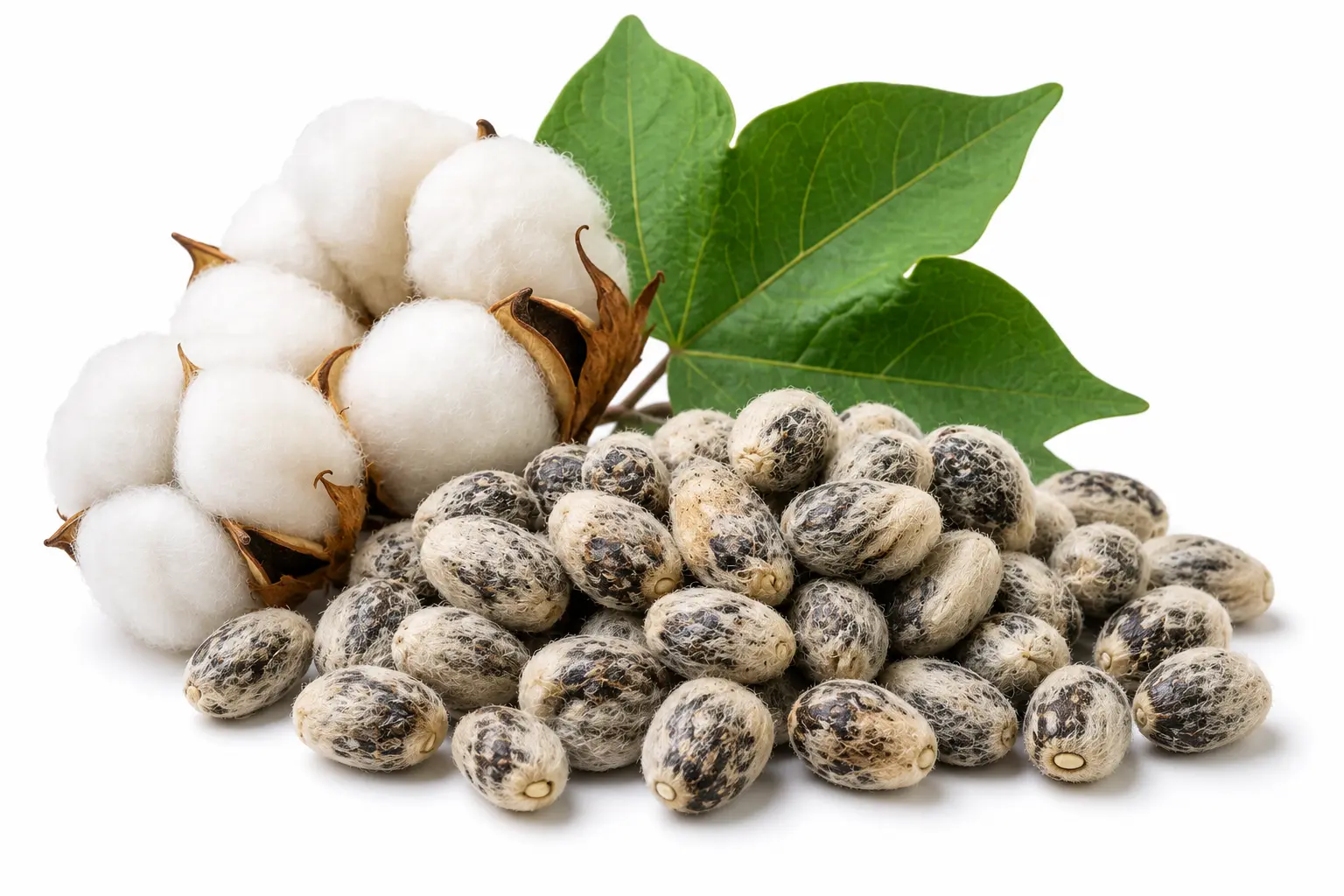 Cottonseed Extraction & Refinery Unit
verified Features of Cottonseed Oil Refinery Plant
- check_circle Continuous moving bed extractor optimized for cottonseed collets, pre-pressed cake, and full-pressed cake
- check_circle Specialized Desolventizer Toaster (DT) system designed to safely reduce free gossypol toxicity in the de-oiled meal
- check_circle Optional delinting and decorticating section for processing whole cottonseed directly
- check_circle Complete Cottonseed Oil Refining Process line covering degumming, neutralization, bleaching, and deodorization
- check_circle Multi-stage miscella distillation system for optimal solvent recovery and dark cottonseed oil handling
- check_circle Zero-venting mineral oil absorption system to minimize hexane emissions to atmosphere
- check_circle Heavy-duty, wear-resistant construction for continuous long-term operation
- check_circle Fully automated control panel with interlock systems for safe, low-manpower plant operation
Advantages of Cottonseed Oil Refinery Plant
Reduces residual oil in de-oiled cake to strictly below 1.0%, maximizing revenue per tonne processed.
Specialized DT heat treatment binds gossypol in the meal, making it safe for cattle and poultry feed.
Produces high-quality cottonseed meal (DOC) with a protein content of 40% to 42%.
Integrated refining section converts crude cottonseed oil into RBD Cottonseed Oil, ready for retail packing or export.
Compatible with multiple input materials including whole cottonseed, pre-pressed cake, fully pressed cake, and expander-produced collets.
The closed-loop hexane recovery system minimizes solvent loss to less than 2.0 liters per tonne of processed material.
Scalable Cottonseed Oil Refinery Plant capacity from 50 TPD to 1500 TPD to match your requirement.
Highly automated operation significantly lowers utility consumption and labour costs per tonne.
Cottonseed Preparation Methods
Cottonseed processing is more challenging than processing many other oilseeds due to the presence of lint and hulls. Super Techno Engineers configures every Cottonseed Oil Refinery Plant based on your raw material condition and existing infrastructure. Four proven preparation methods are available:
1 Direct Screw Press
Whole cottonseed is cleaned and passed directly through screw presses without delinting or dehulling. This is suited for small-scale operations. Oil content in the cake after pressing is around 7%, which is then solvent extracted to below 1.0%. However, because the feed contains hulls and lint, this process produces darker oil and meal with a lower protein content.
2 Full Press
Cottonseed goes through delinting, decorticating, cracking, and dehulling before being conditioned and fed into screw presses. The press reduces oil content in the cake to 6% to 7%. This fully pressed cake is then fed to the solvent extraction system, which recovers the remaining oil and brings residual oil below 1.0% in the final meal.
3 Pre-Press
After complete seed preparation including delinting, decorticating, cracking, dehulling, and conditioning, the cottonseed meat is fed into pre-press screw presses. More than 50% of the oil is recovered in the press, leaving approximately 18% oil in the cake. This pre-pressed cake then goes to the extraction section, reducing residual oil to below 1.0%.
4 Expander Process
Prepared cottonseed flakes are conditioned to 85°C and passed through an expander fitted with a squeeze-o-matic arrangement. The expander releases 10% to 12% of the oil and converts the flakes into high-porosity collets. These collets at 95°C to 100°C are cooled and dried to 55°C and 8% to 9% moisture before entering the extractor. The high porosity of collets allows faster hexane penetration and better extraction efficiency compared to cake or flakes.
Cottonseed Oil Extraction Process
Every Cottonseed Oil Refinery Plant we build follows a structured step-by-step process to ensure maximum oil recovery and high-quality meal output:
Cleaning
Cottonseed received from ginning mills is cleaned using vibratory cleaners or rotary drum cleaners to remove dust, fiber, and solid impurities.
Magnetic Separation
Cleaned cottonseed passes through permanent or rotary drum magnets to remove all iron particles that could damage downstream machinery.
Delinting
Cottonseed contains 6% to 8% lint on its surface. The seed passes through delinters that remove up to 4% surface lint, converting the fuzzy seed into a cleaner black seed. The removed lint is collected and used in napkin or surgical cotton industries.
Decorticating and Cracking
Delinted black seeds are passed through seed crackers that break each seed into 2 to 3 pieces. This exposes the inner kernel meat for further processing.
Dehulling
Cracked seed pieces pass through dehullers fitted with rubber rollers that separate the hulls from the kernel meat. Hulls, which make up more than 30% of the cracked seed, are separated out. Dehulling increases oil content in the remaining meat to 30% to 36%, significantly improving extraction efficiency.
Cooking and Conditioning
Dehulled cottonseed meat is fed into a cooker-conditioner where temperature is raised using jacketed steam and a small quantity of live steam. Conditioning softens the cell walls and prepares the material for flaking or expanding.
Flaking or Expanding
Conditioned meat goes through flaking rolls to form thin flakes of 0.35 mm thickness, or through an expander system that converts flakes into high-porosity collets. Both formats ensure maximum surface area for hexane contact in the extractor.
Solvent Extraction
Prepared flakes, collets, or pressed cake are fed into a continuous deep-bed extractor through a rotary valve or Plug-O-Seal system. Inside the extractor, food-grade hexane flows in the opposite direction of the material, dissolving the oil and creating a liquid mixture known as miscella. This miscella is collected and cleaned using filters or hydro-cyclones before being sent to the distillation section. The remaining de-oiled wet meal is then transferred to the Desolventizer Toaster for solvent removal.
Desolventization
Wet marc enters the Desolventizer Toaster where live steam and indirect heating remove residual hexane. The DT also heat-treats the meal to bind free gossypol, making it safe for livestock. The de-solventized meal exits at approximately 110°C, is cooled to 10°C above ambient, and sent for bagging.
Miscella Distillation
The oil-hexane mixture (miscella) is processed through a two-stage evaporation and stripping system to separate the solvent from the oil. Hexane is recovered, condensed, and recycled back to the extractor. The resulting crude cottonseed oil contains less than 0.1% residual solvent and moves forward to the refining section.
Solvent Recovery and Condensation
Hexane vapors from the DT, evaporators, and vent lines are cooled in a condenser system, where they are turned back into liquid form and recovered for reuse in the process. A mineral oil absorption unit captures trace hexane from non-condensable gases, keeping overall solvent loss under 2.0 liters per tonne processed.
Cottonseed Oil Refining Process
Crude cottonseed oil coming out of the extraction section still carries gums, free fatty acids, color pigments, and odor compounds that make it unsuitable for direct consumption or export. Our Cottonseed Oil Refinery Plant carries this crude oil through a complete Cottonseed Oil Refining Process, converting it into clear, odorless, export-quality RBD Cottonseed Oil:
Degumming
Crude cottonseed oil is treated with phosphoric or citric acid and hydrated at a controlled temperature to precipitate out phospholipids and gums. This Cottonseed Oil Degumming Plant stage protects downstream equipment and improves the efficiency of the neutralization step that follows.
Neutralization
Degummed oil is treated with caustic soda in a continuous neutralizer to strip out free fatty acids (FFA) as soap stock. The Cottonseed Oil Neutralization Plant section is designed to minimize neutral oil loss while bringing FFA down to acceptable refining limits, and the recovered soap stock can be sold separately as a byproduct.
Bleaching
Neutralized oil is mixed with activated bleaching earth under vacuum and heat inside the Cottonseed Oil Bleaching Plant section. This step removes color pigments, residual soaps, and trace metals, giving the oil a light, consistent color profile suited for packaged edible oil.
Deodorization
In the final stage, bleached oil passes through a vacuum steam deodorizer at high temperature inside the Cottonseed Oil Deodorization Plant unit. Volatile odor and flavor compounds are stripped out under vacuum, and the oil is rapidly cooled to lock in stability. The oil leaving this stage is RBD Cottonseed Oil, ready for bottling, bulk export, or industrial use.
info Because degumming, neutralization, bleaching, and deodorization are built as one continuous line, our Cottonseed Oil Refinery Plant needs minimal manual handling between stages, reducing oil exposure to air and heat loss between processes.
Feed Specifications
| Feed Type | Feed Material | Moisture | Oil Content |
|---|---|---|---|
| Pre-pressed Cottonseed Cake | Cottonseed cake with less than 0.5% fines | 8% to 9% | 18% to 20% |
| Full-pressed Cottonseed Cake | Cottonseed cake with less than 0.5% fines | 8% to 9% | 7% to 8% |
| Expanded Cottonseed Collets | Cottonseed collets with less than 0.5% fines | 8% to 9% | 20% to 25% |
Plant Specifications
| Parameter | Standard Value |
|---|---|
| Plant Capacity | 50 TPD to 1500 TPD |
| Raw Material | Whole Cottonseed / Pre-pressed / Full-pressed Cake / Expanded Collets |
| Feed Oil Content | 7% to 36% depending on method |
| Residual Oil in Meal | Less than 1.0% |
| Solvent Used | Food Grade Hexane |
| Solvent Loss | Less than 2.0 Liters per Tonne |
| Meal Protein (DOC) | 40% to 42% |
| Meal Moisture after DT | 9% to 10% |
| Material of Construction | Carbon Steel / Stainless Steel (product contact parts) |
| Automation | PLC-based control system |
* Equipment comes standard with specific measurements. Options and modifications available as per client needs.
Output Products
Every tonne of cottonseed processed through our Cottonseed Oil Refinery Plant produces three high-value commercial outputs:
water_drop Crude Cottonseed Oil
(Pre-Refining)
| Residual Solvent | Less than 0.1% |
| MIV | 0.20% |
| Filterable Impurities | 0.15% |
| FFA | 2% (depends on feed quality) |
| Flash Point | 125°C |
sanitizer RBD Cottonseed Oil
(Post-Refining)
| Color | Light, consistent (post-bleach) |
| FFA | Below 0.1% |
| Moisture & Impurities | Below 0.1% |
| Odor and Flavor | Neutral (post-deodorization) |
| Peroxide Value | Low, stable for storage |
category De-oiled Cottonseed Cake
(DOC)
| Residual Oil | 0.6% to 0.8% |
| Moisture | 9% to 10% |
| Protein Content | 40% to 42% |
| Hexane | Less than 600 ppm |
Frequently Asked Questions
Common technical queries about our Cottonseed Oil Refinery Plant.
Q1. What is the difference between Cottonseed Oil Extraction and Cottonseed Oil Refining?
expand_more
Extraction is the process of pulling crude oil out of the cottonseed using solvent (hexane), while refining is the downstream process of degumming, neutralizing, bleaching, and deodorizing that crude oil into consumable RBD Cottonseed Oil. Our Cottonseed Oil Refinery Plant covers both stages in one integrated line.
Q2. Why is seed preparation so important for cottonseed processing?
expand_more
Cottonseed carries lint on its surface and tough hulls around the kernel, both of which interfere with solvent contact if left untreated. Proper delinting, decorticating, and dehulling expose the oil-rich kernel meat and directly improve extraction efficiency.
Q3. How is gossypol managed during processing?
expand_more
Free gossypol is a natural toxin in cottonseed that must be bound to a safe form before the meal can be used as animal feed. Our Desolventizer Toaster applies controlled heat and moisture to bind free gossypol during desolventization.
Q4. Can we process cottonseed cake directly instead of whole seeds?
expand_more
Yes. Our Cottonseed Oil Refinery Plant is compatible with pre-pressed cake, full-pressed cake, and expander-produced collets in addition to whole cottonseed, so you can size the plant around whatever raw material you already have.
Q5. What makes RBD Cottonseed Oil different from crude oil?
expand_more
RBD stands for Refined, Bleached, and Deodorized. Compared to crude oil, RBD Cottonseed Oil has virtually no free fatty acids, a light and consistent color, and a neutral smell and taste, making it suitable for retail packing, food processing, and export.
Q6. Do you provide custom capacities and costing for industrial cottonseed refinery plants?
expand_more
Yes. Cottonseed Oil Refinery Plant Cost depends on capacity, level of automation, and whether extraction and refining are combined or supplied as separate sections. Share your target capacity and raw material with our engineers for a detailed quotation.
Enquiry Now
(Please fill the form below to get a detailed quotation)