
Palm Kernel Solvent Extraction Plant
Super Techno Engineers Private Limited builds and supplies industrial-grade Palm Kernel Solvent Extraction Plant engineered for high oil recovery from palm kernels and pre-pressed palm kernel cake. Palm kernel, a dense oilseed extracted from oil palm fruit, contains 43% to 48% oil by weight. Mechanical pressing alone leaves 6% to 18% residual oil in the cake, resulting in significant revenue loss per tonne processed. Our Palm Kernel Oil Extraction Plant combines thorough mechanical preparation with food-grade hexane-based solvent extraction to reduce residual oil in the final de-oiled cake to less than 1.0%, ensuring near-complete oil recovery from every batch.
Each Palm Kernel Oil Processing Plant we supply is built for continuous 24x7 operation and accepts all feed types including pre-pressed cake, double full-pressed cake, and direct palm kernel flakes. An integrated Desolventizer Toaster (DT) and multi-stage miscella distillation system ensures the extracted crude palm kernel oil (CPKO) meets refinery-grade quality standards. The de-solventized palm kernel meal produced is safe and protein-rich, making it suitable for dairy and poultry animal feed.
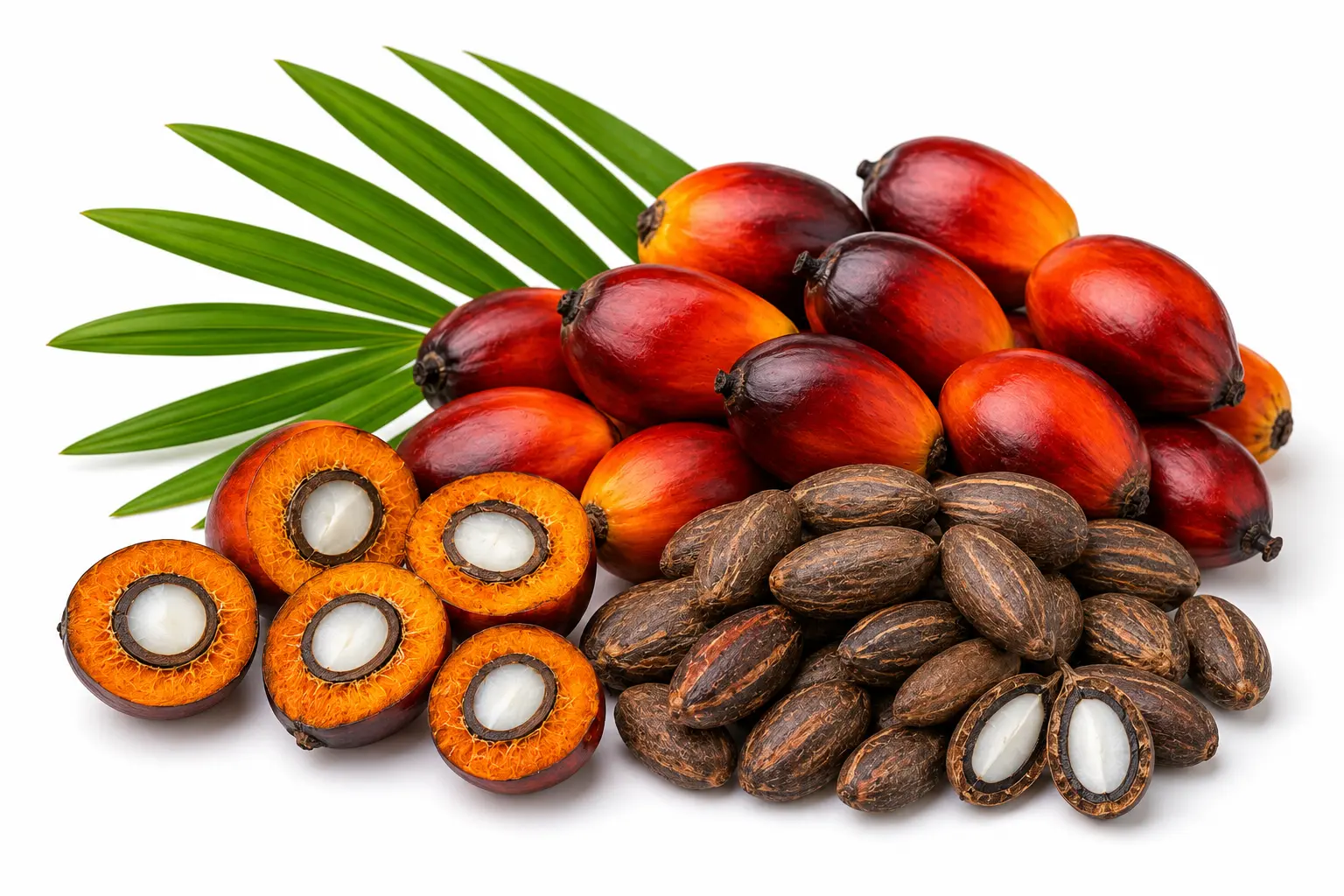 Palm Kernel Solvent Extraction Plant
verified Features of Palm Kernel Extraction Plant
- check_circle Engineered specifically for processing hard palm kernels and high-oil-content pre-pressed cakes.
- check_circle Continuous deep-bed extractor with counter-current hexane spraying for maximum oil dissolution.
- check_circle Multi-stage miscella distillation system designed to handle specific CPKO properties efficiently.
- check_circle Advanced condensation and closed-loop solvent recovery to minimize hexane emissions and losses.
- check_circle Integrated Desolventizer Toaster (DT) for safe and thorough meal desolventization.
- check_circle Heavy-duty, wear-resistant construction for continuous operation and long plant lifespan.
- check_circle PLC-based automation for process control, safety interlocks, and reduced manpower requirement.
stars Advantages of Palm Kernel Oil Manufacturing Plant
- check Reduces residual oil in cake to strictly under 1.0%, maximizing oil yield and plant profitability.
- check Accepts multiple feed types: pre-pressed cake (15-18% oil), full-pressed cake (6-7% oil), or direct flakes (43-45% oil).
- check Produces high-protein desolventized palm kernel meal valued in the animal feed industry.
- check Closed-loop hexane recovery system keeps solvent loss below 2.0 liters per tonne of material.
- check Highly automated operation significantly lowers utility consumption and labour costs per tonne.
- check Scalable Palm Kernel Extraction Plant capacity from 50 TPD to 1500 TPD to match your production requirement.
Palm Kernel Solvent Extraction Process
In any Palm Kernel Processing Plant, effective oil recovery begins long before hexane enters the picture. Raw kernels must go through a structured preparation sequence that breaks down cell walls and exposes the oil for efficient solvent contact. Here is how our Palm Kernel Oil Extraction Unit processes palm kernels from raw feed to refined-grade crude oil:
Cleaning
Incoming palm kernels are fed into a rotary drum cleaner or shaker screen to remove fiber, mud, dust, and foreign particles. Oversized uncracked nuts and stones are separated before the material moves forward.
Magnetic Separation
Cleaned kernels pass through permanent or rotary drum magnets to remove iron and magnetic particles that could damage downstream machinery.
Hammer Mill
Kernels are size-reduced using hammer mills fitted with 6 to 8 mm perforated screens. Hardened beaters break the kernels into pieces of approximately 6 mm, which are then sent to the cracker.
Cracking
Four-roll crackers further reduce particle size to 3 to 4 mm. Uniform particle size at this stage directly impacts downstream extraction efficiency.
Flaking
Cracked material passes through flaking rolls in two stages to form thin flakes. Flaking ruptures the oil cells inside the kernel, making the oil fully accessible to hexane in the extractor. Properly flaked material is critical to achieving residual oil below 1.0% in the final cake.
Solvent Extraction
Prepared flakes or pressed cake are fed into the continuous deep-bed extractor through a rotary valve or Plug-O-Seal arrangement. The oil-hexane miscella passes through a two-stage evaporation and stripping system Hexane vapours from the DT, evaporators, and all vents pass through a condenser system where they are liquefied and recovered. The hexane dissolves the oil and forms a mixture called miscella, which is collected, filtered through miscella filters or hydro-cyclones, and sent to the distillation system. The de-oiled wet marc moves to the Desolventizer Toaster.
Desolventization
Wet marc enters the Desolventizer Toaster where live steam and indirect heating remove residual hexane from the meal. The de-solventized palm kernel meal exits at approximately 110°C, is then cooled to 10°C above ambient temperature, and sent for bagging.
Miscella Distillation
The oil-hexane miscella passes through a two-stage evaporation and stripping system. Hexane is evaporated, condensed, and recycled back to the extractor. The final crude palm kernel oil (CPKO) exits with less than 0.1% residual solvent, ready for storage or refining.
Solvent Recovery
Hexane vapours from the DT, evaporators, and all vents pass through a condenser system where they are liquefied and recovered. An absorption-desorption unit captures trace hexane from non-condensable gases, keeping overall solvent loss under 2.0 liters per tonne processed.
Extraction Methods for Palm Kernel Solvent Extraction Plant
Super Techno Engineers configures every Palm Kernel Oil Production Plant based on your raw material availability and existing setup. Three proven methods are available:
looks_one Pre-Press with Solvent Extraction
Palm kernels first go through screw presses that reduce oil content in the cake to 15% to 18%. This pre-pressed cake is then fed to the Palm Kernel Oil Mill Plant extraction section, which brings residual oil down to below 1.0%. This is the most widely used configuration as it balances press capacity with extractor size efficiently.
looks_two Direct Flaking and Extraction
In this method, palm kernels bypass the pre-press entirely. They are cleaned, cracked, heavily flaked, and sent straight to the extractor. This requires a larger extractor vessel to handle the high initial oil content (43-48%) but eliminates the need for mechanical presses, reducing wear-and-tear parts maintenance.
looks_3 Double Full-Press with Solvent Extraction
Kernels are pressed twice mechanically, leaving only 6% to 7% oil in the cake. This double-pressed cake is then fed to the Palm Kernel Solvent Extraction Plant to recover the final few percentages of oil. This method is often chosen by existing oil mills looking to add a solvent plant to maximize final recovery.
Frequently Asked Questions
Find answers to common queries about our Palm Kernel Oil Processing Plant.
Q1. Can this plant process whole palm kernels directly without pressing?
expand_more
Yes. In the direct solvent extraction method, whole palm kernels are cleaned, hammer milled, cracked, and flaked before feeding directly into the extractor. However, the extractor and distillation system need to be sized larger due to the high oil content of 43% to 45% in the feed material.
Q2. What preparation steps are needed before feeding material into the solvent extractor?
expand_more
Feed must be properly sized and conditioned before extraction. Pre-pressed or full-pressed cake needs to be broken and screened. For direct extraction, kernels go through hammer milling, cracking, and two-stage flaking to rupture oil cells. Moisture content should be maintained at 8% to 9% for efficient hexane penetration and oil dissolution.
Q3. How is palm kernel meal processed after extraction?
expand_more
De-oiled wet marc from the extractor enters the Desolventizer Toaster where live steam removes residual hexane. The meal leaving the DT at around 110°C is then cooled, passed through a screener to break any lumps, and packed into 50 to 75 kg bags. Final meal contains less than 1.0% residual oil and 16% to 18% protein, making it suitable for dairy and poultry feed.
Q4. How efficient is the solvent recovery system?
expand_more
Our closed-loop system uses multi-stage condensation combined with an absorption-desorption recuperation unit to capture hexane from all vent streams. Hexane loss is maintained below 2.0 liters per tonne of material processed, reducing operating costs and ensuring compliance with safety and environmental norms.
Q5. Is crude palm kernel oil the same as regular palm oil?
expand_more
No. Palm oil is extracted from the outer fruit pulp, while crude palm kernel oil (CPKO) comes from the hard inner seed. CPKO is high in lauric acid, similar to coconut oil, and is widely used in soap making, oleochemicals, and edible oil refining. Both oils have different chemical profiles, market prices, and end-use applications.
Q6. Can you integrate this Palm Kernel Solvent Extraction Plant with our existing facility?
expand_more
Yes. Our plant can be integrated with an existing palm oil mill or screw press facility. It accepts palm kernel cake directly from your existing presses. Our engineering team assesses your current setup and designs the feed conveying system, plant layout, and utility connections accordingly.
Enquiry Now
(Please fill the form below)