
Pressure Leaf Filter (PLF)
Precoat-Based Pressure Filtration for Bleached, Winterized, Deodorized & Fractionated Oils.
Filtration Equipment
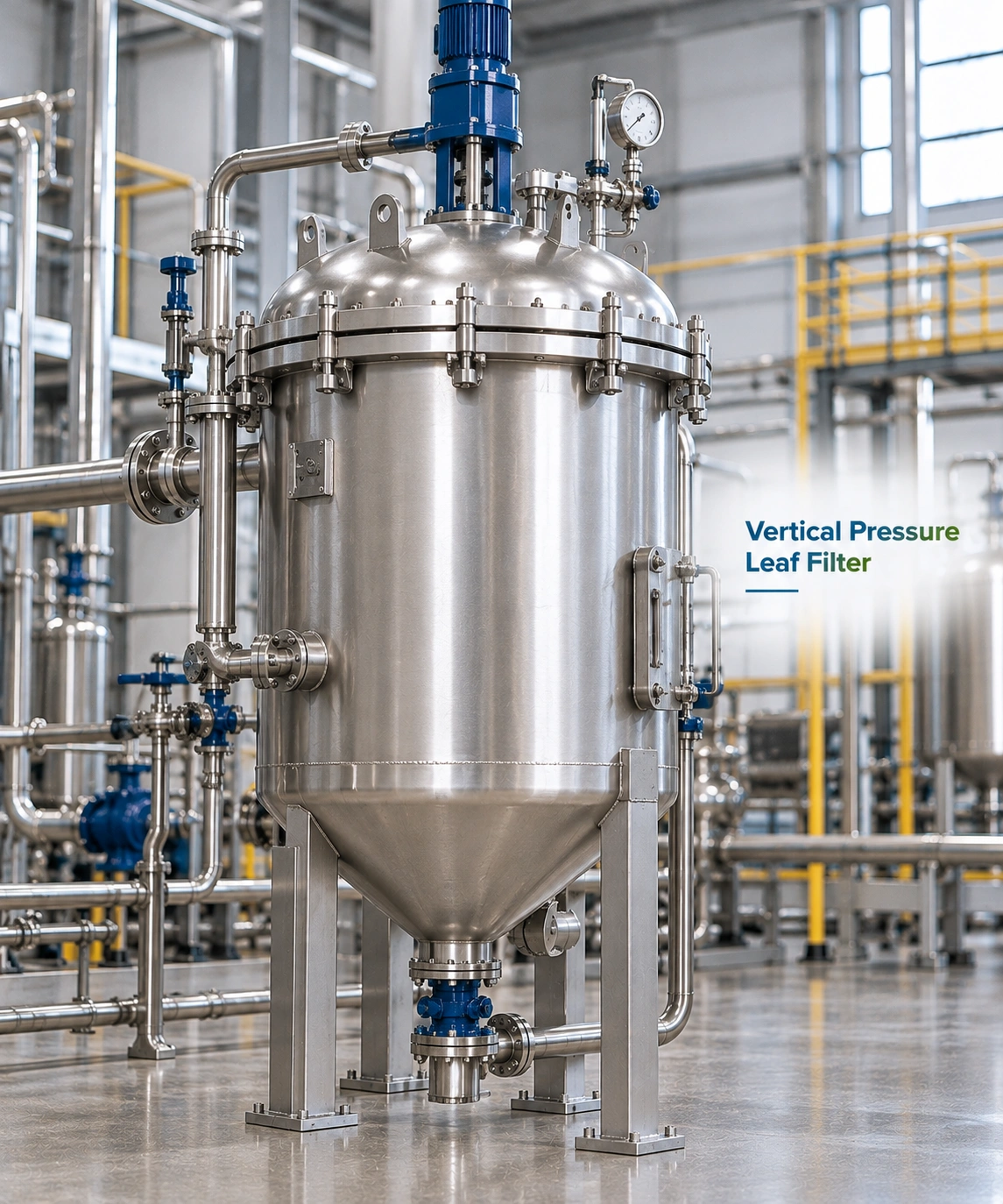
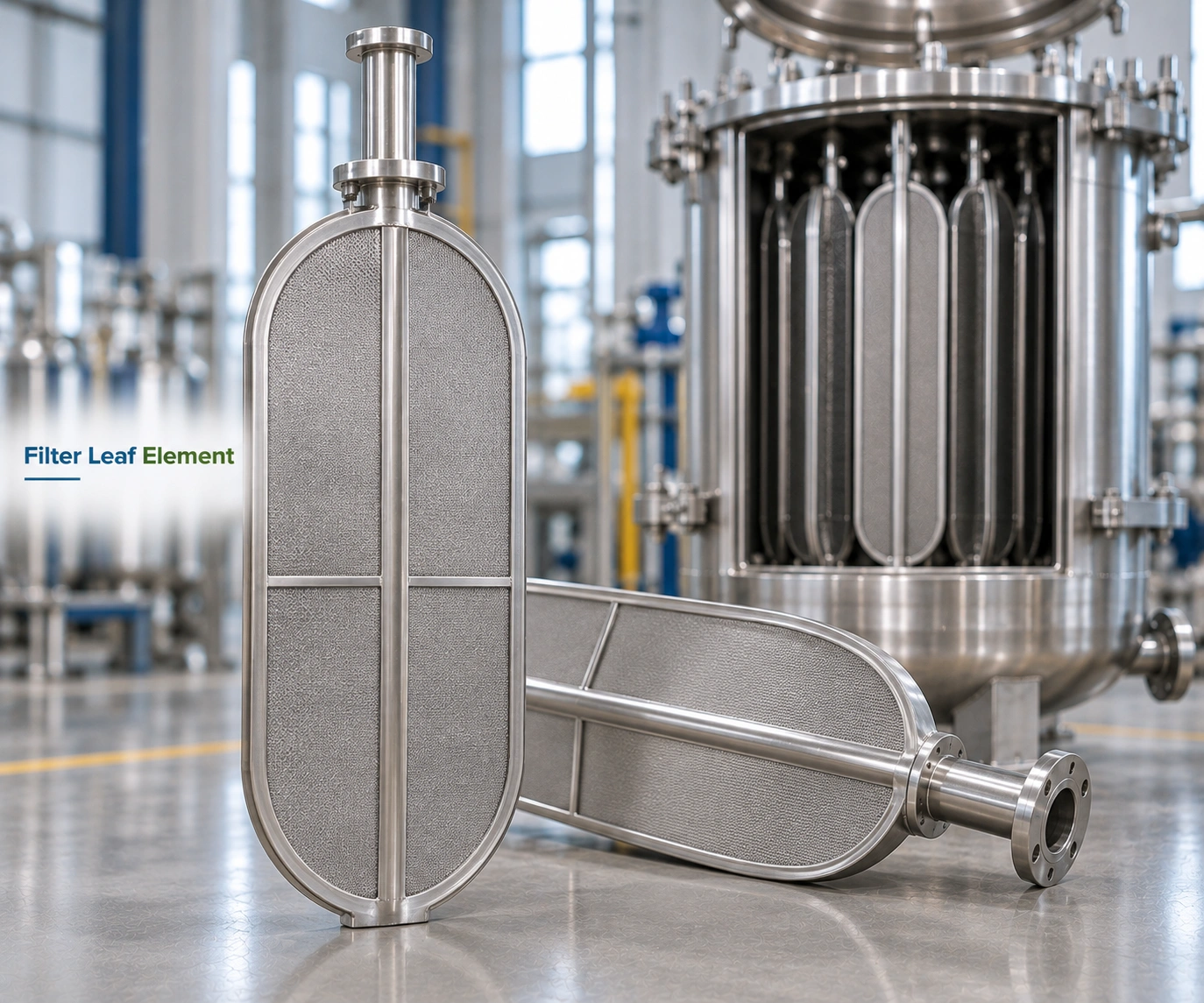
Super Techno Engineers Private Limited's Pressure Leaf Filter (PLF) is a vertical or horizontal MS/SS vessel housing a series of filter leaves mounted on a common manifold pipe. Unfiltered liquid is pumped into the vessel, where a thin precoat layer of filter aid typically bleaching earth, Hyflo, Supercel, or similar media builds up on both sides of each leaf. As pressure develops, the precoat layer traps impurities while clear, filtered liquid passes through the leaf's tubular channel and discharges from the manifold, giving a large effective filtration area within a comparatively compact vessel footprint.
Because each leaf filters on both sides simultaneously, a Pressure Leaf Filter delivers significantly more filtration area per unit of vessel volume than single-sided filtration systems, making it a preferred choice across edible oil bleaching, winterization, deodorization, hydrogenation, and fractionation lines.
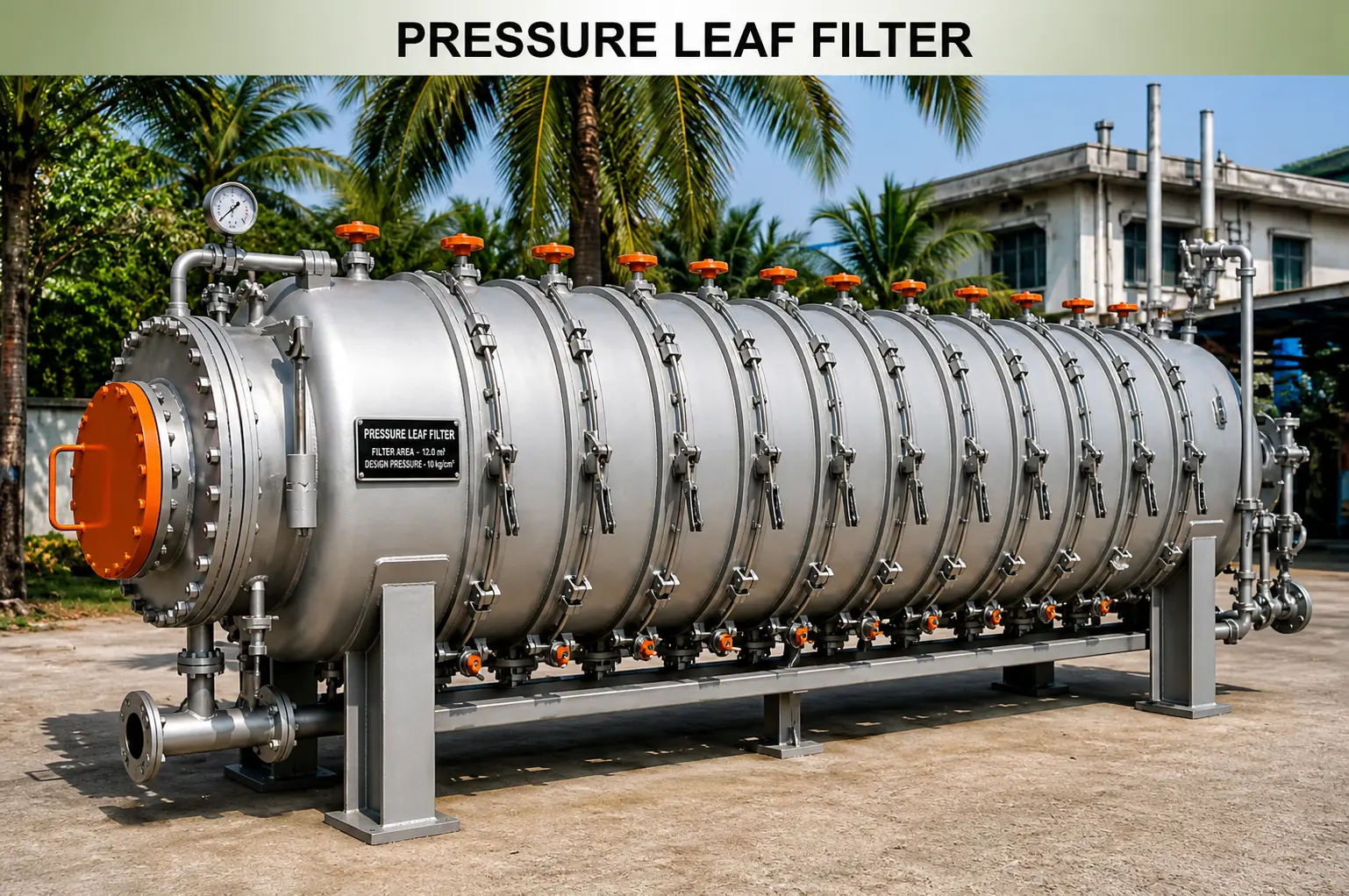
Precoat, Pressure Build-Up & Cake Discharge
Every Pressure Leaf Filter works on the principle of precoating and pressure. A small dose of filter aid (0.5–1% of the batch) is mixed into the liquid to be filtered before pumping begins. As this liquid enters the vessel, filter aid particles form a precoat layer on both sides of each leaf. Early output runs slightly cloudy until this layer is fully established, after which filtrate runs clear.
As filtration continues, impurities build up on the precoat layer as a wet cake. Once the leaves are substantially choked and vessel pressure rises to roughly 3–4 kg/cm², the feed pump is stopped. Steam or air pressure is then applied from the top of the vessel without dropping the internal filter pressure to squeeze residual liquid out of the cake and reduce retention loss, while any unfiltered liquid held in the conical bottom section is recovered.
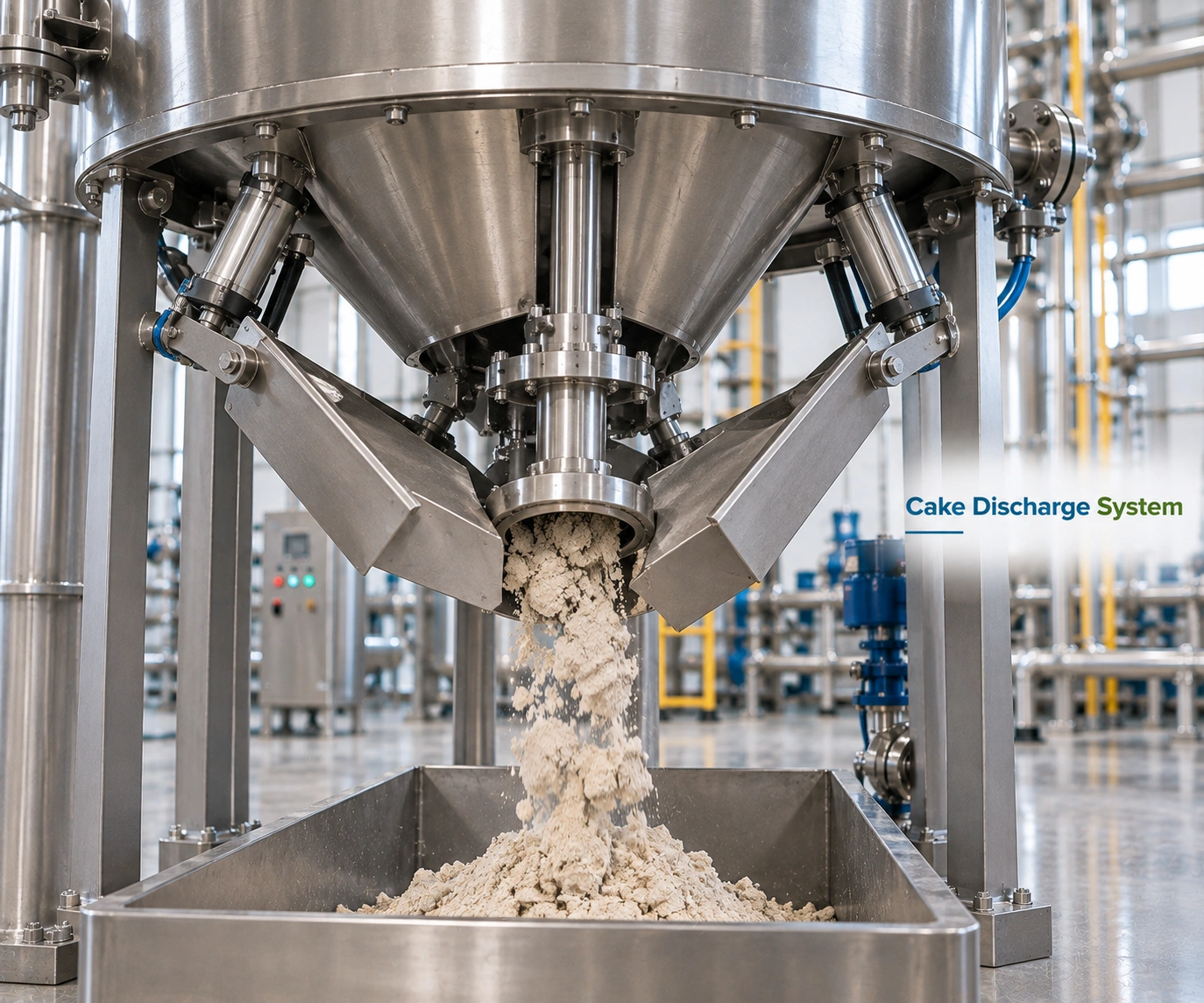
Once cake drying is complete (typically 30–45 minutes), a mechanical or pneumatic leaf vibrator shakes the accumulated cake loose from the leaves for discharge through the bottom outlet a process that takes only 5-10 minutes. Where wet cake discharge is preferred instead, water spray nozzles are provided to wash the cake off the leaves.
-
check_circlePrecoat filtration on both sides of every leaf for maximum area per vessel volume.
-
check_circleSteam/air-assisted cake drying to minimize liquid retention and product loss.
-
check_circleMechanical or pneumatic vibrating shaft for fast, clean cake discharge.
Precision Leaf Elements for Consistent Filtration Quality
Each filter leaf in our Pressure Leaf Filter is built from 5-ply stainless steel wire mesh — two outer filtering layers in a Hollander weave for fine, consistent filtration, and three inner support layers that give the leaf structural strength under pressure. All five layers are held together in a tubular frame and sealed leak-proof through machine riveting, since filtration quality and leaf service life depend directly on outer mesh quality and riveting precision.
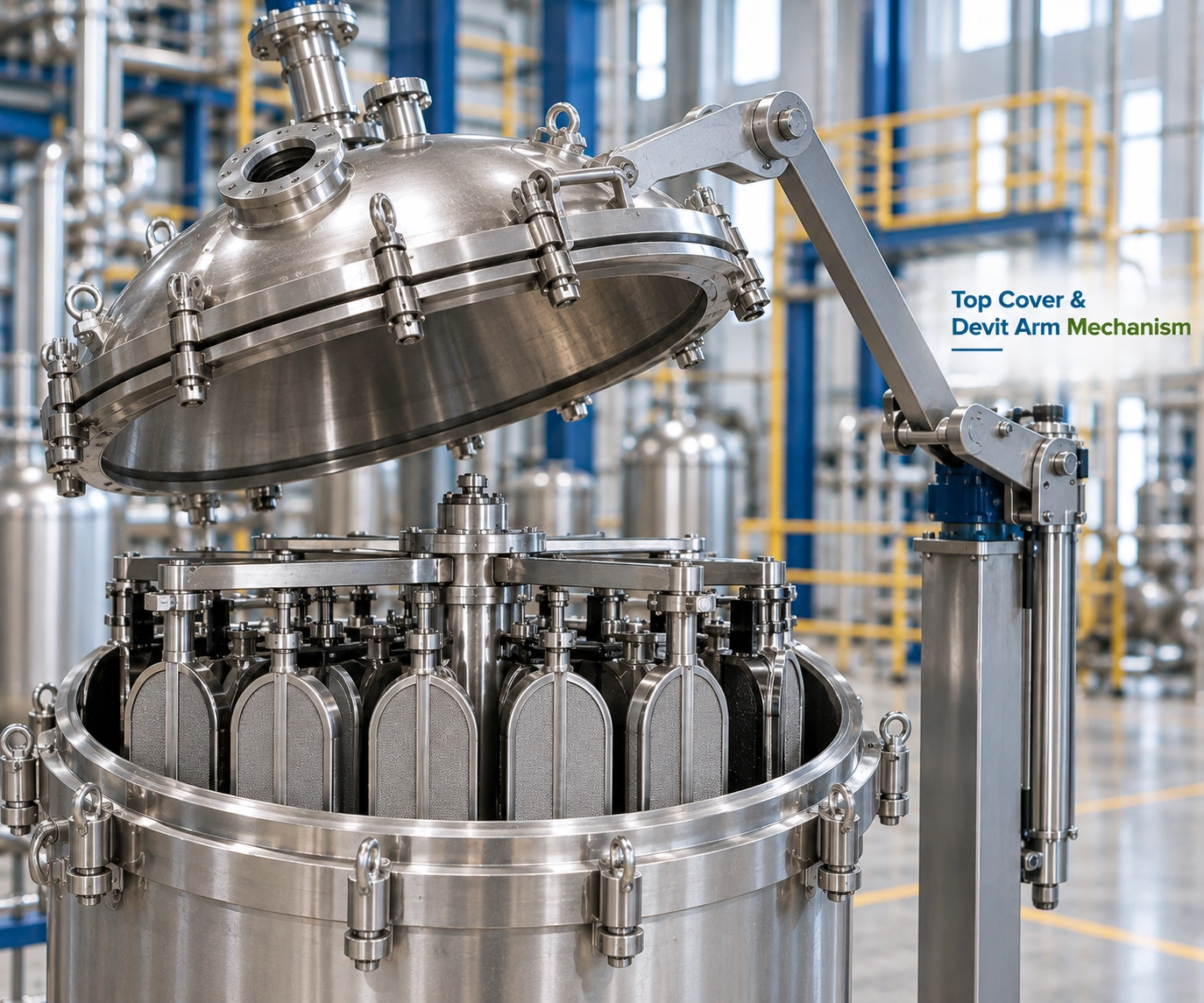
The vessel itself is available in mild steel, stainless steel, or PP construction, with leaves offered in SS 304, SS 316, or SS 316L depending on the product being filtered. A jacketed vessel option is available for hot filtration applications, and the top cover is fitted with a devit arm mechanism and quick-release "I" bolts, supported by a mechanical jack, allowing the lid to be raised easily for leaf cleaning or replacement.
"Filtration performance is only as good as the leaf itself — precision-woven mesh and leak-proof riveting are what keep a Pressure Leaf Filter delivering clean, consistent output batch after batch."
OPERATIONAL CAPABILITIES
Proven Filtration Performance
Standard Pressure Leaf Filter models span from compact 5 m² units to large 90 m² vessels.
Multiple leaf configurations available to match cake volume and throughput requirements.
Fast mechanical/pneumatic vibration discharge after steam or air-assisted cake drying.
TECHNICAL SPECIFICATIONS
Engineered Features
Each leaf filters from both faces, maximizing filtration area within a compact vessel.
Fast, complete cake discharge without manual scraping.
Supports hot filtration for bleaching, winterization, and deodorization lines.
Devit arm mechanism and mechanical jack allow easy access for leaf cleaning or replacement.
Minimizes liquid retention in the cake, reducing product loss per batch.
Pressure gauge, safety valve, and vent/steam/air charging ports fitted as standard.
DATA SHEET
Standard Specifications
Comprehensive technical parameters for our Pressure Leaf Filtration System. Custom configurations are available upon request.
| Parameter | Description / Value |
|---|---|
| Filter Type | Vertical or Horizontal Pressure Leaf Filter |
| Filtration Area Range | 5 m² to 90 m² (across standard model range) |
| Number of Leaves | 5 to 19 (model dependent) |
| Max Cake Volume | 0.125 m³ to 2.25 m³ (model dependent) |
| Leaf Construction | 5-Ply Stainless Steel Wire Mesh (Hollander weave outer layers) |
| Material of Construction | Stainless Steel / Carbon Steel / PP; Leaves in SS 304, 316, or 316L |
| Operating Pressure | Up to 3–4 Kg/cm² during cake build-up |
| Cake Drying Time | 30–45 minutes |
| Cake Discharge Time | 5–10 minutes |
| Sealing Options | Viton, EPDM, Nitrile, or Silicon 'O' Rings |
IMPLEMENTATION PROTOCOL
How We Work
Our engineering teams size every Pressure Leaf Filter to match your specific liquid, filter aid dosage, and batch volume, ensuring efficient precoat formation and fast cake cycles.
Feed & Filtration Analysis
We evaluate the liquid to be filtered, required filter aid type and dosage, and target throughput to determine filtration area and leaf count.
Vessel & Leaf Design
Our engineers select vertical or horizontal configuration, leaf mesh specification, and cake-drying method (steam or air) to match your process and product quality requirements.
Fabrication & Pressure Testing
The vessel, leaves, and manifold are fabricated, leak-tested, and assembled before shipment and integration into your bleaching, winterization, deodorization, or fractionation line.
Case Studies & Endorsements
Industry Testimonials
"Our earlier filtration setup left the oil hazy and cake discharge was slow and messy. Since installing this Pressure Leaf Filter, filtrate clarity has improved noticeably and cake cycles now finish in under 10 minutes."
Equipment Installation Video
Equipment Installation — Live Plant Commissioning
Support & Information
Frequently Asked Questions
A Vertical Pressure Leaf Filter mounts leaves vertically on a common manifold within a vertical vessel, suiting most edible oil bleaching and dewaxing applications, while a Horizontal Pressure Leaf Filter is typically used where a larger cake volume or different vessel footprint is required. Both work on the same precoat-and-pressure filtration principle.
It is used across bleached, winterized, deodorized, hydrogenated, and fractionated oil processing, as well as dewaxing and catalyst filtration in edible oil refineries.
Cake drying using steam or air typically takes 30–45 minutes, after which mechanical or pneumatic vibration discharges the dried cake from the bottom outlet in about 5–10 minutes.
Common filter aids include bleaching earth, Hyflo, Supercel, or similar media, dosed at approximately 0.5–1% of the batch to form the initial precoat layer on the leaves.
Vessels are available in stainless steel, carbon steel, or PP, with filter leaves offered in SS 304, SS 316, or SS 316L depending on the product being filtered and its corrosivity.
Our standard Pressure Leaf Filtration System range spans from 5 m² compact units up to 90 m² large-capacity vessels, with custom sizing available for specific throughput requirements.