Premium Heavy Machinery
Delivering advanced, fully automated solutions for global industrial processing.
A Vision Beyond
Technology.
With over three decades of engineering experience, we provide a comprehensive ecosystem for heavy machinery manufacturing and industrial plant setups.
Evolution & Growth
From our early days producing rudimentary mechanical separators, we have continuously scaled our operations to deliver advanced, fully automated solutions for metallurgy, energy generation, and raw material processing sectors worldwide.
Unmatched Capabilities
We specialize in designing high-tolerance components, automated conveyor systems, industrial-grade thermal processors, and robust extraction plants. Certified with international safety standards (ISO 9001:2015 & ISO 45001:2018), anchored by a 50,000 sq. meter facility and 300+ experts.
Harnessing the power of advanced 3D CAD modeling and AI-driven simulations, we architect precision plant layouts and pressure-tested vessels, ensuring unparalleled operational longevity, safety, and efficiency.
Flagship Equipment
Solvent Extractor Plant
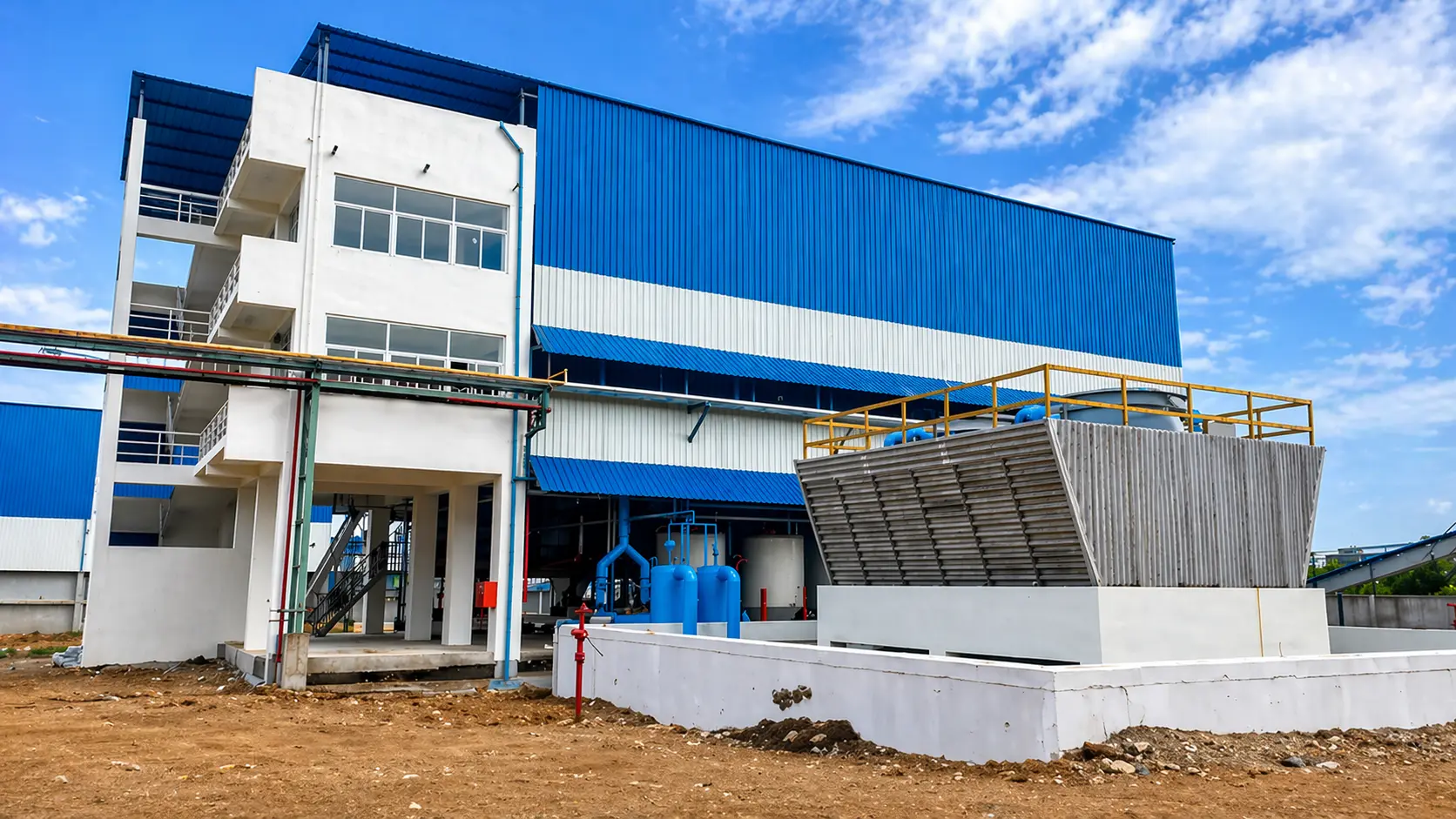
Advanced Engineering & Extraction Technology
Our Solvent Extraction Plants are at the forefront of industrial innovation, utilizing high-performance extractors that ensure maximum oil recovery with minimal solvent loss. We integrate state-of-the-art distillation systems and energy recovery modules that reduce steam consumption significantly.
The core of our technology lies in the specialized PLC/SCADA automation panels that allow for real-time monitoring of extraction rates, temperature gradients, and solvent flow.
-
check_circleHigh-efficiency multi-stage distillation for pure output.
-
check_circleZero-emission solvent recovery systems with carbon adsorption.
-
check_circleFully automated PLC-controlled operational workflow.
Robust Build Quality & Structural Integrity
Every component is fabricated using premium-grade MS (Mild Steel) or high-grade SS (Stainless Steel) based on the specific corrosive requirements of the material processed. We employ advanced robotic welding and ultrasonic testing to ensure every joint can withstand high-pressure environments.
Our structural designs incorporate vibration-damping mounts and thick industrial-grade thermal insulation, ensuring a quieter workspace and minimal energy dissipation. Designed for 24/7 continuous operation.
Our Track Record
Proven Industrial Success
Architecting the industrial future through over a thousand commissioned landmarks.
Trusted corporate partners globally who rely on our precision engineering.
Uncompromising ISO-certified quality standards that ensure mission success.
Technical Specifications
Engineered Features
Designed for high-speed operation and superior output quality with minimal error margins, ensuring absolute consistency in raw material processing.
Centralized touch panel interface with digital settings for seamless operation, real-time monitoring, and instant diagnostic feedback.
Built with energy-efficient motors and advanced heat recovery circuits to significantly reduce operational utility costs without sacrificing power.
Redundant safety sensors and emergency shut-off valves installed to protect operators and prevent catastrophic equipment failure.
Strategically accessible access panels and self-lubricating bearings require minimal downtime, reducing long-term operational expenses.
In-built IoT connectivity allows remote tracking of production metrics to optimize performance and schedule preventative maintenance.
Implementation Protocol
How We Work
Our engineering teams follow strict, ISO-compliant methodologies to build sustainable operational efficiency, from consultation to final commissioning.
Analyse & Audit
Comprehensive site analysis and metallurgical audits to identify your exact operational needs and technical specifications.
Architecture & Design
Utilizing 3D CAD to draft precise plant layouts, focusing on workflow optimization, structural integrity, and safety compliance.
Fabrication & Commissioning
In-house manufacturing using premium materials, followed by on-site installation, testing, and full operator training.
Setting the Benchmark in Industrial Engineering
We engineer competitive advantages. By combining decades of metallurgical expertise with cutting-edge tech integration, we deliver robust machinery solutions that outlast and outperform global standards.
Unmatched Expertise
Over two decades of proven leadership and metallurgical innovation globally.
Advanced Tech
Pioneering Industry 4.0 integration for fully automated plant workflows.
Safety First Protocol
Strict zero-tolerance policy for occupational hazards and safety compromises.
Sustainable Builds
Implementing closed-loop systems and eco-friendly recovery processes.
Case Studies & Endorsements
Industry Testimonials
"It is our pleasure to state that Heavy Machinery Co. has completed our plant commissioning before the stipulated period. From the initial engineering designs to the final supply and testing of the heavy-duty extraction plant, their team of engineers performed impeccably. The operational stability of the equipment is outstanding."
Mr. John Doe
Chairman & CEO, Global Manufacturing Ltd.
Featured Video Case Study
Mr. Osman Ansari
Managing Director, Core Industrial Mills
Support & Information
Frequently Asked Questions
We offer a standard 2-year comprehensive corporate warranty on all custom machinery and plants. You can also extend this up to 5 years through our SLA (Service Level Agreement) packages.
Yes, our technical team will visit your facility globally for complete installation, commissioning, and provide comprehensive hands-on training to your plant operators.
We have a robust logistics network and handle end-to-end international freight, CIF shipping, and ensure secure delivery to any global port or inland facility.
We maintain a comprehensive global inventory of critical spare parts. Most replacement parts can be expedited and air-freighted to your site within 48 to 72 hours to minimize downtime.
Absolutely. All our engineering processes, welding, and final assemblies strictly adhere to ISO 9001:2015 (Quality Management) and ISO 45001:2018 (Occupational Health & Safety) certifications.
Yes. Our engineering team can analyze your specific raw material requirements and custom-build an extraction plant optimized for your exact capacity and processing needs.
Our machines are designed for low maintenance. We generally recommend a routine quarterly inspection and standard lubrication of moving parts to ensure decades of operational life.
Standard machinery is typically manufactured and dispatched within 4-6 weeks. Custom builds and large-scale plant setups may take 8-10 weeks depending on complexity.
Yes, our advanced PLC/SCADA systems and modular piping designs ensure seamless integration with your existing industrial infrastructure and control rooms.
We partner with several leading industrial financial institutions globally to provide flexible financing and equipment leasing options to eligible corporate clients.