
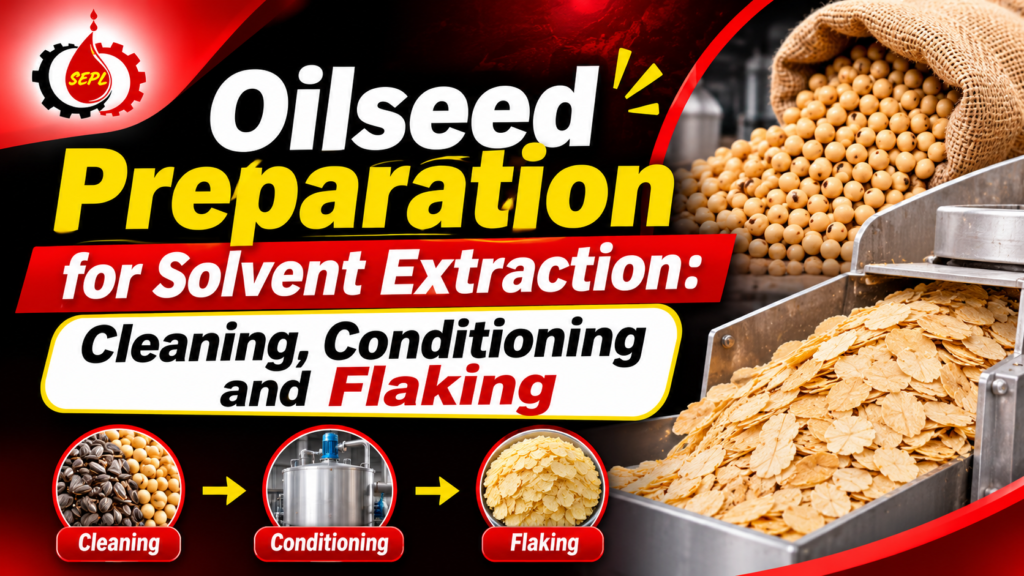
Most oil losses in a plant do not start in the extractor. They start much earlier, at the seed receiving yard and the preparation section. Good oilseed preparation for solvent extraction decides how easily hexane reaches the oil inside the seed cell. If this stage is weak, even the best machinery will leave extra oil in the meal.
In this guide, we explain oilseed preparation for solvent extraction in simple words, covering the three core steps: cleaning, conditioning and flaking. You will also find typical operating ranges, comparison tables, common mistakes and answers to frequently asked questions.
Why Oilseed Preparation for Solvent Extraction Matters
Solvent extraction works by letting hexane pass through a bed of prepared seed material and wash out the oil. For that to happen well, the material must have three qualities:
- Clean, so that foreign matter does not damage equipment or contaminate the meal.
- Plastic and warm, so that it forms strong flakes and does not break into fines.
- Thin, so that the solvent has a short path to reach the oil cells.
When these conditions are met, you get higher oil recovery, a stable bed in the extractor, lower residual oil in the meal and better steam and solvent economy. Strong oilseed preparation for solvent extraction is the cheapest way to raise yield, because it costs far less than fixing problems later in the process. You can read more about the full process in our guide to how a solvent extraction plant improves oil recovery.
The Oilseed Preparation for Solvent Extraction Flow at a Glance
A typical preparation line for soybean and similar seeds follows this order:
- Seed receiving and storage
- Pre-cleaning and cleaning
- Cracking and dehulling (for seeds that need it)
- Conditioning
- Flaking
- Expanding or pelletizing (for low oil or difficult seeds)
- Transfer to the extractor
Every plant is different, but the logic stays the same. Remove what should not be there, make the seed soft and warm, then make it thin.
Step 1: Cleaning in Oilseed Preparation for Solvent Extraction
What cleaning removes
Raw seed arrives with stones, sand, dust, straw, metal pieces, broken seed and weed seeds. Each one causes trouble:
- Stones and metal damage cracking rolls and flaking rolls.
- Sand and dust wear down conveyors and add ash to the meal.
- Straw and husk pieces can block chutes and lower the meal protein.
- Excess moisture or green matter can promote heating and spoilage in storage.
Common cleaning equipment
- Vibrating screens or rotary sieves remove oversize and undersize material.
- Destoner (gravity separator) removes stones and heavy particles.
- Magnetic separator captures iron pieces before the rolls.
- Aspiration system lifts away light dust and husk.
A well-planned material handling system with proper conveying equipment keeps the seed moving without breakage or dust build-up.
Practical tip
Aim for foreign matter below about 1 to 2 percent in the seed going to the next step. Check the screens regularly. A torn screen or a clogged aspiration duct is one of the most common reasons impurities slip through, and it is often found only after a roll gets damaged.
Step 2: Cracking and Dehulling (Where Needed)
Some seeds need size reduction or hull removal before flaking.
- Soybean is usually cracked into about 4 to 6 pieces. This makes flaking smoother and more uniform.
- Sunflower and cottonseed often need dehulling, because hulls hold little oil and reduce meal quality.
- Rapeseed and canola are commonly flaked directly, often after conditioning.
Cracking should be done at the right seed moisture, normally around 9.5 to 10.5 percent for soybean. If the seed is too wet, it smears. If it is too dry, you create too many fines.
Step 3: Conditioning the Seed Before Flaking
What conditioning does
Conditioning is gentle heating and moisture adjustment. It makes the seed soft and plastic, so that the flaking rolls press it into strong, thin flakes instead of crumbling it. It also helps break down cell walls so that oil moves out more easily during extraction. Of all the stages in oilseed preparation for solvent extraction, conditioning is the one most often done carelessly, and it has the biggest effect on flake strength.
Typical conditioning targets
For soybean, common practice is:
- Temperature: about 60 to 70°C
- Moisture at flaking: about 10 to 11 percent
- Time: around 20 to 30 minutes in a conditioner with indirect steam heating
Different seeds need different settings. Always follow your plant designer’s recommendation and confirm with trials on your own seed lot.
Common conditioning mistakes
- Overheating can darken the meal and reduce protein quality.
- Too little moisture gives brittle flakes and more fines.
- Too much moisture gives sticky flakes that pack tightly and slow solvent flow.
- Uneven heating inside the conditioner leads to mixed flake quality.
Step 4: Flaking the Seed
Why thin flakes matter
The flaking roll presses conditioned seed into thin flakes. The thinner the flake, the shorter the distance hexane must travel to reach the oil. But there is a limit. If flakes are too thin, they break during transfer and create fines that hurt percolation.
Typical flake thickness
| Oilseed | Preparation before flaking | Typical flake thickness |
| Soybean | Clean, crack, condition | 0.25 to 0.30 mm |
| Rapeseed / Canola | Clean, condition (often with cooking) | 0.25 to 0.30 mm |
| Sunflower | Clean, dehull, condition | 0.30 to 0.35 mm |
| Cottonseed | Clean, delint, dehull, condition | 0.30 to 0.40 mm |
| Rice bran | Pelletizing or expanding instead of flaking | Pellets, not flakes |
These are general working ranges. Actual values depend on seed variety, moisture, oil content and plant design.
Roll maintenance
Keep the roll surface smooth, the gap even and the scraper in good condition. Measure flake thickness at least once per shift with a simple micrometer. Small changes in gap or wear can quietly raise your residual oil.
Oilseed Preparation for Solvent Extraction for Low Oil and Difficult Seeds
Not every raw material suits flaking. Rice bran, for example, is fine and powdery. It is usually pelletized or expanded so that hexane can percolate through it. You can see this in our overview of the rice bran solvent extraction process.
High oil seeds like sunflower and rapeseed are often pre-pressed first, then the cake goes to extraction. If you are comparing methods, see solvent extraction vs oil expeller.
How Good Preparation Improves Results
Here is what you can usually expect when oilseed preparation for solvent extraction is done well:
- Lower residual oil in meal. Well-prepared soybean flakes can bring residual oil down to roughly 0.5 to 1 percent in the final meal, depending on plant design.
- Stable extractor bed. Fewer fines mean better solvent flow and less choking.
- Better meal quality. Gentle conditioning protects protein, which supports a better de-oiled cake production process.
- Lower energy use. Uniform flakes reduce the load on the desolventizer toaster and the hexane recovery system.
For more ways to raise yield across the plant, read our guide on how to improve oil yield in solvent extraction.
Common Problems in Oilseed Preparation for Solvent Extraction
| Problem | Likely cause | What to check |
| High fines in flakes | Seed too dry or flakes too thin | Conditioning moisture, roll gap |
| Sticky, lumpy flakes | Moisture too high | Steam and moisture addition |
| High residual oil in meal | Thick flakes or uneven conditioning | Flake thickness, conditioner temperature |
| Frequent roll damage | Stones or metal in seed | Destoner and magnet performance |
| Extractor bed choking | Excess fines or wet flakes | Preparation quality before extractor |
Safety and Quality Checks
Preparation is not only about yield. Dust control and good housekeeping reduce fire and explosion risk. Make sure dust collection, grounding and magnetic separation are working. Our article on solvent extraction plant safety covers the wider safety picture.
A simple daily checklist helps:
- Check screen condition and impurity level
- Record seed moisture before cracking
- Record conditioner temperature and flake moisture
- Measure flake thickness every shift
- Sample meal residual oil from the laboratory regularly
Planning a New Plant?
Preparation equipment must match your capacity, seed type and oil content. If you are still planning, our guide to solvent extraction plant capacity selection can help, and you can estimate expected output with the solvent extraction plant output calculator. For seed-specific design, see our soybean solvent extraction plant page. Getting oilseed preparation for solvent extraction right at the design stage saves you from costly changes after commissioning.
Frequently Asked Questions
Q1: Why is oilseed preparation for solvent extraction important?
Oilseed preparation for solvent extraction makes the seed ready for hexane to reach the oil easily. Good cleaning, conditioning and flaking improve oil recovery and protect equipment and meal quality.
Q2: What are the main steps in oilseed preparation for solvent extraction?
The main steps are cleaning, cracking or dehulling where needed, conditioning and flaking. Some seeds like rice bran are pelletized or expanded instead.
Q3: What is the ideal flake thickness for soybean?
Most plants work with about 0.25 to 0.30 mm. Thinner flakes may create fines, and thicker flakes leave more oil behind.
Q4: What happens if seeds are not cleaned properly?
Stones and metal can damage rolls, and dust and sand reduce meal quality. Foreign matter can also cause blockages and raise maintenance costs.
Q5: Why is conditioning done before flaking?
Conditioning softens the seed and makes it plastic. This allows the rolls to form strong, thin flakes without breaking them into fines.
Q6: How often should flake thickness be checked?
At least once per shift, and again whenever you change seed lots or notice a rise in residual oil.
Conclusion
Strong oilseed preparation for solvent extraction is the quiet foundation of a profitable plant. Clean seed protects your machines, correct conditioning keeps flakes strong, and proper flaking opens the path for hexane to take out more oil. Small gains at each step add up to better yield, better meal and lower running cost.
If you want help designing or improving the preparation section of your plant, please contact our team with your seed type and capacity. We will help you get oilseed preparation for solvent extraction working at its best.