
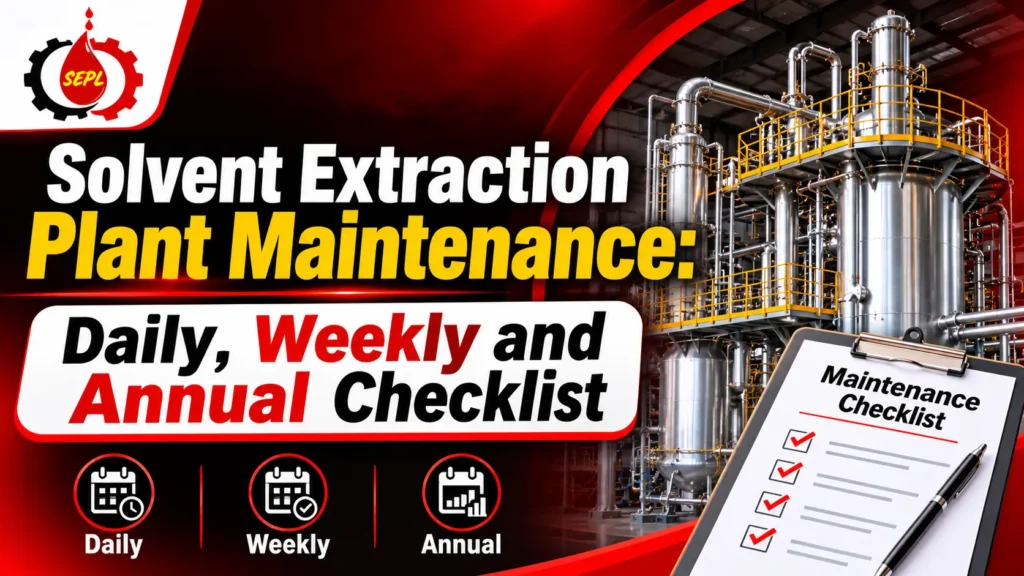
Good solvent extraction plant maintenance decides whether your plant earns steady profit or loses money to breakdowns, solvent loss and poor oil recovery. A plant that runs 300 days a year can still lose weeks to avoidable stoppages if the basics are ignored.
This guide gives you a simple solvent extraction plant maintenance checklist that you can print and hand to your shift team. It is based on common practices followed in Indian oilseed extraction units. Always cross-check it with your equipment manual and your plant’s safety rules.
Why Solvent Extraction Plant Maintenance Matters
A solvent extraction plant handles hexane, steam, high temperatures and moving machinery together. A small leak or a worn part can quickly turn into a safety risk or a costly shutdown.
Regular solvent extraction plant maintenance helps you:
- Reduce hexane loss and residual oil in the meal
- Avoid unplanned stoppages in peak crushing season
- Lower steam and power use (see our guide on an energy efficient solvent extraction plant)
- Keep workers safe and your licences in order
- Improve yield, as explained in how to improve oil yield in solvent extraction
Safety Rules for Every Maintenance Task
Hexane vapor is flammable, so these rules apply to every job in your solvent extraction plant maintenance routine:
- Use a valid work permit for hot work and confined space entry.
- Isolate, drain and purge equipment before opening it.
- Use flameproof tools and earthed equipment in the hazardous zone.
- Check gas detectors and fire protection before any shutdown job.
- Never bypass interlocks, even for a quick fix.
Read more in our detailed article on solvent extraction plant safety.
Daily Solvent Extraction Plant Maintenance Checklist
Daily checks are your first line of defense. They take little time and catch most problems early. Operators should log every reading.
Extraction section
- Check the extractor for abnormal noise, vibration or spillage.
- Inspect the extractor chain tension and look for jerking movement.
- Confirm the bed depth and solvent flow are steady.
- Check miscella concentration and the working of the miscella pump.
Desolventizing and solvent recovery
- Monitor temperature and steam pressure in the desolventizer toaster.
- Check meal moisture and residual hexane at the outlet.
- Look for leaks at flanges, glands and sight glasses.
- Confirm cooling water temperature at the solvent condenser.
- Check the vent line and the mineral oil absorption system in your hexane recovery system.
Material handling and utilities
- Listen to the rotary valve for scraping, and check for air leakage.
- Check conveyors, elevators and the meal cooler for blockages.
- Drain steam traps and check boiler pressure and water level.
- Test gas detectors, emergency stop buttons and fire extinguishers.
Daily record to keep
Note the hexane consumption per ton of seed, steam use, power use, and any alarm or trip. A sudden rise in hexane loss is often the first sign of a hidden leak.
Weekly Solvent Extraction Plant Maintenance Checklist
Weekly jobs go deeper. Plan them during a short stop or a low-load period.
| Area | Weekly task | What to look for |
| Chains and drives | Lubricate chains, bearings and gearboxes | Dry spots, overheating, oil leaks |
| Filters | Clean the miscella filter | Pressure drop, fine particles in miscella |
| Valves and gauges | Check valves and instrumentation | Stuck valves, wrong gauge readings |
| Pumps | Inspect seals and couplings | Seal leakage, misalignment |
| Condensers | Check cooling water flow and fouling | Rising outlet temperature |
| Electrical | Check motor current and panel heat | Loose lugs, uneven load |
| Safety | Test alarms and interlocks | Delayed or missing response |
| Housekeeping | Clean the plant floor and drains | Oil spills, seed dust, solvent traces |
Extra weekly checks
- Measure and record residual oil in de-oiled cake. If it creeps up, review the de-oiled cake production process and your extractor settings.
- Check the reddler chain for wear if your plant uses one.
- Inspect the boiler ash handling and feeding system if you run a biomass boiler. Our page on boiler feeding conveyors can help.
Monthly Checks That Are Often Missed
Many plants skip the monthly layer and then wonder why small faults grow. Add these to your solvent extraction plant maintenance schedule:
- Calibrate temperature and pressure transmitters.
- Check tightness of foundation bolts on heavy rotating equipment.
- Inspect insulation on steam and hot lines.
- Review the spares stock list against recent consumption.
- Check the economizer and heat exchangers for scaling.
Annual Solvent Extraction Plant Maintenance Checklist (Shutdown Overhaul)
The annual shutdown is your chance to open equipment and fix what daily checks cannot reach. Plan it at least a month ahead, order spares early, and assign a clear owner to each job.
1. Extractor overhaul
- Measure chain elongation and replace worn links, sprockets and rollers.
- Inspect the shell, false bottom, wedge wire or screens, and replace damaged parts.
- Check spray nozzles and clean solvent distribution headers.
2. Desolventizer toaster
- Open and inspect trays, sweep arms, shafts and steam jackets.
- Clean scale from heating surfaces.
- Check for thinning of steel plates and cracks in welds.
3. Distillation and recovery
- Clean and test the evaporator flasher and stripping column.
- Descale condensers and check tube leakage with a pressure test.
- Service the vapor scrubber for distillate recovery if installed.
4. Pressure parts and safety
- Get boiler and pressure vessels inspected and certified as required by law.
- Test and recalibrate safety valves and relief devices.
- Replace worn gaskets, glands and flexible hoses.
5. Electrical and automation
- Check motor insulation resistance and bearing condition.
- Test PLC logic, sensors and trip settings. Our article on automation in a solvent extraction plant explains what to verify.
- Inspect earthing pits and lightning protection.
6. Restart checks
- Do a leak test with air or nitrogen before introducing hexane.
- Run empty with no solvent to confirm movement and alignment.
- Restart in stages and watch temperature, pressure and current closely.
Common Mistakes That Increase Breakdowns
From what we see in plants across India, these errors repeat often:
- Running equipment until it fails instead of replacing parts on schedule
- Using cheap, non-standard spares that wear out in weeks
- Skipping log books, so trends are never noticed
- Ignoring small hexane smells because “it is always like that”
- Rushed restarts after shutdown without a proper leak test
Many of these start at the installation stage. See oil plant installation mistakes to avoid carrying old problems into your maintenance routine.
How to Build a Solvent Extraction Plant Maintenance Plan
- Make a master equipment list. Give every machine a tag number.
- Set frequencies. Use the daily, weekly, monthly and annual lists above as a base.
- Assign owners. One person should be responsible for each section.
- Keep critical spares ready. Stock chains, seals, bearings, gaskets and valves. Our page on solvent extraction plant spares and equipment lists common items.
- Track results. Record downtime, hexane loss and residual oil each month, then adjust the plan.
- Train operators. A trained operator spots trouble before it becomes a shutdown.
If your plant is new or you are planning an upgrade, the right capacity selection also reduces overload and wear.
When to Call an Expert
Some jobs should not be done in-house, such as structural repairs on the desolventizer, major chain replacement, or redesign of the vapor recovery line. If you are unsure, take help from a manufacturer with field experience. You can learn how we support plants through our services page, or contact us to discuss your plant’s condition.
Frequently Asked Questions
Q1: How often should solvent extraction plant maintenance be done?
Daily checks and weekly jobs should never be skipped. Most plants also do one major shutdown every year, usually in the off-season. Short stops of a few hours may be needed monthly for cleaning and inspection, depending on the seed type and running load.
Q2: What is the biggest cause of hexane loss?
Leaks at flanges and glands, poor condensation, and high meal outlet temperature are common causes. Daily leak checks and a well-maintained hexane recovery system reduce this loss.
Q3: Can operators do the daily maintenance themselves?
Yes. Daily checks are mostly visual and simple. Anything involving opening equipment, hot work or electrical repair should be done by trained technicians under a permit.
Q4: Which spares should I always keep in stock?
Keep extractor chain links, bearings, mechanical seals, gaskets, rotary valve parts, pump spares, instruments and fuses. Fast-moving items depend on your seed and capacity.
Q5: Does solvent extraction plant maintenance affect oil yield?
Yes. Worn extractor parts, blocked nozzles and poor temperature control raise residual oil in the meal. Good maintenance directly protects your yield and your profit.
Final Thoughts
Strong solvent extraction plant maintenance is not about doing more work. It is about doing the right checks at the right time and writing them down. Start with the daily list, build discipline, and use the annual shutdown to fix deeper issues. Over time, you will see lower hexane loss, fewer stoppages and a safer plant.
Maintenance practices vary by plant design and local regulations. Always follow your equipment manufacturer’s manual and statutory safety requirements.