
If you are planning a new oil processing unit, the first question is always the same: how much does a solvent extraction plant cost in India? Search online and you will find prices from ₹8 lakh to ₹70 crore. That gap is not a mistake. It comes from comparing very different things: a small herbal extractor and a 500 TPD oilseed plant, machinery-only quotes and full project budgets, ex-works prices and installed prices.
This guide breaks down the solvent extraction plant cost in India the way a real project is budgeted. You will see indicative prices by capacity, what each part of the budget covers, the hidden costs most buyers miss, and how to get a quote you can actually compare. The figures are based on what the team at Super Techno Engineers Pvt. Ltd., a solvent extraction plant manufacturer from Dhuri, Punjab, sees across Indian projects. Every plant is different, so use them for planning and confirm with a site-specific quotation.
Quick answer: When it comes to solvent extraction plant cost in India, the machinery for a continuous 100 TPD solvent extraction plant typically costs ₹3 to 5 crore, and a 500 TPD plant around ₹11 to 17 crore. Once you add civil work, boiler, power, fire safety, approvals and working capital, the total project cost is usually 2.5 to 4 times the machinery price, excluding land.
Solvent Extraction Plant Cost in India by Capacity (Indicative, 2026)
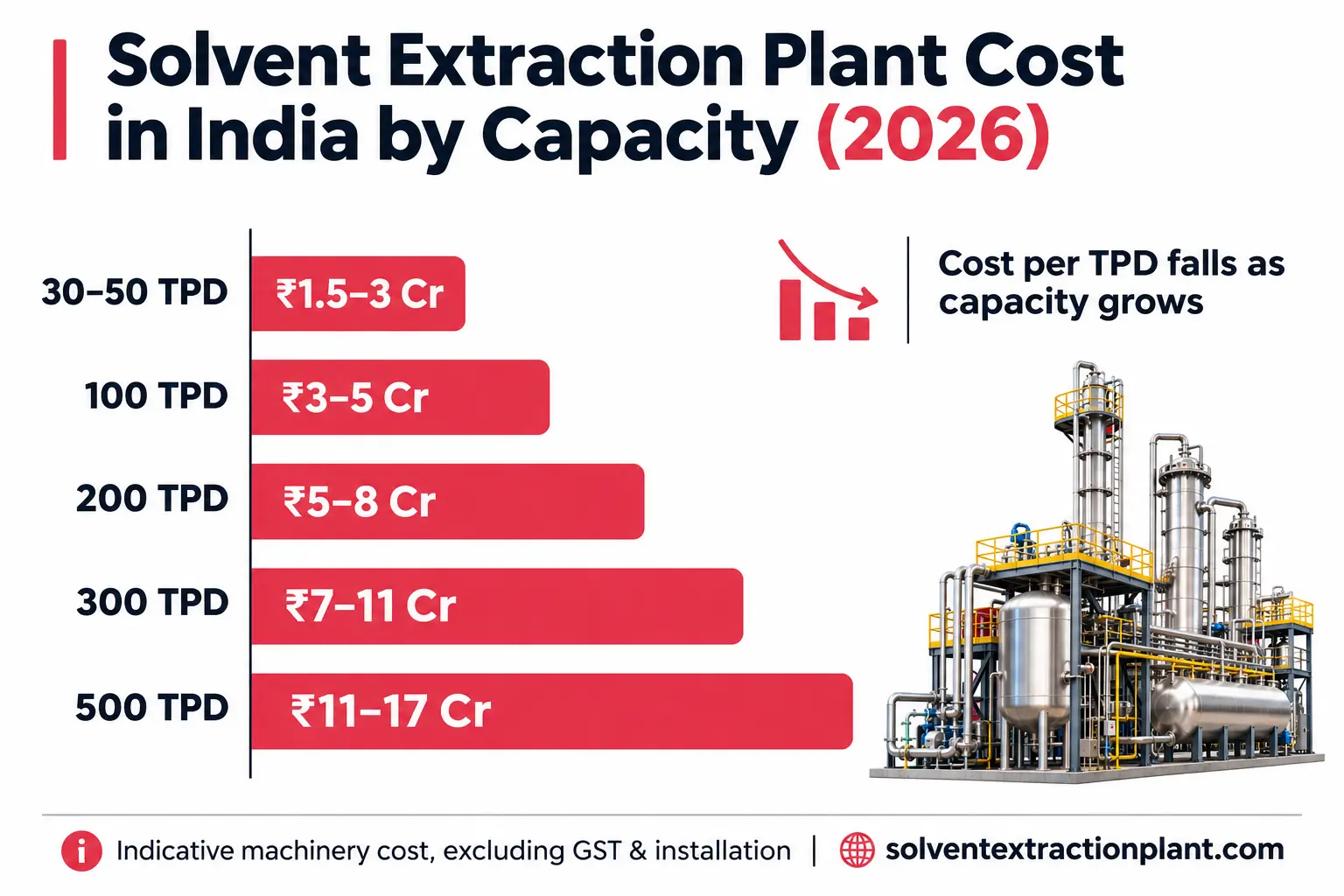
The table below shows typical machinery budgets for a continuous solvent extraction plant handling oilseeds or oil cakes. It covers the extraction section, desolventiser-toaster (DT), miscella distillation and solvent recovery. Seed preparation, refinery and civil work are separate.
| Plant Capacity | Extraction Machinery (Indicative) | Cost per TPD (Approx.) | Typical Buyer |
|---|---|---|---|
| 30 to 50 TPD | ₹1.5 to 3 crore | ₹5 to 6 lakh | Oil mills adding extraction to existing expellers |
| 100 TPD | ₹3 to 5 crore | ₹3.5 to 5 lakh | Regional processors, cake-based units |
| 200 TPD | ₹5 to 8 crore | ₹2.5 to 4 lakh | Soybean, rice bran and mustard processors |
| 300 TPD | ₹7 to 11 crore | ₹2.3 to 3.7 lakh | Integrated oil and meal businesses |
| 500 TPD | ₹11 to 17 crore | ₹2.2 to 3.4 lakh | Large integrated plants |
Notice that the cost per TPD falls as capacity grows. This is the main reason solvent extraction plant cost in India varies so widely. A 500 TPD plant does not cost five times a 100 TPD plant, because pumps, condensers, control systems and engineering do not scale one to one. This is why choosing the right capacity has such a big effect on your payback.
Prices are indicative machinery ranges before GST, freight and installation, based on Super Techno Engineers’ project experience. They change with steel prices, raw material, design and scope.
What Is Included in a Solvent Extraction Plant Project Cost?
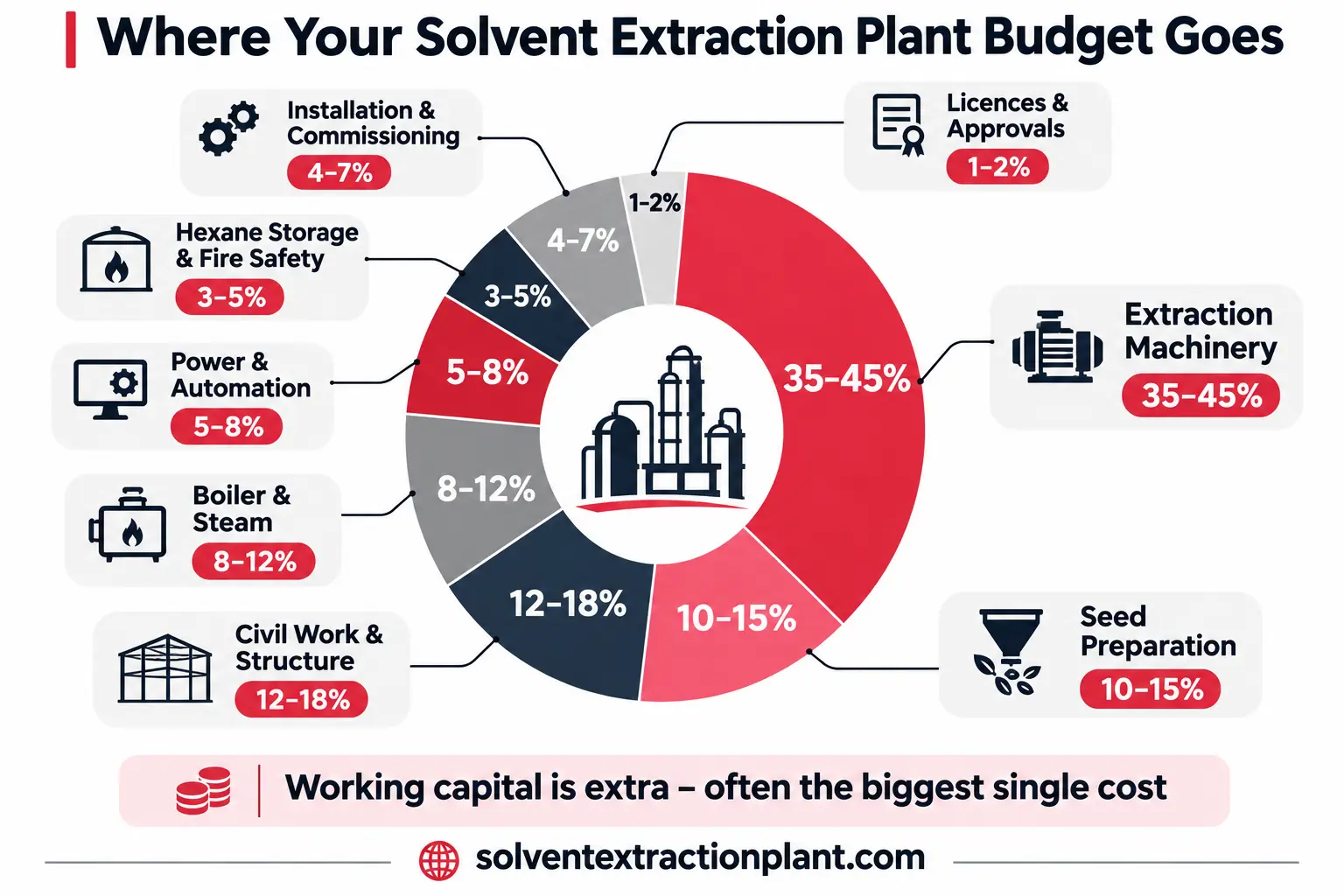
A machinery quote is only one part of the money you need. When Super Techno Engineers prepares a project estimate for a client, the complete budget usually looks like this:
| Budget Head | Share of Project (Approx.) | What It Covers |
|---|---|---|
| Extraction machinery | 35 to 45% | Extractor, DT, distillation, condensers, solvent recovery, pumps, tanks, piping |
| Seed preparation (if seed-based) | 10 to 15% | Cleaning, cracking, conditioning, flaking or expander |
| Civil work and structure | 12 to 18% | Extraction building, foundations, silos, meal godown, roads |
| Boiler and steam system | 8 to 12% | Boiler, feed conveyor, ash handling, economiser |
| Power, electricals and automation | 5 to 8% | Transformer, MCC panels, cabling, DG backup, PLC |
| Hexane storage and fire safety | 3 to 5% | Underground tanks, flame-proof fittings, hydrant system |
| Installation and commissioning | 4 to 7% | Erection, insulation, trial runs, training |
| Licences and approvals | 1 to 2% | Pollution control consent, factory licence, PESO, fire NOC |
On top of this sits working capital, which is often the largest single block of money. Three to four months of seed or cake stock can cost more than the machinery itself, especially for soybean and mustard.
8 Factors That Decide the Price of a Solvent Extraction Plant
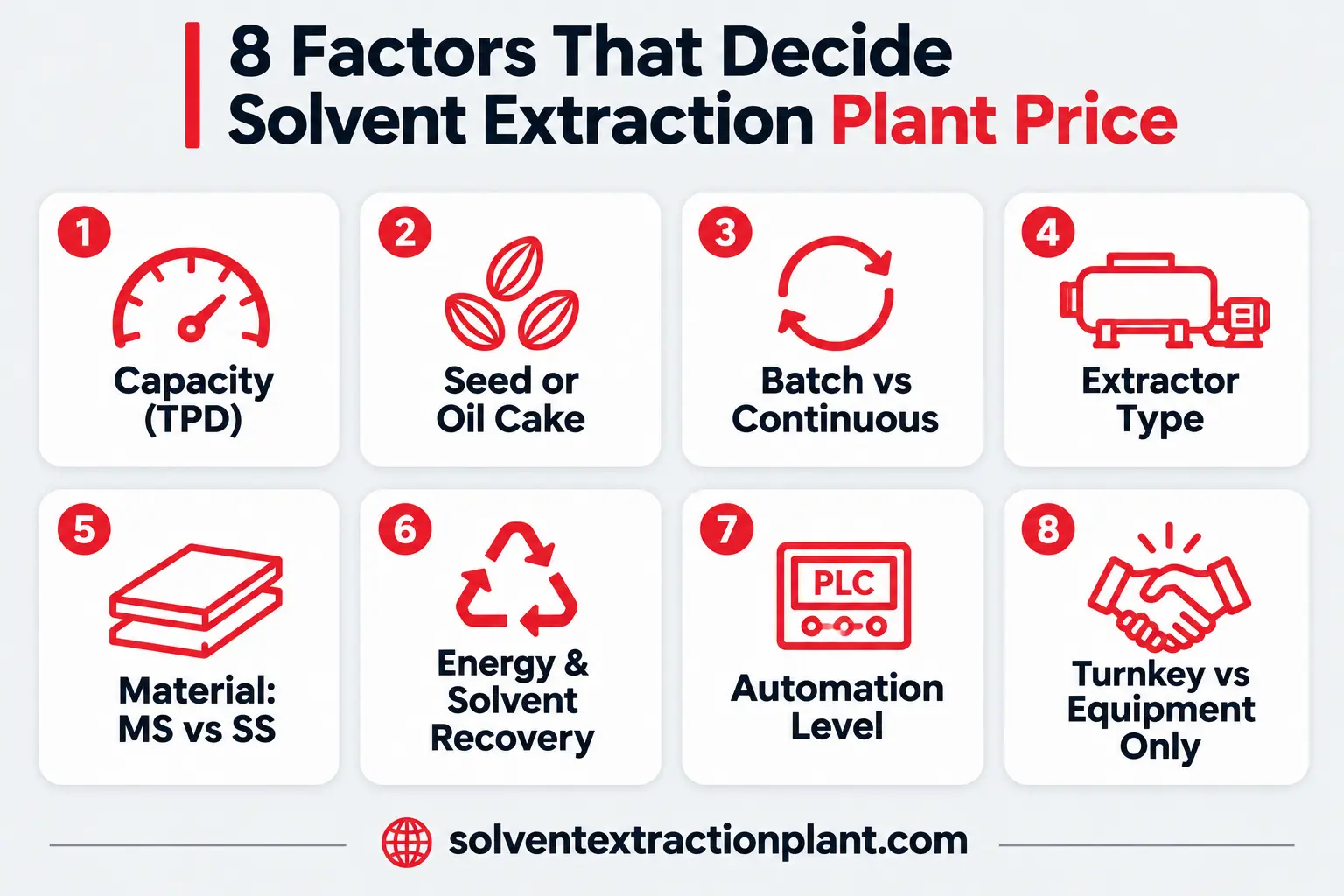
1. Capacity (TPD)
Capacity is the biggest driver. Size it on the raw material you can reliably buy for at least 300 days a year, not on the biggest plant you can afford. An idle plant costs money every day.
2. Raw material: seed or oil cake
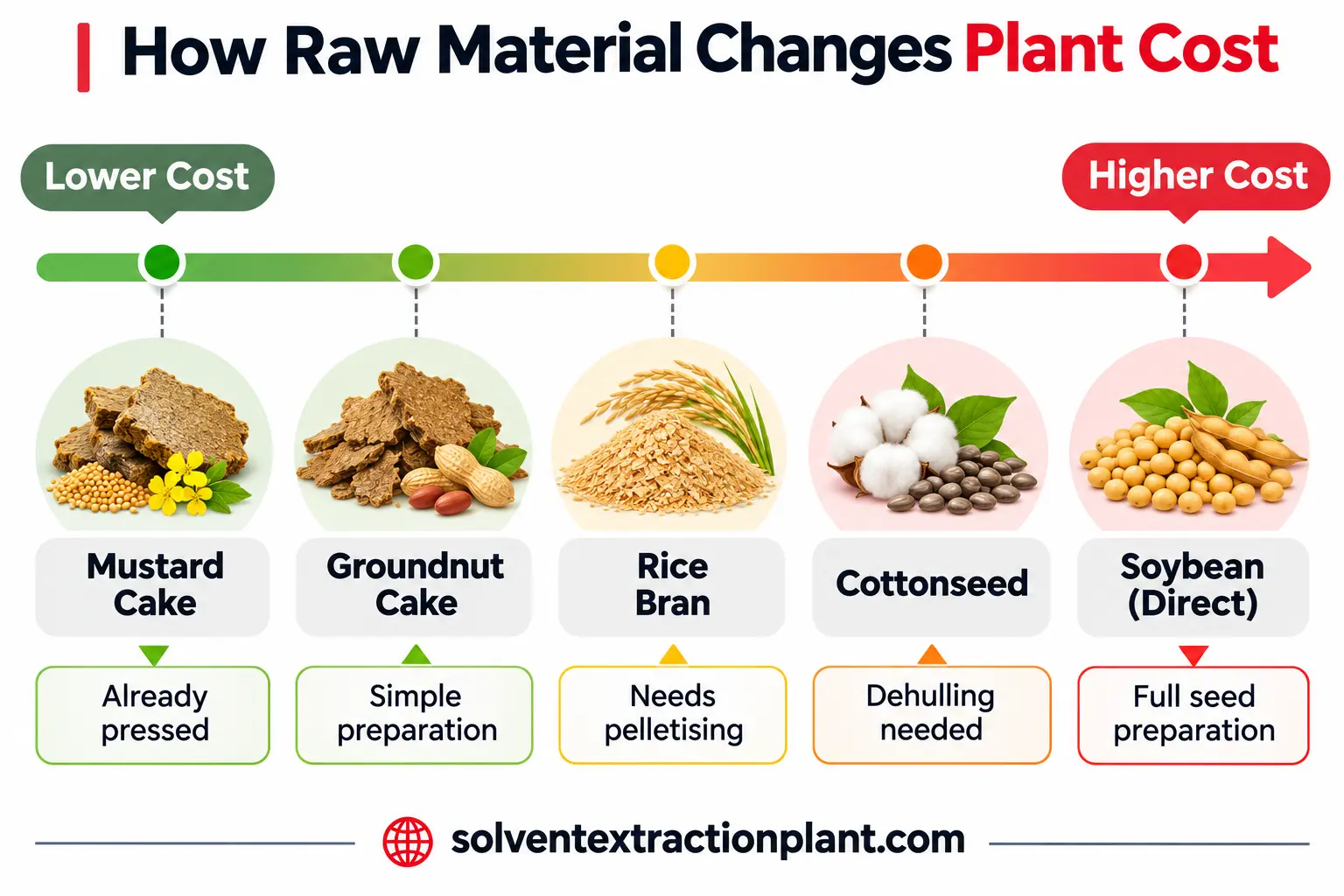
A plant that processes oil cake (mustard cake, groundnut cake, cottonseed cake) needs little preparation and is cheaper. A plant that processes whole seed such as soybean needs cleaning, cracking, dehulling and flaking, which can add 25 to 35% to machinery cost. Rice bran needs pelletising and stabilisation. You can see the full soybean picture in our soybean oil plant cost guide.
3. Batch or continuous process
Batch plants have a lower starting price and suit small capacities, but they use more solvent, steam and labour per tonne. Continuous plants cost more upfront and pay it back through lower running costs. Read our comparison of batch vs continuous solvent extraction before you decide.
4. Type of extractor
Rotocel, loop and chain-type extractors differ in price, footprint and how well they handle fines. The right choice depends on your raw material. Our guide on types of solvent extractors explains the differences.
5. Material of construction
Mild steel is cheaper, while stainless steel in wetted parts lasts longer and resists corrosion. Most well-built plants use a mix, with SS in critical solvent and miscella contact areas. At Super Techno, we recommend the material for each section based on the raw material and the client’s budget.
6. Energy recovery and solvent recovery
Economisers, vapour heat recovery and an efficient mineral oil absorption system add cost but cut steam and hexane use for the life of the plant. In most cases this is the best money you will spend. See energy efficient solvent extraction for details.
7. Automation level
A PLC or SCADA-controlled plant costs more than a manual one but gives steadier temperatures, lower residual oil and safer operation with fewer operators.
8. Turnkey or equipment-only scope
An equipment-only quote looks cheaper on paper. A turnkey quote includes engineering, layout, erection, utilities integration and commissioning under one responsibility. Compare like with like, and read turnkey vs modular solvent extraction plants to understand the trade-off.
Total Project Cost: A Realistic Example
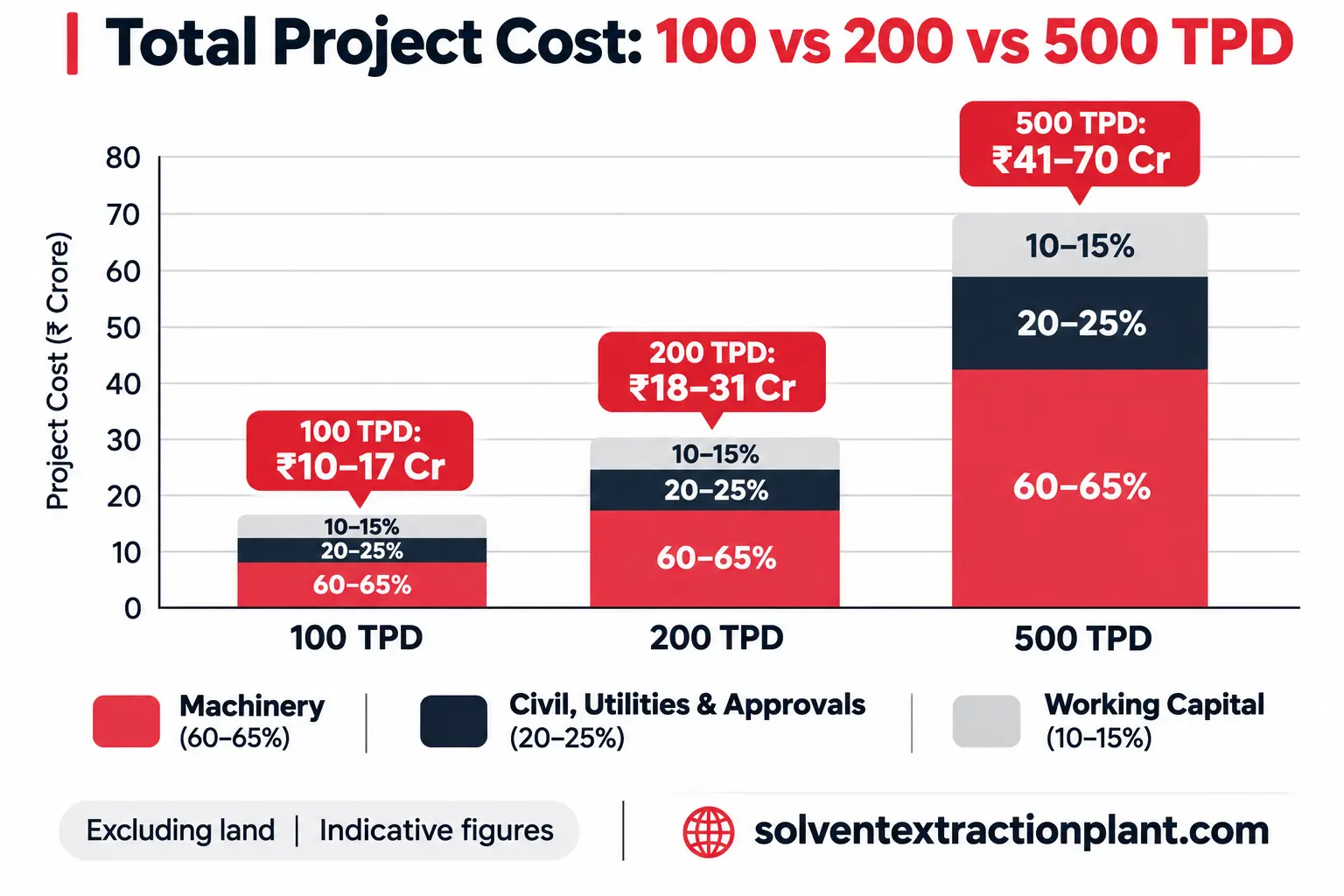
To understand the full solvent extraction plant cost in India, look beyond machinery. For a typical seed-based plant, an indicative total budget (excluding land) looks like this:
| Capacity | Machinery | Civil, Utilities and Approvals | Working Capital | Indicative Total |
|---|---|---|---|---|
| 100 TPD | ₹4 to 6.5 crore | ₹2 to 3.5 crore | ₹4 to 7 crore | ₹10 to 17 crore |
| 200 TPD | ₹6.5 to 10 crore | ₹3.5 to 6 crore | ₹8 to 15 crore | ₹18 to 31 crore |
| 500 TPD | ₹14 to 22 crore | ₹7 to 12 crore | ₹20 to 36 crore | ₹41 to 70 crore |
Cake-based plants usually sit at the lower end of these ranges because they need little or no seed preparation.
Hidden Costs Most Buyers Miss
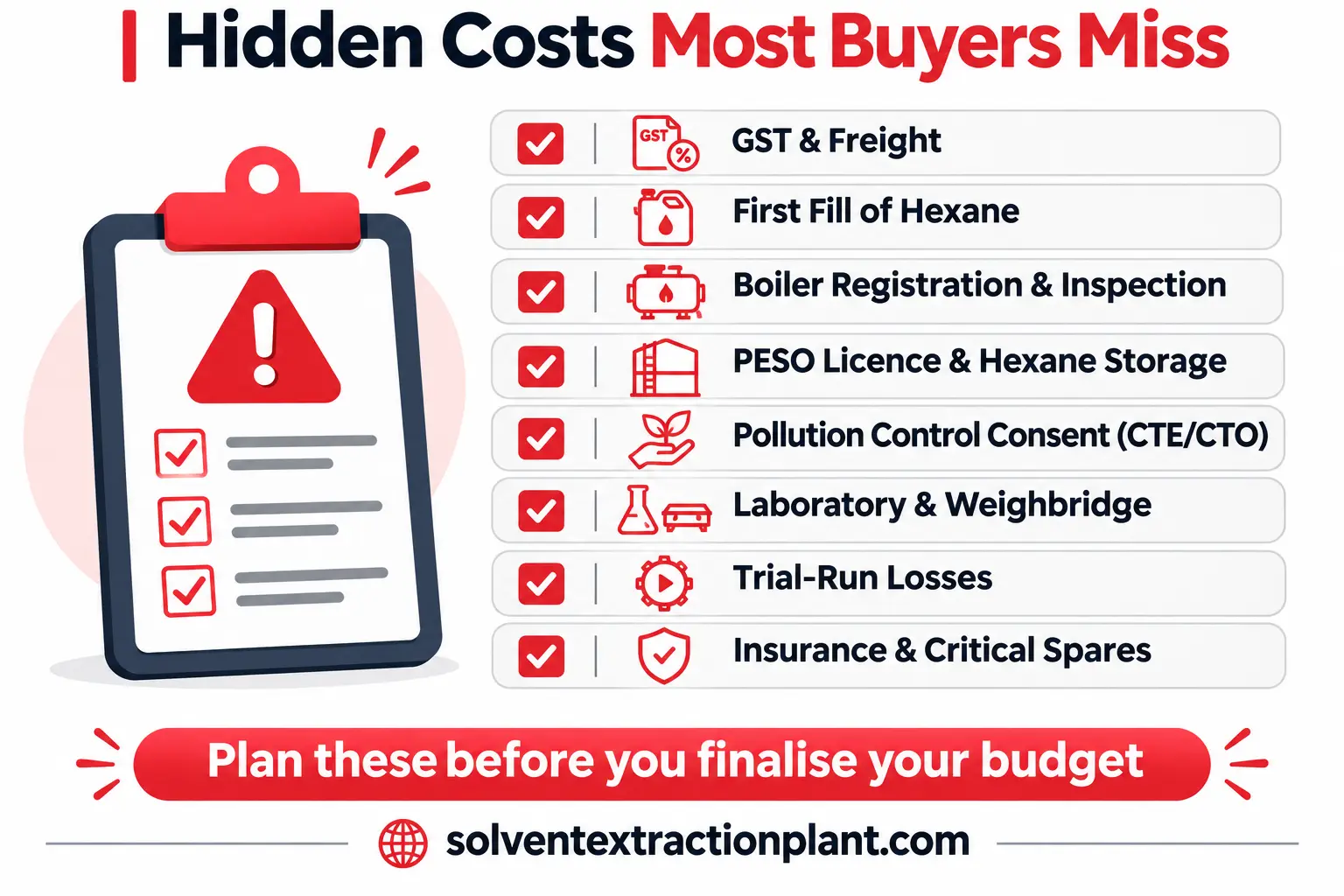
- GST and freight: GST on machinery and transport to a remote site can add a noticeable amount to the quoted price.
- First fill of hexane: The system needs an initial stock of solvent before start-up.
- Boiler registration and inspection: Boilers need statutory registration and periodic inspection.
- PESO licence and hexane storage: Petroleum storage rules apply to hexane tanks and must be planned into the layout. Licensing is handled by the Petroleum and Explosives Safety Organisation (PESO).
- Pollution control consent: Both Consent to Establish and Consent to Operate are needed from your State Pollution Control Board, along with effluent handling as per Central Pollution Control Board norms.
- Laboratory and weighbridge: You need these to measure residual oil, moisture and incoming material.
- Trial-run losses: The first weeks of commissioning use raw material and utilities before output stabilises.
- Insurance and spares: Plan a starting stock of critical spare parts so a small breakdown does not stop production.
The Super Techno Engineers team includes these items in every project estimate, because skipping them in the budget is one of the most common oil plant installation mistakes we see.
Running Cost: What It Costs to Operate the Plant
Capital cost is only one part of the solvent extraction plant cost in India, and it is a one-time number. Running cost decides whether the plant makes money every month. The main heads are:
- Hexane loss: A well-designed continuous plant keeps solvent loss low. Older or poorly maintained plants can lose two to three times more, which quickly becomes lakhs of rupees a month. A good hexane recovery system is the key, which is why every Super Techno plant is designed around efficient solvent recovery.
- Steam: Mostly used in the DT and distillation. Heat recovery directly reduces fuel cost.
- Power: Conveyors, pumps, fans and the preparation section are the main users.
- Manpower: Continuous plants run with smaller shifts than batch plants.
- Maintenance: Chains, seals, valves and instruments need regular attention.
You can estimate your oil and meal output with our free solvent extraction plant output calculator.
How Solvent Extraction Plant Cost Changes by Raw Material
| Raw Material | Cost Impact | Why |
|---|---|---|
| Mustard / rapeseed cake | Lower | Already pressed, needs mainly pelletising or conditioning |
| Groundnut cake | Lower | Cake-based, simple preparation |
| Rice bran | Medium | Needs stabilisation and pelletising to handle fines |
| Cottonseed | Medium to high | Delinting, dehulling and gossypol handling |
| Soybean (direct) | Higher | Full seed preparation: cracking, dehulling, flaking, often an expander |
How to Get an Accurate Quotation
The fastest way to get a reliable figure for your solvent extraction plant cost in India is to share clear inputs with the manufacturer:
- Raw material type and its oil content
- Required capacity in TPD and operating days per year
- Seed-based or cake-based operation
- Existing equipment (expellers, boiler, refinery) you want to reuse
- Expected residual oil in meal and meal quality
- Site location, land size and available utilities
- Equipment-only or complete turnkey scope
With these details, a manufacturer like Super Techno Engineers can give an itemised quote rather than a rough figure. If you are comparing suppliers, our guide on choosing a solvent extraction plant manufacturer in India lists the questions to ask.
Is a Cheaper Plant Really Cheaper?
Not always. When people compare solvent extraction plant cost in India, they often look only at the purchase price. A plant that is ₹50 lakh cheaper but loses more hexane, uses more steam or leaves 1% more oil in the meal can cost far more than ₹50 lakh within the first year. When comparing quotes, ask each supplier for guaranteed values of residual oil in meal, solvent loss per tonne and steam consumption, and compare running costs, not only the purchase price.
Frequently Asked Questions
Q.1 What is the cost of a 100 TPD solvent extraction plant in India?
The extraction machinery for a continuous 100 TPD plant typically costs ₹3 to 5 crore. With seed preparation, civil work, utilities, approvals and working capital, the total project usually falls between ₹10 and 17 crore, excluding land.
Q.2 What is the cost of a mini solvent extraction plant?
Small batch or semi-continuous plants in the 30 to 50 TPD range usually start around ₹1.5 to 3 crore for machinery. Very small units sold for herbal or spice extraction are a different product and are not comparable to an oilseed plant.
Q.3 How much does a rice bran solvent extraction plant cost?
Rice bran plants cost slightly more than cake-based plants of the same size because the bran must be stabilised and pelletised. Budget toward the middle of the ranges above for your chosen capacity.
Q.4 Is solvent extraction plant cost the same as the project cost?
No. The solvent extraction plant cost in India quoted by most suppliers covers only the machinery, which is just one part of the project. Total project cost also includes civil work, boiler, power, fire safety, approvals and working capital, and is commonly 2.5 to 4 times the machinery price.
Q.5 How long does it take to recover the investment?
Payback depends on raw material price, oil and meal prices, capacity utilisation and running efficiency. Well-run plants with steady raw material supply generally recover faster than plants that run below capacity. A detailed project report with your local prices gives the most reliable answer, and the Super Techno Engineers team can help you prepare one.
Q.6 Which costs more: batch or continuous?
A batch plant is cheaper to buy, but a continuous plant is cheaper to run. For capacities above roughly 50 TPD, continuous plants usually make more financial sense.
In short, solvent extraction plant cost in India depends far more on capacity, raw material and scope than on any single price list, so a site-specific estimate is always the safest starting point.
Get a Cost Estimate from Super Techno Engineers
Super Techno Engineers Pvt. Ltd. is an ISO 9001:2015 certified company that designs and manufactures complete solvent extraction plants from our facility in Dhuri, Punjab, for soybean, rice bran, mustard, cottonseed, groundnut and other oilseeds and oil cakes. Share your raw material, capacity and site details, and our team will send an itemised estimate covering machinery, utilities and installation.
Request a quotation or explore our complete solvent extraction plant range.