
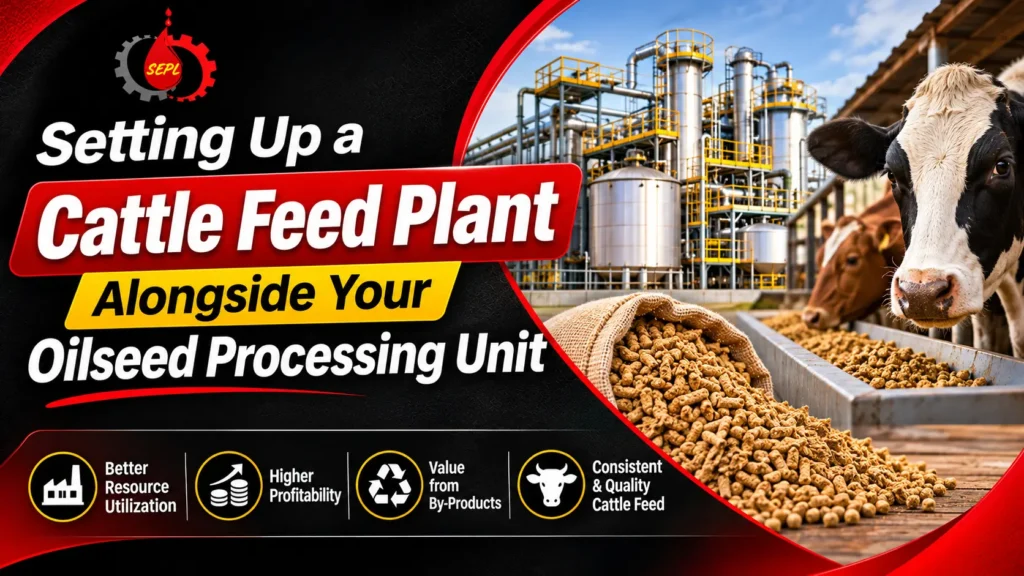
If you already run a solvent extraction plant, you are sitting on one of the best raw materials for animal nutrition. Every day, your plant produces de-oiled cake that is rich in protein. Many owners sell this cake in bulk at a thin margin. A smart cattle feed plant setup lets you turn that same cake into a branded, higher value product.
This guide explains how to plan a cattle feed plant setup next to your oilseed unit. It covers the reasons, the layout, the machines, the process, the paperwork and the mistakes to avoid. It is written in simple language so that you can use it as a checklist.
Why a Cattle Feed Plant Setup Makes Sense for Oilseed Processors
A cattle feed plant setup next to an oilseed unit works well for a few practical reasons.
- Raw material is on your doorstep. De-oiled cake, rice bran and other by-products come out of your plant every day. You save freight, handling and middleman costs.
- Better margin. Loose meal usually sells as a commodity. Packed cattle feed, whether mash or pellet, sells at a higher price per tonne and builds a brand.
- Steady demand. Dairy farms, cattle owners and cooperatives buy feed all year, not only in the oilseed season.
- Shared infrastructure. Your boiler, power connection, weighbridge, labour and storage can often be shared.
- Less price risk. When edible oil prices fall, feed income helps balance your earnings. You can read more about this in our post on global edible oil prices and the solvent extraction industry.
Know Your Raw Material: What Your Oilseed Plant Gives You
Before you plan a cattle feed plant setup, understand what your solvent extraction line produces. The de-oiled cake production process decides the quality of the cake, and quality decides how good your final feed will be.
| Raw material | Typical protein level (approx.) | Common use in cattle feed |
|---|---|---|
| Soybean DOC | 44% to 48% | High protein base for dairy feed |
| Groundnut DOC | 40% to 45% | Protein source, check for aflatoxin |
| Cottonseed DOC | 35% to 40% | Popular dairy ingredient, limit by gossypol |
| Rapeseed or mustard DOC | 32% to 38% | Protein source in controlled share |
| Sunflower DOC | 28% to 36% | Fibre and protein mix |
| Rice bran DOC | 14% to 18% | Energy and bulk ingredient |
These figures are approximate and change with seed quality and process control. Always test every lot in a lab before using it.
The desolventizer toaster process matters a lot here. Too much heat can damage protein. Too little heat can leave solvent residue or anti-nutritional factors. Good control at the extraction stage makes your cattle feed plant setup easier later.
If you process specific seeds, you can learn more about each line here: soybean solvent extraction plant, cottonseed solvent extraction plant, groundnut solvent extraction plant, mustard solvent extraction plant and rice bran solvent extraction plant.
Step 1: Decide the Product and Capacity
The first step in any cattle feed plant setup is to decide what you will make and how much.
Product choices:
- Mash feed: A ground, mixed, loose feed. It needs a simpler setup and costs less.
- Pellet feed: Mash that is steam conditioned and pressed into pellets. It needs more machines, but animals waste less and it stores and transports better.
- Concentrate or compound feed: A balanced mix with minerals and vitamins. Often sold to dairy farmers.
| Feature | Mash feed | Pellet feed |
|---|---|---|
| Investment | Lower | Higher |
| Steam needed | No | Yes |
| Wastage by animals | Higher | Lower |
| Shelf life and handling | Average | Better |
| Selling price | Moderate | Higher |
Capacity: Match your cattle feed plant setup to the DOC you actually have. A simple way to think about it is that your feed plant should consume a part of your daily cake, not all of it. Keep the rest for bulk sale so you are not forced to depend on one market. Our guide on solvent extraction plant capacity selection explains how to read your output before you size anything new.
Step 2: Plan the Land and Layout
A poor layout wastes money every single day. When you plan the cattle feed plant setup, think about material flow first.
Keep these points in mind:
- Place the feed plant away from the solvent area. Hexane is flammable, and feed mills create dust. Mixing the two zones is a safety risk. Read our notes on solvent extraction plant safety before you decide the distance.
- Keep the DOC route short. Cake should move from your desolventizer to the feed plant with minimum handling.
- Plan separate gates for raw material in and finished feed out.
- Leave room for future expansion, for example a second pellet line.
- Keep storage dry, raised and well ventilated. Moisture is the biggest enemy of feed.
For a deeper look at planning space, see our article on solvent extraction plant layout design.
Step 3: List the Machinery for a Cattle Feed Plant Setup
Here is a practical machine list for a mid-size cattle feed plant setup. Exact items depend on whether you make mash or pellets.
- Raw material intake: Hopper, weighbridge, bucket elevator and screw conveyor. You can learn about similar systems in material handling in a solvent extraction plant.
- Pre-cleaner and magnet: Removes stones, metal and dust.
- Grinder or hammer mill: Reduces particle size for even mixing.
- Batching bins and weighing system: For accurate recipe control.
- Mixer: Horizontal ribbon or paddle mixer. Mixing quality decides feed quality.
- Molasses or liquid dosing unit: Optional, for taste and binding.
- Pellet mill with conditioner: For pellet feed. See our page on pellet mills and spares.
- Pellet cooler: Brings pellets to a safe temperature before bagging. Check our pellet cooler page for details.
- Crumbler and screener: Optional, for different pellet sizes.
- Packing and stitching unit: Automatic or semi-automatic bagging.
- Dust collection: Cyclone or bag filter to protect workers and equipment.
- Control panel: Basic or PLC based. Read how automation in a solvent extraction plant improves consistency, because the same logic applies to feed.
You may already have a good part of the support systems. A boiler and steam system that serves your extraction plant can often supply the steam needed for pellet conditioning, if its capacity allows.
Step 4: Understand the Cattle Feed Production Process
A well-run cattle feed plant setup follows this flow:
- Receiving and testing: Weigh and sample every incoming lot. Test moisture, protein and visible contamination.
- Cleaning: Remove foreign matter with screens and magnets.
- Grinding: Reduce ingredients to the right size.
- Batching: Weigh each ingredient as per the formula.
- Mixing: Blend for the set time. Add minerals, salt and vitamins in a premix so they spread evenly.
- Conditioning and pelleting (if needed): Steam softens the mash, and the die forms pellets.
- Cooling and drying: Pellets must cool well to avoid mould.
- Screening: Remove fines and send them back for re-pelleting.
- Packing and storage: Bag, label and stack on pallets away from walls.
A sample dairy concentrate formula might use DOC as the main protein, a grain or rice polish for energy, a mineral mixture and salt. A qualified animal nutritionist should always approve the final formula. Feed that looks fine but is poorly balanced will hurt your brand fast.
Step 5: Licences and Compliance
Rules differ by state and by scale, so confirm each point with your local authority or a consultant. Typical items include:
- Udyam registration and GST registration
- Factory licence and local body approvals
- Pollution control board consent
- Fire safety clearance
- Weights and measures compliance for packing
- Quality norms for compounded cattle feed from BIS, such as IS 2052, which you should check for the latest version
Since you already hold approvals for your oilseed unit, check whether they need an amendment for the new activity. Our oil refinery project consultant service can guide you through project planning and documentation. You can also look at our post on edible oil plant subsidy in India, as some schemes may support related agro-processing investment.
Step 6: Budget and Cost Factors
Costs vary widely, so no single number fits every cattle feed plant setup. These are the main cost drivers:
| Cost area | What affects it |
|---|---|
| Machinery | Capacity, mash or pellet, brand, automation level |
| Civil work | Building size, flooring, storage bins, shed design |
| Power and steam | Existing connection and boiler spare capacity |
| Working capital | Raw material stock, packing material, credit to dealers |
| Lab and testing | Moisture meter, protein testing, basic lab tools |
| Licences and approvals | Local fees and consultant charges |
Your biggest saving is that your raw material and some utilities are already in place. For a broader view of how plant cost is built up, see our guide on solvent extraction plant cost in India. Also consider energy use from day one. The ideas in our article on energy efficient solvent extraction plants can help you keep running cost under control in the feed section too.
Common Mistakes in a Cattle Feed Plant Setup
From our experience working with oilseed processors, these errors come up again and again:
- Placing the feed section too close to the solvent area. Dust and solvent vapour do not mix well. This is also a fire risk.
- Skipping lab testing. Aflatoxin in groundnut cake and high moisture in rice bran can ruin a whole batch.
- Using hot cake directly. DOC should be cooled before it goes into the feed line. A meal cooler or drier cooler helps here.
- Choosing the wrong mixer size. An undersized mixer gives uneven feed.
- Ignoring spares and maintenance. Pellet dies and hammers wear quickly. Plan a spares stock and a service plan. Our solvent extraction plant AMC article shows how a maintenance contract thinking can reduce breakdowns.
- No sales plan. Build dealer and farmer contacts before the machines arrive.
- Mixing up plant types. Some owners confuse a feed unit with a fully separate business. For more on this, see our cattle feed plant page.
Safety and Quality Checklist
Use this list during every shift in your cattle feed plant setup:
- Keep ignition sources away from the solvent zone
- Clean dust regularly and fit proper dust collectors
- Guard all belts, couplings and moving parts
- Store premixes and minerals in a separate, labelled area
- Record batch numbers and keep retention samples
- Train workers on both food safety and machine safety
Good records also build trust with dairy farmers and cooperatives, who increasingly ask where the ingredients came from.
Why Work With an Experienced Team
A cattle feed plant setup next to an oilseed unit is not just about buying machines. It is about joining two processes so that cake flows smoothly, steam is shared wisely and the layout stays safe. An experienced turnkey oil plant manufacturer can design both sides together, so you avoid rework later. If you want to talk about your own site, you can contact our team with your seed type, daily crushing capacity and available land.
Frequently Asked Questions
Q1: What is the first step in a cattle feed plant setup?
Start by checking how much de-oiled cake and other by-products your oilseed plant produces each day. Then decide whether you will make mash or pellet feed and size the plant accordingly.
Q2: Can I use de-oiled cake directly in cattle feed?
Yes, DOC is a common protein source. However, it must be cooled, tested for moisture and contamination, and mixed in the right share. Never feed it without a balanced formula approved by a nutritionist.
Q3: Which is better for a new cattle feed plant setup, mash or pellet?
Mash needs less investment and is easier to start. Pellets cost more to set up but give better handling, less wastage and a higher selling price. Many owners begin with mash and add a pellet line later.
Q4: Can my existing boiler support the cattle feed plant setup?
Possibly. Pellet conditioning needs steam, so check your boiler’s spare capacity and pressure. If it is short, plan an upgrade or a small separate steam source.
Q5: How much space do I need?
It depends on capacity, storage and whether you add pelleting. Plan for raw material storage, the process hall, finished goods storage and truck movement, and keep room for expansion.
Q6: Do I need new licences for a cattle feed plant setup?
Most likely you will need updates or new approvals, such as factory, pollution, fire and quality related ones. Rules vary by state, so confirm with local authorities or a consultant.
Q7: Is a cattle feed plant setup profitable for oilseed processors?
It can be, because raw material cost and logistics are lower and feed sells at a better margin than loose meal. Your actual profit depends on formula, quality, brand and sales reach.
Final Thoughts
A well-planned cattle feed plant setup can turn your oilseed processing unit into a fuller agro business. You use your own cake, share your utilities and reach a market that buys all year. Focus on layout, safety, quality testing and a good formula, and the rest will follow.
If you are planning your cattle feed plant setup and want guidance on layout, machinery and integration with your existing line, reach out to our team today.