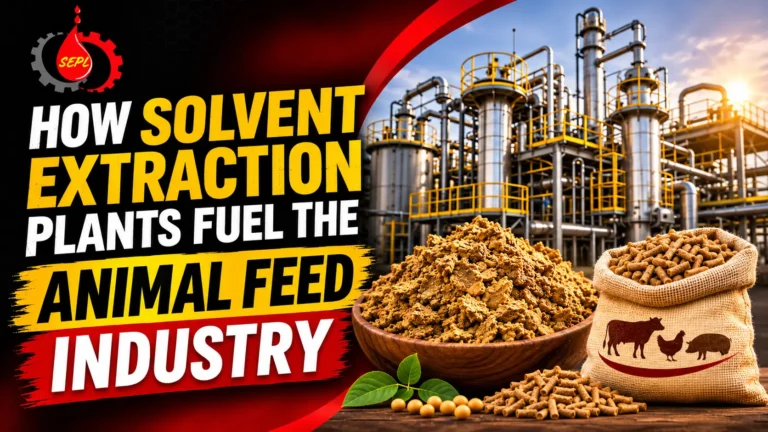

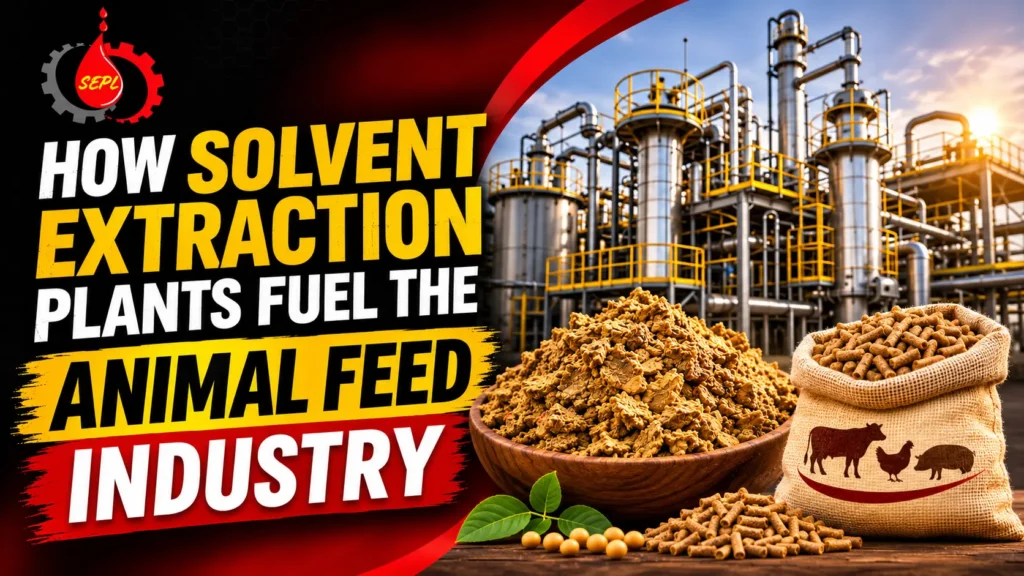
Every egg, glass of milk and piece of chicken starts with feed. And a big share of the protein in that feed comes from one place: a solvent extraction plant animal feed supply chain that turns oilseeds into high-protein meal.
Most people think a solvent extraction plant only makes edible oil. That is half the story. The other half is the meal left behind after the oil is removed. This meal feeds poultry, dairy cattle, fish and pigs across the world. In many cases, the meal is worth more than the oil.
In this guide, we explain how a solvent extraction plant supports animal feed, which oilseeds work best, what quality checks matter, and what plant owners should know before investing. We keep it simple and practical.
What Is a Solvent Extraction Plant?
A solvent extraction plant uses a food-grade solvent, usually hexane, to pull oil out of oilseeds and other oil-bearing material. The solvent dissolves the oil, the oil-solvent mixture is separated, and the solvent is recovered and reused.
Compared to pressing alone, this method takes out far more oil. That matters for two reasons. Processors earn more oil per ton of seed. And the leftover meal is cleaner, lighter in fat and richer in protein, which is exactly what feed makers want.
Why Animal Feed Depends on Solvent Extraction
Animals need energy, protein, minerals and vitamins. Protein is the costly part of any ration. Grains give energy, but oilseed meals give concentrated protein at a price farmers can manage.
A solvent extraction plant animal feed operation matters because it delivers:
- High protein content. Soybean meal, for example, commonly carries around 44 to 48 percent protein.
- Low residual oil. Solvent extraction leaves very little oil in the meal, often around 1 percent, so the meal stores better and does not go rancid quickly.
- Consistent quality. A continuous process gives uniform meal batch after batch.
- Large volume. Plants run at hundreds of tons per day, which feed mills need for steady supply.
- Better value from every seed. Oil goes to the food market, meal goes to the feed market.
Simply put, without solvent extraction the world would struggle to feed its livestock at today’s scale.
From Oilseed to Animal Feed: The Process Step by Step
Here is how a solvent extraction plant animal feed chain works inside the factory.
1. Seed Cleaning and Preparation
The seed is cleaned to remove stones, dust and metal. It is then cracked, conditioned and flaked or pelletized. Good oilseed preparation is the base of the whole process. Thin, even flakes let the solvent reach the oil easily and also protect meal quality.
2. Solvent Extraction
Prepared material enters the extractor, where hexane is sprayed over it in a counter-current flow. The solvent washes the oil out. You can read more about the different types of solvent extractors and the choice between batch and continuous extraction.
Two streams leave the extractor: miscella (oil plus solvent) and wet meal (meal plus solvent).
3. Meal Desolventizing and Toasting
This step decides your feed quality. The wet meal goes to the desolventizer toaster (DT), where steam removes the solvent and heat toasts the meal. Our guide on the desolventizer toaster process explains it in detail.
Toasting is not just drying. In soybean meal, it breaks down anti-nutritional factors like trypsin inhibitors. Under-toasted meal can upset animals. Over-toasted meal loses digestible protein. Getting the balance right is the real skill of a good operator.
4. Meal Drying, Cooling and Handling
After toasting, the meal passes through a meal cooler or drier cooler so moisture and temperature are safe for storage. It is then ground, screened and bagged, or sent to silos. Some plants add a pellet cooler when they sell pelleted meal.
5. Solvent Recovery
The miscella goes through distillation to separate crude oil from hexane. The hexane is condensed and reused. A strong hexane recovery system keeps solvent loss low, which protects your margin and keeps the plant safe. See also how miscella distillation works.
The full path from seed to meal is covered in our guide on the de-oiled cake production process.
Which Oilseeds Make the Best Animal Feed?
Not every oilseed meal is equal. The table below gives a practical view. Protein figures are typical ranges and vary by variety, region and processing.
| Oilseed | Typical Meal Protein | Main Feed Use | Notes |
|---|---|---|---|
| Soybean | 44 to 48% | Poultry, swine, dairy, aquafeed | Gold standard protein meal. Needs proper toasting |
| Rapeseed / Canola | 34 to 38% | Dairy, swine, poultry | Good amino acids, check glucosinolate levels |
| Sunflower | 28 to 36% | Ruminants, poultry | Higher fiber, lower cost |
| Cottonseed | 36 to 45% | Dairy and beef cattle | Free gossypol must be managed, mainly for non-ruminants |
| Groundnut | 40 to 48% | Cattle, poultry | Aflatoxin control is critical |
| Rice bran (de-oiled) | 14 to 17% | Cattle, poultry, fish | Rich in minerals, good energy source |
| Coconut / Copra | 20 to 24% | Cattle | Fibrous, suited to ruminants |
You can see how each seed is handled in our process guides for soybean, rice bran, rapeseed, sunflower, cottonseed, groundnut and coconut copra extraction.
A Quick Word on Non-Edible Meals
Some seeds, such as castor, neem and mahua, give meal that is not safe for regular animal feed because of natural toxins and bitter compounds. These meals are usually sold as organic fertilizer or used in other industries. If you plan a neem or mahua plant, plan the meal market separately. Do not assume it can go into the feed chain.
Solvent Extraction vs Expeller Pressing for Feed Meal
Many new investors ask whether a small expeller is enough. For feed quality and scale, here is the honest comparison. We also cover this in depth in solvent extraction vs oil expeller.
| Factor | Solvent Extraction | Expeller Pressing |
|---|---|---|
| Residual oil in meal | About 1% | Around 6 to 10% |
| Meal protein concentration | Higher | Lower |
| Shelf life of meal | Longer | Shorter, fat can turn rancid |
| Oil recovery | Very high | Moderate |
| Best scale | Medium to large | Small |
| Investment | Higher | Lower |
For a small village unit, expellers can work. For anyone supplying commercial feed mills, a solvent extraction plant animal feed setup is the practical choice, because feed buyers want low-fat, uniform, high-protein meal in volume.
How a Solvent Extraction Plant Supports Different Feed Sectors
Poultry Feed
Broilers and layers need high-quality protein for fast growth and egg production. Soybean meal is the backbone of most poultry rations. Consistent protein and low anti-nutritional factors are the key demands here.
Dairy and Cattle Feed
Ruminants handle fibrous and lower-protein meals better. Cottonseed, groundnut, sunflower and rice bran meals are common in cattle rations. If you want to go further and make finished feed, look at our guides on cattle feed plant setup and the cattle feed plant.
Aquafeed
Fish and shrimp farming is growing fast, and it needs steady protein. Plant meals like soybean meal and de-oiled rice bran are used to reduce dependence on costly fishmeal.
Pig Feed
Swine need balanced amino acids. Properly toasted soybean meal and rapeseed meal are the usual choices.
Quality Parameters Feed Buyers Check
Buyers do not purchase meal on price alone. They test it. A good plant tracks these every shift:
- Protein percentage (checked against the contract grade)
- Residual oil (should stay low)
- Moisture (usually kept near or below 12 percent for safe storage)
- Urease activity (for soybean meal, shows if toasting was correct)
- Residual hexane (should be negligible in finished meal)
- Aflatoxin and mycotoxins (important for groundnut and cottonseed)
- Fiber and ash (shows hulls and sand content)
- Particle size and color (a clean, even look signals good processing)
In our experience working with oil plant projects, most meal quality complaints trace back to three causes: poor seed preparation, wrong DT temperature or steam control, and weak cooling and storage. Fix these and your meal price goes up.
Business Benefits of Feed-Grade Meal Production
Why do investors look at a solvent extraction plant animal feed model so closely?
- Two revenue streams. Oil and meal both sell. When oil prices dip, meal often keeps the plant profitable.
- Steady demand. Poultry, dairy and aquaculture keep growing as incomes and protein intake rise.
- Export potential. Countries with strong oilseed output, including India, ship de-oiled cake and meal to many markets. See our note on solvent extraction plant export.
- Higher yield per seed. Better extraction means less oil left in the meal and more money in your pocket. Learn how to improve oil yield.
- Waste turned into value. Rice bran, once treated as a by-product, now becomes oil and feed meal.
What to Consider Before You Set Up a Plant
Here is a simple checklist from the feed angle:
- Choose the right seed. Pick one with strong local supply and a clear meal market.
- Select the right capacity. Too small and costs per ton rise. Too large and you may run short of seed. Read our guide to solvent extraction plant capacity selection, and try the output calculator to estimate oil and meal output.
- Budget properly. Our breakdown of solvent extraction plant cost in India and soybean oil plant cost will help.
- Put safety first. Hexane is flammable. Follow proper solvent extraction plant safety practices, including gas detection, earthing and trained staff.
- Plan maintenance. A well-kept plant gives steadier meal quality. See maintenance tips and a guide to spare parts.
- Pick a reliable partner. Experience matters. Here is how to choose the right solvent extraction plant manufacturer in India, and why a turnkey oil plant manufacturer can reduce your risk.
Common Mistakes That Hurt Feed Meal Quality
- Running seed with high moisture or too much dust
- Skipping regular DT temperature checks
- Poor cooling, which causes lumps and mold in storage
- Mixing meal from different seeds without proper records
- Ignoring aflatoxin testing on groundnut and cottonseed
- Weak solvent recovery, which leaves traces of hexane in meal
Avoid these and you protect both your buyers and your brand. Our article on oil plant installation mistakes covers more pitfalls to watch for early on.
The Future of Solvent Extraction in Animal Feed
Livestock and aquaculture keep growing, and protein is getting more expensive. This pushes plants toward better efficiency, tighter quality control and cleaner operations. Automation helps hold DT conditions steady, and energy-saving designs cut steam use per ton. You can read about automation in solvent extraction plants and energy-efficient plant design to see where the industry is heading.
The core idea will stay the same. A well-run solvent extraction plant animal feed operation gives farmers affordable protein and gives processors a second, strong income stream.
Frequently Asked Questions
Q1: What is the role of a solvent extraction plant in animal feed?
It removes oil from oilseeds and leaves behind a protein-rich, low-fat meal. That meal is a main protein source in poultry, cattle, pig and fish feed.
Q2: Is solvent-extracted meal safe for animals?
Yes, when the plant is run correctly. Proper desolventizing removes hexane, and proper toasting reduces anti-nutritional factors. Reliable buyers test meal for residual solvent, urease activity and toxins.
Q3: Which oilseed meal is best for animal feed?
Soybean meal is the most widely used because of its high protein and good amino acid profile. Rapeseed, cottonseed, sunflower, groundnut and rice bran meals are also used, depending on the animal and the budget.
Q3: What is de-oiled cake?
De-oiled cake (DOC) is the solid material left after oil is extracted from seeds. In a solvent plant it is also called de-oiled meal. It is sold as feed, or as fertilizer when the seed is non-edible.
Q4: Can castor, neem or mahua meal be used as animal feed?
Not as regular feed. They contain natural toxins or bitter compounds. They are normally sold as organic manure.
Q5: How much residual oil is left in meal after solvent extraction?
A well-run plant usually leaves around 1 percent oil in the meal, which is much lower than expeller cake.
Q6: How do I start a solvent extraction plant for animal feed meal?
Start with seed availability, capacity planning, budget and a trusted equipment partner. Then plan your meal quality checks and your buyer network before you finalize the design.
Conclusion
A solvent extraction plant animal feed chain is the quiet engine behind affordable meat, milk, eggs and fish. By taking oil out cleanly and protecting the protein in the meal, these plants serve the food industry and the feed industry at the same time.
If you are planning a new plant or upgrading an existing one, focus on seed preparation, DT control, solvent recovery and meal testing. Get these right and your meal will sell at a better price, month after month.
Ready to plan your project? Contact our team for expert guidance on a solvent extraction plant built for quality feed meal. You can also read about our turnkey solutions or explore our full machinery range.