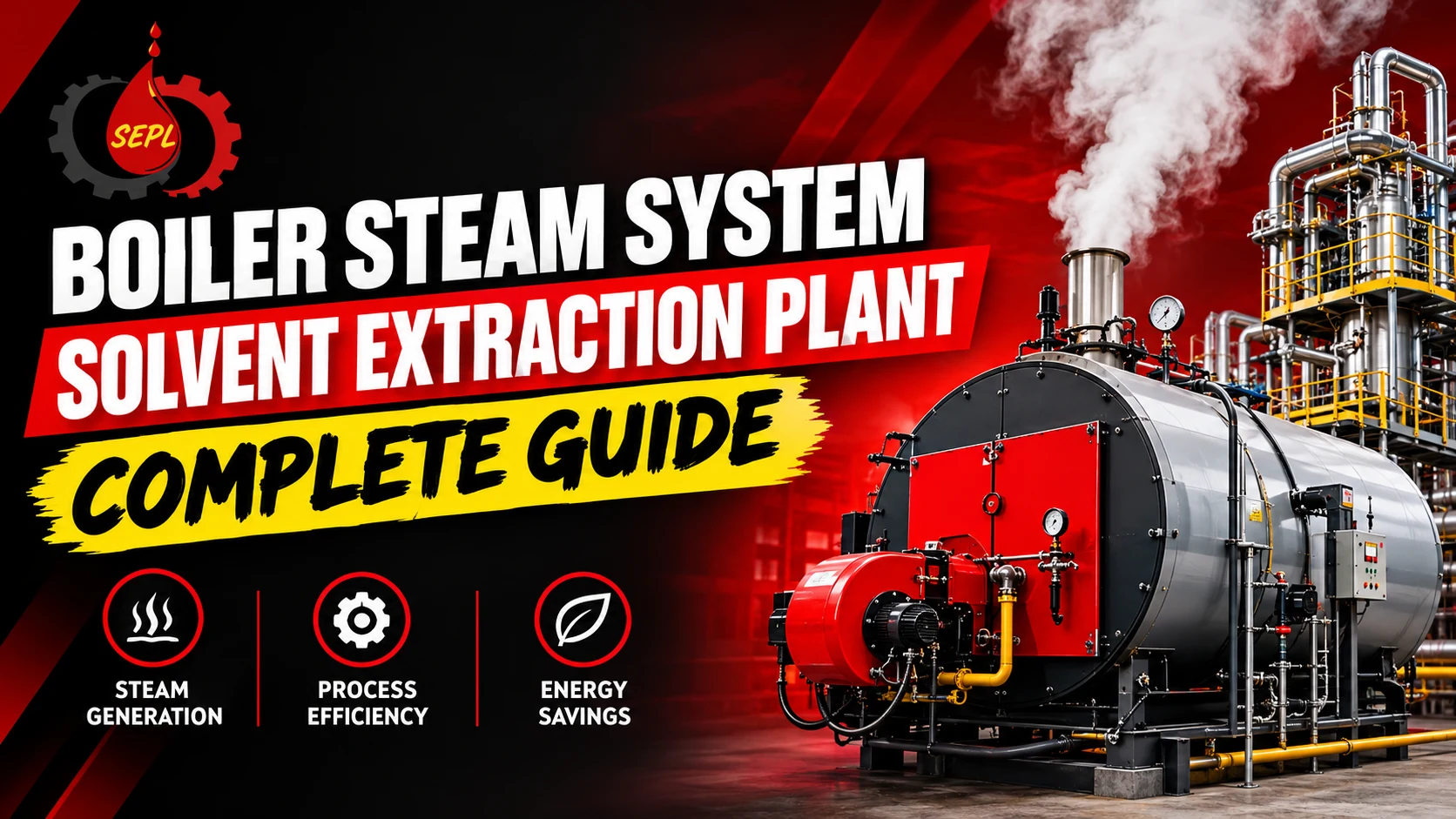
A solvent extraction plant can have the best extractor and the best desolventizer, but without a reliable steam supply it will not run well. A properly designed boiler steam system solvent extraction plant setup heats the meal, drives off hexane, runs the distillation columns and powers the vacuum system. If steam is weak or uneven, oil recovery drops and your cost per tonne rises.
This guide explains how the boiler steam system in a solvent extraction plant works, what size and type to choose, and which mistakes to avoid. It is written for plant owners, project managers and engineers who want practical answers.
Why Steam Matters in a Solvent Extraction Plant
Almost every stage of a solvent extraction plant needs heat. Steam is preferred because it is safe around hexane, easy to control and cheap to produce from biomass or coal. Electric heating or open flames would be a serious fire risk in a hexane area.
Here is where steam is used:
- Desolventizer toaster (DT): Steam heats the meal through jackets and trays. Direct steam strips hexane from the meal. Read more in our guide to the desolventizer toaster process.
- Miscella distillation: Steam heats the oil and hexane mixture so hexane can be separated and reused. See the miscella distillation process.
- Hexane recovery: Steam powers the stripping and ejector systems of the hexane recovery system.
- Preparation section: Cooking, conditioning and flaking of seeds often need steam.
- Refinery: Degumming, neutralization, bleaching and deodorization all use steam or hot thermic fluid.
Main Parts of a Boiler Steam System
A complete boiler steam system in a solvent extraction plant is more than just a boiler. Think of it as a loop: water in, steam out, condensate back.
- Boiler: Produces steam at the required pressure.
- Fuel feeding system: Handles rice husk, coal, wood or briquettes.
- Feed water tank and pump: Supplies treated water to the boiler.
- Water treatment plant: Softener or RO unit to prevent scale.
- Steam header and piping: Distributes steam to each section.
- Pressure reducing valves and traps: Control pressure and remove condensate.
- Condensate recovery tank: Returns hot water to the boiler.
- Chimney and dust collector: Keeps emissions within limits.
Good valves and instrumentation make a big difference. Cheap valves leak steam for years and nobody notices until the fuel bill arrives.
Types of Boilers Used in Oil Extraction Plants
Most plants in India choose between fire tube and water tube boilers. Some refineries also add a thermic fluid heater for high temperature work.
| Feature | Fire Tube Boiler | Water Tube Boiler | Thermic Fluid Heater |
|---|---|---|---|
| Best for | Small to medium plants | Medium to large plants | Deodorizer and high heat needs |
| Pressure range | Lower | Higher | Low pressure, high temperature |
| Startup time | Slower | Faster | Moderate |
| Efficiency | Good | Very good | Good |
| Initial cost | Lower | Higher | Medium |
| Fuel flexibility | Good | Very good | Good |
Simple rule: If your plant crushes below roughly 100 tonnes per day, a fire tube boiler is usually enough. For larger plants or where steam demand swings a lot, a water tube boiler handles load changes better. Always confirm the final choice with your plant designer.
How to Size a Boiler Steam System for Your Plant
Undersized boilers are one of the most common problems in this industry. The plant runs, but the DT never gets full steam and residual hexane in the meal stays high. Sizing a boiler steam system solvent extraction plant correctly from day one avoids this.
Follow these steps:
- Fix your capacity. For example, 200 tonnes per day of seed.
- Estimate steam use per tonne of seed. A modern extraction plant often needs around 250 to 400 kg of steam per tonne of seed, depending on the seed, moisture and design. A refinery adds more on top.
- Add the preparation section and refinery demand.
- Add a safety margin of 15 to 20 percent for peak load and future growth.
- Check required pressure. Most sections need moderate pressure, so a boiler rated a little above your highest need is sensible.
Example: A 200 TPD soybean plant using about 300 kg of steam per tonne needs roughly 60 tonnes of steam per day for extraction, or about 2.5 tonnes per hour. With a 20 percent margin, you would look at a boiler near 3 tonnes per hour, before adding refinery load. These are indicative numbers only, so get exact figures from your process designer. If you are planning a new project, our guide on how to set up a soybean solvent extraction plant in India covers the wider picture.
Choosing the Right Fuel
Fuel is usually your biggest running cost after the seed itself. Pick what is easy to get near your plant.
| Fuel | Advantages | Things to Watch |
|---|---|---|
| Rice husk | Cheap in rice belts, renewable | Seasonal price, ash handling |
| Coal | High heat value, steady supply | Price swings, emission rules |
| Wood and briquettes | Clean burn, easy storage | Moisture, rising cost |
| Husk and biomass blends | Uses local waste | Needs a suitable furnace |
If you run a rice bran solvent extraction plant, husk is often right at your doorstep, which makes it the natural choice. Before you decide, ask your supplier for a written fuel consumption figure per tonne of steam.
Safety: Keeping the Boiler and Hexane Apart
This is where experience matters most. Hexane vapour is flammable, and a boiler house has open flame. Good plant layout keeps the two well separated, and local rules set the minimum distance.
Key safety points:
- Place the boiler house at a safe distance from the extraction section and storage tanks, upwind where possible.
- Use only boilers registered and inspected under the Indian Boiler Regulations.
- Install flameproof electricals and gas detectors in the hexane area.
- Fit safety valves, water level gauges and low water cut offs, and test them on a schedule.
- Train operators on emergency shutdown, and keep written procedures at the panel.
Skipping these steps to save money is never worth it. Many accidents begin with small layout shortcuts.
How Steam Quality Affects Oil and Meal Quality
Steam is not just about quantity. A weak boiler steam system solvent extraction plant design shows up directly in your product.
- Wet steam carries water into the DT, which can make the meal sticky and raise moisture.
- Low pressure leaves hexane in the meal, which is a safety and quality risk.
- Scale in the boiler lowers heat transfer and wastes fuel.
The results show up in your de-oiled cake production process, where meal quality directly affects price. In the refinery, steady steam also protects colour and flavour during deodorization and bleaching.
Common Boiler Steam System Mistakes
These problems appear again and again:
- Choosing a boiler only on price, with no thought for fuel cost and efficiency.
- No condensate recovery. Returning hot condensate can cut fuel use noticeably.
- Poor pipe insulation. Bare pipes lose heat all day long.
- Faulty steam traps that blow live steam into the drain.
- Ignoring water treatment, leading to scale and tube failure.
- Wrong pipe sizing, causing pressure drops at the far end of the plant.
Several of these overlap with the issues in our article on oil plant installation mistakes. A good turnkey oil plant manufacturer plans the boiler and steam network together with the process, which avoids mismatches.
Tips to Cut Steam and Fuel Costs
- Insulate all steam lines, valves and flanges.
- Return condensate to the feed tank.
- Check steam traps every month.
- Clean boiler tubes and remove soot regularly.
- Keep fuel dry, since wet husk or wood burns poorly.
- Track steam per tonne of seed daily. A sudden rise tells you something is wrong.
- Use well made SS coils for refinery plants to improve heat transfer.
Maintenance Checklist
| Frequency | Task |
|---|---|
| Daily | Check water level, pressure, blowdown and fuel feed |
| Weekly | Inspect gauges, pumps and trap operation |
| Monthly | Clean tubes, test safety valves, check insulation |
| Yearly | Statutory boiler inspection, full overhaul, refractory check |
Keep spare parts ready for pumps, gauges and valves. Having the right solvent extraction plant spares on the shelf prevents long shutdowns.
Frequently Asked Questions
Q1. What is the role of a boiler steam system in a solvent extraction plant?
The boiler steam system produces and delivers steam that heats the meal, separates hexane from oil and meal, and powers the recovery system and refinery.
Q2. Which boiler is best for a solvent extraction plant?
For small and medium plants, a fire tube boiler is common. Larger plants with changing loads often prefer a water tube boiler. The best choice depends on capacity, pressure and fuel.
Q3. How much steam does a solvent extraction plant use?
It varies by seed and design, but many plants use around 250 to 400 kg of steam per tonne of seed for extraction. Refining needs extra.
Q4. Can I use rice husk as boiler fuel?
Yes. Rice husk is a popular and low cost fuel, especially near rice mills, as long as the furnace is designed for it.
Q5. Is it safe to keep a boiler near hexane storage?
No. Keep them well apart and follow local safety rules and statutory distances.
Q6. How can I reduce steam consumption?
Insulate lines, recover condensate, fix steam traps and maintain the boiler. These simple steps often give the fastest savings.
Final Thoughts
A well planned boiler steam system solvent extraction plant protects your oil recovery, meal quality, safety and profit. Size it properly, choose a fuel you can source easily, keep it separate from hexane areas and maintain it on a routine. Do these basics right and your plant will run smoother and cheaper for years.
If you are planning a new project or upgrading an existing one, talk to our team. We can help you match the boiler and steam network to your process. You can also read our guides on how a solvent extraction plant improves oil recovery and soybean oil plant cost in India, or contact us directly.