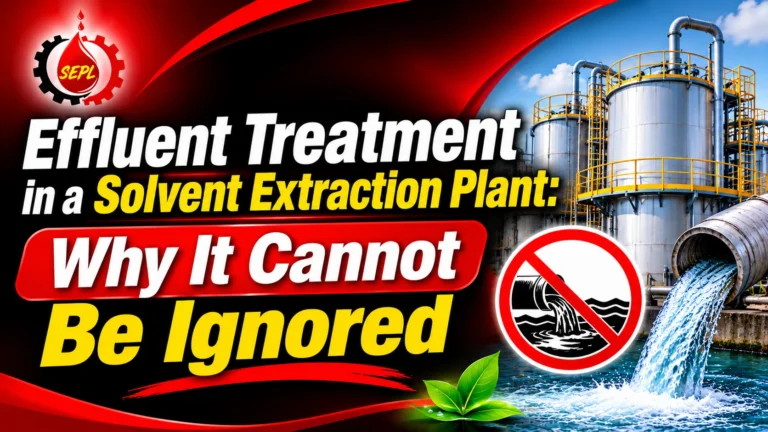

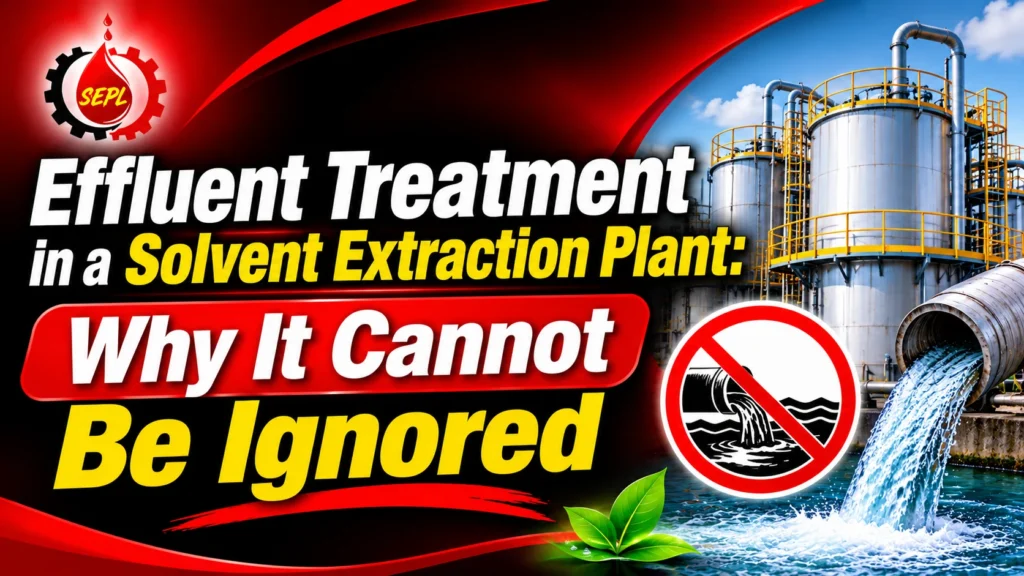
Many plant owners spend months choosing the right extractor, desolventizer and boiler. Effluent treatment is often left for later. That is a costly mistake.
A proper effluent treatment solvent extraction plant setup does three jobs. It keeps your plant legal, it keeps your people safe, and it stops you from losing money through wasted hexane and oil. In this guide, we explain where effluent comes from, what it contains, how an effluent treatment solvent extraction plant system works, and what to check before you buy or upgrade one.
What Is Effluent Treatment in a Solvent Extraction Plant?
Effluent is the wastewater that leaves your plant after it has touched the process. In a solvent extraction plant, water and steam are used in many places, and some of it picks up hexane, oil, meal dust and chemicals along the way.
Effluent treatment solvent extraction plant systems clean this water before it is reused or discharged. If it goes straight to a drain, it becomes a risk to the environment and a fire hazard inside your premises. That is why effluent treatment solvent extraction plant planning should start on day one, not after commissioning.
Where Does the Effluent Come From?
Effluent does not come from one point. It is a mix of streams from different sections.
| Plant Section | Typical Effluent Source | Main Pollutants |
|---|---|---|
| Solvent recovery | Water from the solvent-water separator and the stripping column | Traces of hexane, dissolved oil |
| Desolventizer toaster | Condensed steam and vapour condensate | Hexane, fine meal particles |
| Condensing and scrubbing | Cooling water bleed, wet scrubber blowdown | Solvent traces, dust, high temperature |
| Boiler and steam system | Boiler blowdown, softener regeneration | High TDS, salts |
| Refinery | Soapstock water, wash water, acid water | High oil and grease, high COD and BOD, low or high pH |
| Floor and equipment washing | Spills and cleaning water | Oil, solvent, solids |
If your site also has a refinery, the load grows a lot. The neutralization process, the degumming process and bleaching all create their own wastewater. You can read more about the refining side on our edible oil refinery plant page. A refinery makes the effluent treatment solvent extraction plant design more demanding, so size it for the full site and not only the extraction section.
Why Effluent Treatment Cannot Be Ignored
1. Safety comes first
Hexane is highly flammable. If hexane-contaminated water enters an open drain, vapour can collect in pits and channels. One spark is enough for a serious accident. A well-planned effluent treatment solvent extraction plant system removes solvent before discharge and is a core part of solvent extraction plant safety.
2. Legal compliance
In India, industrial units generally need consent from their State Pollution Control Board. Discharge limits are set for parameters such as pH, oil and grease, COD, BOD and suspended solids. Limits differ by state and by where the treated water goes, so always confirm your exact norms with your local board. Plants that skip effluent treatment risk notices, fines and even closure orders.
3. Solvent loss is money loss
Every litre of hexane that leaves with wastewater is a litre you paid for. A good hexane recovery system and an efficient solvent condenser reduce this loss. Effluent testing tells you if they are working. A sudden rise in hexane in wastewater is often the first sign of a leak or a poorly performing stripper. In this way, effluent treatment solvent extraction plant monitoring also protects your yield.
4. Reputation and buyer trust
More buyers of de-oiled cake and edible oil now ask about environmental practices. A clean, well-documented plant is easier to defend during audits and easier to sell from.
Key Parameters to Monitor in Your Effluent Treatment
You do not need a large lab to start. Track these regularly:
- pH: Refinery streams swing between acidic and alkaline.
- Oil and grease: Shows how well your separators are working.
- COD and BOD: Show the organic load that biology must handle.
- Total suspended solids (TSS): Fine meal and gums raise this.
- Total dissolved solids (TDS): Mostly from boiler and softener water.
- Hexane or solvent traces: Check at the stripping column outlet.
Keep a simple daily log. It helps you spot problems early and shows inspectors that your effluent treatment solvent extraction plant process is under control.
How an Effluent Treatment Solvent Extraction Plant System Works
A typical treatment line is built in stages. Each stage removes a different type of pollutant.
Step 1: Solvent stripping. Process water first goes through a stripping column or similar unit so that hexane is removed and sent back to recovery. This must happen before anything else.
Step 2: Oil and grease removal. An oil-water separator or oil trap lets free oil float and be skimmed off. Recovered oil can often be reused or sold as low-grade oil.
Step 3: Equalization. A holding tank mixes the different streams so that the next stages receive a steady flow and a steady load.
Step 4: pH correction. Acid or alkali is dosed to bring the water into the right range for biological treatment.
Step 5: Dissolved air flotation (DAF) or chemical treatment. Fine oil and emulsified fat are removed with air bubbles and coagulants.
Step 6: Biological treatment. Bacteria break down the dissolved organic matter and bring COD and BOD down. Depending on load, this can be anaerobic, aerobic or a combination.
Step 7: Clarification and polishing. Solids settle out, and the water may pass through sand or carbon filters.
Step 8: Reuse or disposal. Treated water is often reused for gardening, cooling tower make-up or ash handling, subject to quality. Where local rules are strict, plants move toward zero liquid discharge using evaporators.
Common Mistakes in Effluent Treatment Solvent Extraction Plant Projects
These problems appear again and again in oil plants:
- No separate line for solvent-contaminated water. Mixing it with general drains spreads the hazard.
- Undersized equalization tank. Shock loads from refinery washing then upset the biology.
- Ignoring soapstock and acid water. These are the heaviest pollution streams.
- Skipping routine maintenance. Blocked separators and worn pumps quietly reduce performance. A proper maintenance routine covers effluent equipment too.
- Planning effluent last. Layout, drains and land for tanks should be part of the original plant layout design, not an afterthought.
Effluent Treatment Options Compared
| Option | Best For | Advantages | Limitations |
|---|---|---|---|
| Basic ETP (separator, pH, biological) | Small to medium plants with discharge allowed | Lower cost, simple operation | Needs good monitoring |
| ETP with DAF and tertiary polishing | Plants with a refinery | Handles oily, high-COD water | Higher chemical and power use |
| Zero liquid discharge (ZLD) | Areas with strict rules | No liquid leaves the site | Higher investment and energy |
The right effluent treatment solvent extraction plant option depends on your seed type, capacity, refinery load and local rules. A plant processing rice bran with a refinery will have a different effluent profile than a simple soybean extraction unit.
Practical Tips to Reduce Effluent at the Source
The cheapest effluent is the one you never create.
- Keep steam and cooling water use under control with energy efficient design.
- Fix leaks in condensers and heaters quickly.
- Use dry cleaning methods for floors before washing.
- Recover oil from separators and soapstock instead of sending it to drain.
- Train operators to report solvent smell in water immediately.
- Review turnkey vs modular plant options so that effluent treatment is included in the scope from day one.
Checklist Before You Choose an Effluent Treatment System
- Have you listed all wastewater streams and their approximate flow?
- Is there a separate path for solvent-contaminated water?
- Do you know your State Pollution Control Board discharge limits?
- Is there space for an equalization tank and sludge handling?
- Can treated water be reused on site?
- Who will operate and test the effluent treatment solvent extraction plant system every day?
Frequently Asked Questions
Q1. Is effluent treatment compulsory for a solvent extraction plant?
In most cases, yes. Industrial units usually need pollution board consent, and wastewater discharge conditions are part of it. Check the rules for your state before you start building your effluent treatment solvent extraction plant.
Q2. How much wastewater does a solvent extraction plant produce?
It depends on capacity, seed type, steam use and whether a refinery is attached. Plants with refineries produce much more and much stronger effluent than extraction-only units. Your plant supplier should estimate this from your process design.
Q3. Can hexane be removed from wastewater completely?
A well-run stripping column removes most of it, and the remaining traces are handled in later stages. Regular testing is the only way to confirm results at your site.
Q4. What is the most polluting stream in an oil plant?
Refinery wastewater, especially soapstock and acid water, usually carries the highest oil, COD and BOD load.
Q5. Can treated water be reused?
Often yes, for gardening, ash handling or cooling tower make-up, provided it meets the quality needed for that use.
Q6. Does a de-oiled cake plant need a different ETP from a refinery?
The core steps are similar, but refinery streams need stronger oil removal and pH control. Many plants use one combined effluent treatment solvent extraction plant system sized for both.
Final Thoughts
Effluent treatment solvent extraction plant planning is not an extra cost. It is part of running a safe, legal and profitable oil plant. Plan it early, keep solvent-contaminated water separate, monitor key parameters and maintain your equipment well.
If you are setting up a new unit or fixing compliance issues in an existing one, our team can help you plan the right system for your seed and capacity. Contact us to discuss your project.