

Solvent extraction plant challenges are part of daily life for every owner. Oil left in the meal, hexane loss, high steam bills, sudden breakdowns, and safety worries show up in almost every plant, whether it is new or twenty years old. The good news is that these problems are well understood. Most can be fixed with better seed preparation, regular care, and smarter equipment choices.
This guide covers the nine solvent extraction plant challenges owners face most often, why each one happens, and what you can do about it. Use it as a practical checklist for your own plant.
Quick Overview of Solvent Extraction Plant Challenges
| Challenge | Main Cause | Quick Fix |
|---|---|---|
| High residual oil in meal | Poor seed preparation, short contact time | Better flaking and extractor settings |
| Solvent (hexane) loss | Leaks, weak condensation | Tight recovery system, weekly leak checks |
| High steam and power use | Old boiler, poor heat recovery | Heat exchangers, insulation |
| Frequent breakdowns | Worn chains, valves, pumps | Planned maintenance, spare stock |
| Safety risks | Vapor leaks, static, weak training | Gas detection, grounding, drills |
| Poor meal quality | Wrong toasting temperature | Controlled desolventizing |
| Effluent problems | Untreated wastewater | Proper treatment setup |
| Wrong capacity choice | Weak planning | Study seed supply first |
| Skill gaps | Untrained operators | Training and automation |
1. High Residual Oil in the De-Oiled Cake
This is the most expensive of all solvent extraction plant challenges, because every bit of oil left in the cake is money lost. When residual oil is higher than expected, the cause is usually upstream of the extractor.
Why it happens:
- Seeds are not conditioned or flaked correctly
- Flake thickness is uneven
- Moisture is too high or too low
- Solvent contact time is too short
How to fix it:
- Follow a proper oilseed preparation process covering cleaning, cracking, conditioning, and flaking.
- Check flake thickness often. Thin, even flakes let hexane reach the oil faster.
- Review the bed depth and solvent flow in your extractor.
A real example: a plant owner sees residual oil creeping up over a few weeks. The extractor looks fine, but the flaking rolls have worn unevenly. Regrinding the rolls brings the numbers back without touching the extraction section at all. Always check the first step before blaming the last one.
For more detail, read how to improve oil yield in solvent extraction and how a well-run plant improves oil recovery.
2. Solvent Loss and Rising Hexane Costs
After raw material, hexane is usually your biggest running cost. Even a small extra loss per ton of seed adds up quickly over a month. Many well-run plants aim for roughly 1 to 2 liters of loss per ton of seed, though your target depends on seed type and plant design.
Common causes:
- Leaking flanges, gaskets, and pump seals
- Poor condensation of vapors
- Weak vent recovery
- Overheated miscella
Practical solutions:
- Keep the hexane recovery system in good order, including the solvent condenser and stripping column.
- Use a vapor scrubber or wet scrubber to capture escaping vapors.
- Check cooling water temperature daily. Warm water means weak condensation.
- Run a weekly leak check with a gas detector.
Also confirm that your miscella distillation process runs at the right temperature and vacuum.
3. High Steam and Energy Consumption
Steam drives desolventizing, distillation, and heating. If the boiler is old or heat is wasted, fuel and power bills rise fast.
What helps:
- Reuse waste heat with an economizer or plate heat exchanger.
- Insulate steam lines and hot vessels.
- Fix steam leaks and failed traps right away.
- Review your boiler and steam system for efficiency.
Our article on the energy efficient solvent extraction plant explains design choices that cut steam use without hurting output.
4. Frequent Breakdowns and Downtime
When the plant stops, you lose production, and restarting a solvent plant takes time. Most breakdowns come from parts that move and wear: chains, valves, pumps, and conveyors.
Typical weak points:
- Extractor chain and reddler chain wear
- Rotary valve blockage or leakage
- Miscella pump seal failure
- Conveyor jams in material handling
How to reduce downtime:
- Write a maintenance plan with daily, weekly, and yearly checks.
- Keep key spare parts in stock so a small fault does not become a long shutdown.
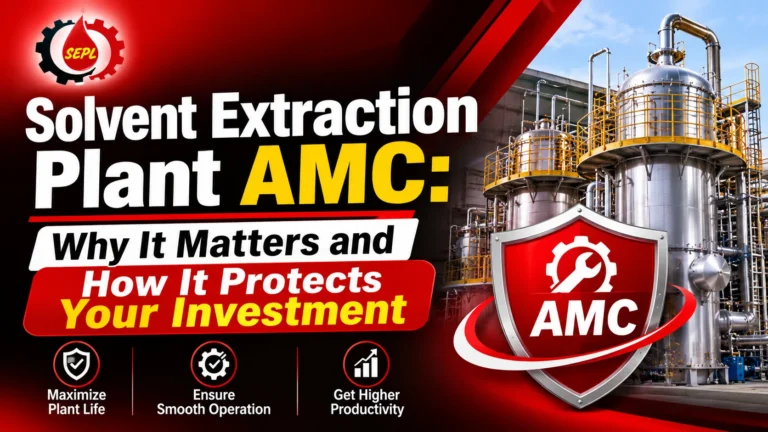
- Consider an annual maintenance contract if you lack a full in-house team.
5. Safety Risks Around Hexane
Safety is the most serious of all solvent extraction plant challenges. Hexane is flammable, and vapors can build up quickly when something goes wrong.
Key safety steps:
- Install gas detectors in the extraction and distillation areas.
- Ground all equipment to control static electricity.
- Use explosion-proof electrical fittings.
- Keep hot work permits strict and allow no open flames near solvent areas.
- Run fire drills and emergency training every few months.
Our guide to solvent extraction plant safety offers a fuller checklist.
6. Poor Meal Quality and Protein Damage
Overheated meal loses protein value. Under-toasted meal may hold residual solvent or leave anti-nutritional factors high. Both lower your selling price.
Fix it by:
- Controlling temperature and retention time in the desolventizer toaster.
- Cooling meal properly in a meal cooler before storage.
- Understanding the full de-oiled cake production process so each stage supports the next.
7. Effluent and Environmental Compliance
Wastewater from a solvent plant can carry traces of solvent and oil. Regulators check this closely, and neighbors notice smell and discharge.
Set up a proper effluent treatment system early instead of adding it after a complaint. Treat the water, recover what you can, and keep clear records for inspections.
8. Wrong Plant Capacity or Poor Layout
Many owners buy a plant that is too large for their seed supply, or too small to grow. A plant running at 40 percent load wastes energy, while an overloaded plant wears out fast.
Before you invest:
- Study your seed availability across the whole year.
- Read about solvent extraction plant capacity selection.
- Plan a smart plant layout.
- Avoid common installation mistakes.
- Test your numbers with the output calculator.
If you are comparing setups, our guide on turnkey vs modular plants can help you decide.
9. Skill Gaps and Manual Errors
A plant is only as good as the people running it. Wrong valve timing, missed readings, or a poor shift handover can quietly cut yield and raise risk.
What works:
- Train operators on both normal running and emergency steps.
- Place a simple SOP at every control panel.
- Add automation for temperature, level, and flow so results do not depend on one person’s memory.
A Simple Monthly Checklist to Catch Solvent Extraction Plant Challenges Early
- Test residual oil in meal every shift
- Track solvent consumption per ton of seed
- Inspect chains, valves, and seals
- Verify gas detectors and alarms
- Compare steam use against production
- Log every stoppage and its cause
Tracking these numbers is the easiest way to catch a small issue before it turns into a costly one.
Frequently Asked Questions About Solvent Extraction Plant Challenges
Q1: What is the biggest challenge in a solvent extraction plant?
For most owners, it is a mix of oil loss in the meal and solvent loss. Both reduce profit directly, so they deserve the closest attention.
Q2: How can I reduce hexane loss?
Fix leaks quickly, keep condensation strong, maintain the scrubber and recovery system, and track solvent use per ton of seed.
Q3: How often should a solvent extraction plant be serviced?
Do small checks daily and weekly, and plan a full inspection in the off-season. A yearly maintenance plan keeps surprises low.
Q4: Is solvent extraction better than an oil expeller?
Solvent extraction usually leaves less oil in the cake, so it suits larger volumes. See our comparison of solvent extraction vs oil expeller for details.
Q5: Can an old plant be upgraded instead of replaced?
Often, yes. Better heat recovery, new chains and valves, and automation can lift performance without a full rebuild.
Final Thoughts
Every owner faces solvent extraction plant challenges, but the best ones treat them as routine work, not emergencies. Prepare seed well, protect your solvent, plan maintenance, and put safety first. Small, steady improvements add up to better yield and steadier profit.
If you want expert help reviewing your plant, upgrading equipment, or planning a new project, explore our solvent extraction plant solutions or contact our team for a free consultation.