
 A solvent extraction plant runs day and night during the crushing season. When one small part fails, the whole line can stop. A broken chain link or a leaking valve can cost you more in lost production than the part itself.
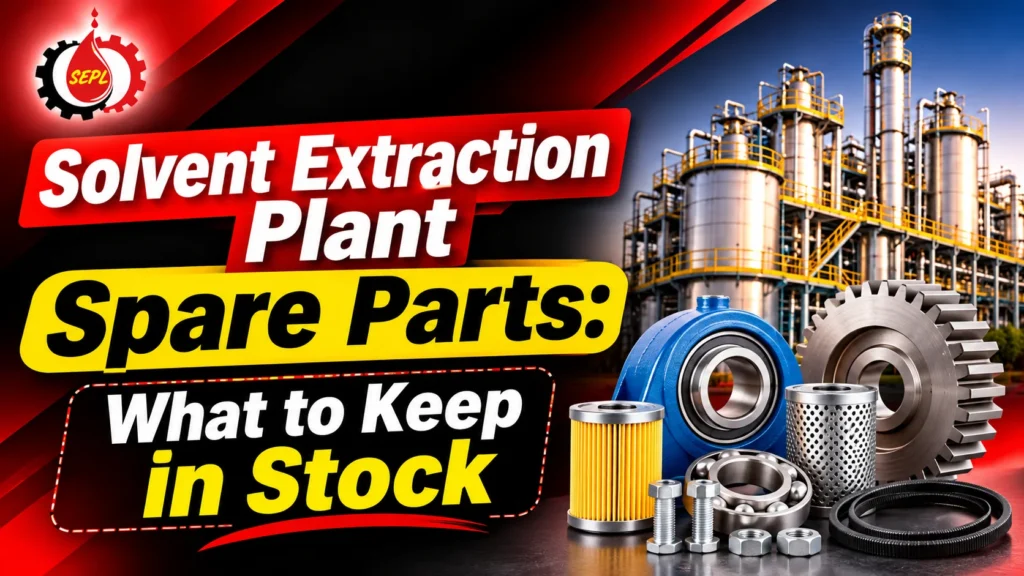
That is why smart plant owners plan their solvent extraction plant spare parts before the season starts, not after a breakdown. This guide explains which parts to stock, how many to keep, and how to build a simple spare parts plan that fits your budget.
Why Solvent Extraction Plant Spare Parts Planning Matters
Your plant handles hexane, steam, heat and heavy moving parts all at once. Parts wear out at different speeds. Some last years, while others need replacement every few months.
Good planning of solvent extraction plant spare parts gives you three clear benefits:
- Less downtime. You fix the problem the same day instead of waiting weeks for delivery.
- Lower cost. Planned purchases are cheaper than emergency orders and urgent freight.
- Better safety. Worn parts in a hexane system are a real risk. Replacing them on time keeps your team safe. You can read more in our guide on solvent extraction plant safety.
In our experience working with oil mills, most long shutdowns come from a small number of parts that were not in stock. Those are the parts you should know first.
How to Decide Which Spare Parts to Stock
You do not need to stock everything. A simple three-level method works well for any plant size.
| Category | What it means | Stocking rule |
|---|---|---|
| Critical | Plant stops fully if the part fails | Always keep at least one spare |
| Fast-moving | Wears out within months | Keep a full season of stock |
| Slow-moving | Rarely fails but has a long lead time | Keep one spare, or confirm quick supply |
Ask three questions about every part:
- What happens to production if it fails?
- How long does it take to get a replacement?
- How often has it failed in the past?
If the answers are “plant stops”, “more than two weeks” and “often”, that part goes to the top of your list.
Essential Solvent Extraction Plant Spare Parts to Keep in Stock
Below are the main groups of solvent extraction plant spare parts, organized by section of the plant.
1. Extractor Section Spares
The extractor is the heart of the plant, so its moving parts need the most attention.
- Extractor chain and links. The extractor chain carries the load all day and stretches over time. Keep spare links, pins and bushes.
- Sprockets and shafts. Worn sprockets damage new chains quickly, so replace them together when needed.
- Bearings and gearbox parts. Keep common sizes in stock, along with oil seals.
- Screens and perforated sheets. In a batch extractor setup, the filter plates and screens block or tear with use.
2. Conveyor and Material Handling Spares
Seeds, flakes and meal move through many conveyors. These parts take constant wear.
- Reddler chain and bulk flow chain with extra links
- Conveyor flights, trough liners and gearboxes
- Rotary valve rotors, end covers and seals, which keep hexane vapor from leaking between sections
- Motors, couplings and belts
For a full view of this area, see our page on material handling equipment and our article on material handling in a solvent extraction plant.
3. Desolventizer Toaster and Meal Cooling Spares
The desolventization toaster (DT) removes hexane from the meal using steam and heat. It works under hard conditions.
- Agitator shaft seals and sweep arms
- Steam coils and traps
- Gearbox oil and spare bearings
- Wear plates and trays
Do not forget the cooling side. The meal cooler and drier cooler need spare fans, drive belts and scraper parts.
4. Miscella and Distillation Section Spares
This section separates oil from hexane. It involves heat, vacuum and liquid movement, so leaks matter here.
- Miscella pump seals, bearings and impellers
- Miscella filter bags, meshes and gaskets
- Evaporator and flasher gaskets and tube spares
- Stripping column packing and internals
- Plate heat exchanger gaskets, which are cheap but cause long stops if missing
If you want to understand how this section works, read our guide to the miscella distillation process.
5. Solvent Recovery and Condensing Spares
Every liter of hexane lost is money lost, and also a safety risk. Keeping the recovery system healthy is a priority.
- Solvent condenser tubes, gaskets and cooling water spares
- Vapor scrubber packing and nozzles
- Solvent heaters tubes and seals
- Economizer tube spares
Our page on the hexane recovery system explains how these parts work together.
6. Valves, Instruments and Electrical Spares
These parts are small and low in price, but a failure can stop the whole plant.
- Gate, globe and safety valves in common sizes
- Pressure gauges, temperature sensors and level switches
- Steam traps and check valves
- Push buttons, contactors and overload relays
- Spare PLC cards if your plant is automated
Browse our valves and instrumentation range for details. If you run an automated line, our article on automation in a solvent extraction plant lists what control hardware to back up.
7. Boiler and Steam System Spares
No steam means no extraction. Keep these items close:
- Boiler feed pump seals
- Water level gauge glasses
- Safety valve and pressure gauges
- Spare parts for the boiler feeding conveyor and ash handling conveyor
More background is in our guide on the boiler and steam system.
8. Refinery Spares (If You Run a Refinery)
If your site also refines oil, add refinery items to your list. These include SS coils, filter cloths for the pressure leaf filter, deodorizer and bleacher parts, and centrifuge wear parts. See our edible oil refinery spares page for the full range.
Quick Reference: Wear Parts and Suggested Stock
The numbers below are general guidance. Your own stock levels should depend on your plant capacity, running hours and supplier lead time.
| Spare part | Wear speed | Suggested stock |
|---|---|---|
| Conveyor chain links | Fast | 5 to 10 percent of total links |
| Gaskets (all types) | Fast | One full season set |
| Pump mechanical seals | Fast | 2 per pump type |
| Bearings (common sizes) | Medium | 2 to 4 per size |
| Rotary valve seals | Medium | 1 full set |
| Valves and gauges | Slow | 1 per critical size |
| Gearboxes | Slow | 1 for the most critical drive |
Common Mistakes When Buying Solvent Extraction Plant Spare Parts
Plant owners often make the same errors. Avoid these:
- Buying only the cheapest part. Low-grade material wears faster and costs more over time.
- Ignoring material grade. Parts that touch hexane, steam or acidic oil need the right metal.
- Not keeping a record. Without a log, you cannot tell which parts fail often.
- Waiting for the shutdown. Order before the season, not during it.
- Skipping drawings and part numbers. Wrong sizes cause delays and rework.
Several of these overlap with problems we describe in our post on oil plant installation mistakes.
How to Build Your Own Spare Parts Plan
Follow these simple steps:
- List every machine in your plant, from the preparation section to the refinery.
- Mark critical parts that can stop production.
- Check your history. Note which parts you replaced in the last two years.
- Confirm lead times with your supplier for each part.
- Set a minimum stock level and reorder when you reach it.
- Review before every season. Update the list after each maintenance shutdown.
Pair this plan with a regular service routine. Our guide on solvent extraction plant maintenance gives you a practical schedule you can follow.
How to Choose a Reliable Spare Parts Supplier
The best stock plan fails if the supplier cannot deliver. Look for a supplier who:
- Knows your plant design and can match drawings
- Offers parts made from the correct material grade
- Keeps common items ready for quick dispatch
- Gives clear technical support when you are not sure what to order
For more detail, read our article on how to choose the right edible oil refinery spares manufacturer in India. You can also view our full range of solvent extraction plant spares and equipment.
Frequently Asked Questions
Q1: What are the most important solvent extraction plant spare parts to stock?
Start with extractor chains, bearings, gaskets, pump seals, rotary valve parts, valves and basic electrical items. These cause the most stoppages when missing.
Q2: How much should I spend on solvent extraction plant spare parts each year?
Many plants set aside a small share of their equipment value each year for spares and maintenance. The right figure depends on plant age, capacity and running hours, so use your own repair history to set it.
Q3: How often should I check my spare parts stock?
Check at least twice a year. Do one full review before the crushing season and a quick check midway through it.
Q4: Should I buy spare parts from the original plant manufacturer?
Original or matched-spec parts are the safest choice, because size and material fit your design. A good supplier can also make parts to your drawings if the material grade is correct.
Q5: Can better spare parts planning improve oil recovery?
Yes. Worn seals, leaking gaskets and tired conveyors reduce efficiency and increase solvent loss. Fresh parts help the plant run closer to its design performance. Our article on how a solvent extraction plant improves oil recovery explains this in more detail.
Final Thoughts
Good solvent extraction plant spare parts planning is not about buying more. It is about buying the right parts, in the right quantity, at the right time. Rank your parts by risk, track what fails, and review your list each season.
If you need help building a stock list for your plant, or want to buy spares for your solvent extraction plant, please contact our team. We will help you find the right parts for your capacity and oilseed.