
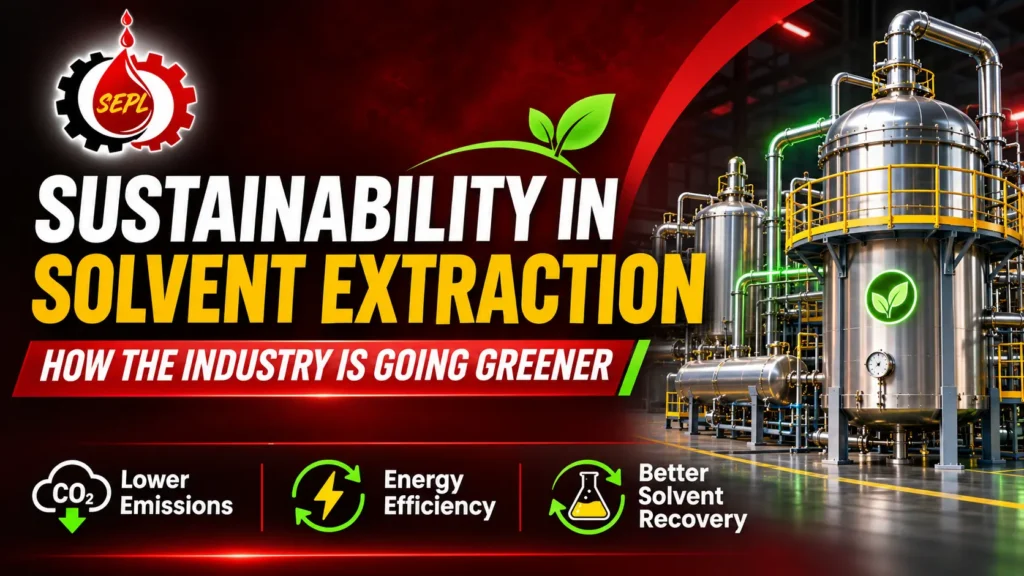
For decades, solvent extraction has been the most efficient way to recover oil from soybean, rice bran, sunflower, rapeseed and other oilseeds. It leaves very little oil in the meal, and that is exactly why large processors rely on it. But the process uses solvent, steam, electricity and water, so it has always carried an environmental question mark.
That question is now being answered. Today, a sustainable solvent extraction plant is not a marketing phrase. It is a practical plant design that recovers more solvent, wastes less energy, treats its own effluent and sells every by-product it can. Buyers, banks and regulators increasingly expect it.
In this guide, we explain what makes a solvent extraction plant sustainable, which technologies matter most, what it costs, and how to choose the right setup for your business.
What Is a Sustainable Solvent Extraction Plant?
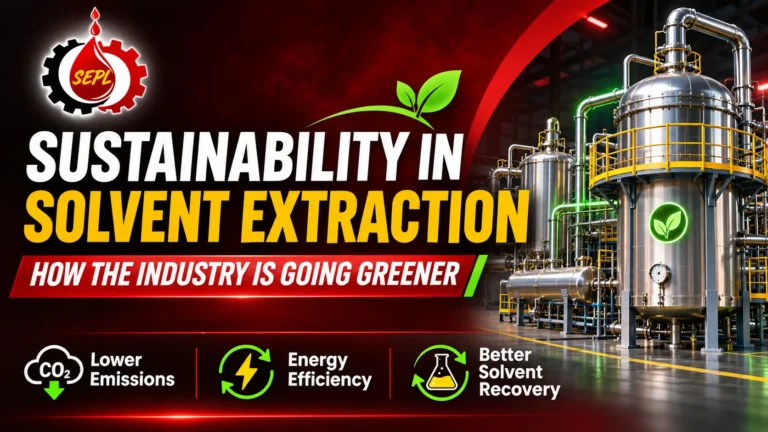
A sustainable solvent extraction plant is an oil extraction facility designed and operated to reduce its environmental footprint without hurting oil yield or profit. It does this in four main ways:
- Low solvent loss: Almost all hexane is recovered and reused instead of escaping into the air or leaving with the meal.
- Efficient energy use: Heat is recovered and reused across the process, so less steam and fuel are needed.
- Responsible water and waste handling: Effluent is treated, and solid waste is reused or disposed of properly.
- Full use of by-products: De-oiled cake, lecithin, husk and ash become products or fuel instead of waste.
The idea is simple. Every litre of solvent, every kilogram of steam and every tonne of by-product that you save or sell improves both the planet’s side and your balance sheet.
Why Sustainability Matters Now
Three pressures are pushing the industry toward greener plants.
- Rising energy and raw material costs. Fuel and steam are among the biggest running costs in any extraction unit. Saving energy directly saves money.
- Stricter environmental and safety rules. Regulators watch hexane emissions, wastewater quality and plant safety more closely than before.
- Buyer expectations. Large food companies and export customers ask processors about their environmental practices. A cleaner plant helps you win and keep contracts.
There is also a climate angle. Weather swings affect crop yields and seed supply, which changes how plants plan their capacity. Our article on oilseed crushing capacity and climate explains how this connects to plant planning.
Where a Traditional Plant Loses Resources
Before fixing a problem, it helps to see where it comes from. In an older or poorly maintained plant, losses usually happen in these places:
- Solvent vapor escaping from the extractor, condensers and vents
- Solvent staying behind in the meal if desolventizing is weak
- Excess steam use in the desolventizer toaster and distillation section
- Heat leaving through uninsulated pipes and hot condensate that is never reused
- Untreated wash water and process effluent
- Husk, ash and fines that are dumped instead of used
Each of these is fixable, and most of the fixes pay for themselves over time.
7 Ways a Sustainable Solvent Extraction Plant Goes Greener
1. Better Hexane Recovery
Hexane is the heart of the process, and it is also the biggest environmental and safety concern. A modern hexane recovery system captures solvent vapor and returns it to the cycle.
Key equipment that improves recovery includes:
- A properly sized solvent condenser to turn vapor back into liquid
- A vapor scrubber for distillate recovery to catch what the condensers miss
- Tight seals on the extractor and rotary valves to prevent leakage
Well-run plants track solvent loss in litres per tonne of seed processed and treat any rise in that number as an early warning for a leak or a worn part.
2. Efficient Desolventizing and Distillation
Steam is used to remove solvent from the meal and from the oil. If this stage is poorly designed, it wastes energy and can leave solvent in the meal. Understanding the desolventizer toaster process and the miscella distillation process helps you see where steam can be saved.
Good practices include:
- Using vapor from one stage to heat another stage
- Keeping the evaporator flasher and stripping column clean and well tuned
- Using a meal cooler properly so the finished meal leaves at a safe temperature
3. Smart Energy Management
Energy is where many plants find their quickest savings. A detailed look at an energy efficient solvent extraction plant shows how small changes add up. Common steps are:
- Installing an economizer to recover heat from flue gas
- Using a plate heat exchanger to preheat oil or water with waste heat
- Returning condensate to the boiler
- Insulating steam lines and hot vessels
- Running a well-managed boiler and steam system with proper fuel feeding and ash handling
4. Effluent Treatment and Water Care
Water leaves the plant through condensate, washing and refining steps. If it carries oil, solvent traces or chemicals, it must be treated before reuse or discharge. A dedicated effluent treatment setup for a solvent extraction plant protects local water sources and helps you meet discharge norms. Treated water can often be reused for cooling or cleaning, which cuts fresh water demand.
5. Safer Operation Through Automation
A safer plant is a more sustainable plant. Fires, leaks and shutdowns waste resources and put people at risk. Modern automation in a solvent extraction plant uses sensors, level controls and alarms so operators can spot problems early. Good valves and instrumentation make this possible. You can read more about the full set of practices in our guide to solvent extraction plant safety.
6. Turning By-Products into Revenue
A sustainable solvent extraction plant does not see waste. It sees products.
- De-oiled cake is a protein-rich ingredient. Learn how it is made in our guide to the de-oiled cake production process, and how it supports the animal feed industry.
- Soya lecithin can be recovered during degumming. See the soya lecithin extraction process.
- Husk and biomass can fuel the boiler, which reduces reliance on outside fuel.
- Spent bleaching earth still holds oil that can be recovered in a spent earth extraction plant.
7. Preventive Maintenance
A plant that is not maintained leaks, wears and wastes. Regular checks on gaskets, chains, pumps and heat exchangers keep losses low. Our guides on solvent extraction plant maintenance and annual maintenance contracts explain how to plan this. Keeping quality spare parts in stock also avoids long breakdowns.
Traditional Plant vs Sustainable Solvent Extraction Plant
| Area | Traditional Plant | Sustainable Solvent Extraction Plant |
|---|---|---|
| Solvent recovery | Basic condensers, higher losses | Multi-stage recovery with scrubber |
| Energy use | High steam demand, little heat reuse | Heat recovery, economizer, insulation |
| Water | Often discharged with little treatment | Treated and partly reused |
| Monitoring | Mostly manual | Sensors, alarms and automation |
| By-products | Sold at low value or dumped | Cake, lecithin, husk fuel and spent earth recovered |
| Safety | Higher leak and fire risk | Better sealing, controls and training |
| Long-term cost | Higher running cost | Lower running cost over time |
Solvent Extraction vs Expellers: Which Is Greener?
Many small processors ask whether an oil expeller is the cleaner choice. The honest answer depends on scale and design. Expellers do not use hexane, but they leave more oil in the cake, so more seed is needed for the same oil output. Solvent extraction recovers far more oil from each tonne of seed, which means less raw material is wasted. For large volumes, a well-designed solvent plant is usually the more resource-efficient route. For a detailed comparison, read our article on solvent extraction vs oil expeller.
Higher recovery also links directly to sustainability. If you want to extract more oil from the same seed, see how to improve oil yield in solvent extraction.
Matching Sustainability to Your Raw Material
Different seeds need different handling, so a sustainable setup is never one-size-fits-all.
- A soybean solvent extraction plant usually runs at large scale, so heat recovery and lecithin recovery matter a lot.
- A rice bran solvent extraction plant deals with a delicate raw material that must be processed fresh, so speed and efficiency are important.
- A sunflower or rapeseed plant needs good seed preparation to keep yield high.
Our guide on oilseed preparation for solvent extraction shows why proper cleaning, cracking and flaking save energy later in the process.
What Does a Sustainable Plant Cost?
A greener plant can cost more at the start because of better condensers, heat recovery units, automation and effluent treatment. However, these items usually lower solvent purchases, fuel bills and downtime. The result is a lower cost per tonne over the life of the plant.
To plan your budget, start with our breakdown of solvent extraction plant cost in India and the soybean oil plant cost in India. You can also check whether support is available through the edible oil plant subsidy in India. To estimate production, try the solvent extraction plant output calculator.
Common Challenges on the Way to Greener Operations
Going green is not always easy. Processors often face:
- Higher upfront investment
- Old equipment that is hard to upgrade
- Lack of trained operators
- Poor data, so losses go unnoticed
These are normal hurdles, and we cover them in more depth in our article on solvent extraction plant challenges. Starting with a loss audit helps you fix the biggest problems first.
Trends to Watch
The industry keeps moving. Digital monitoring, better heat integration, improved solvent recovery and lower-emission boilers are all becoming more common. For a wider view, see our article on solvent extraction plant technology trends.
How to Choose a Partner for a Sustainable Plant
The best design on paper means little without good execution. When you compare suppliers, look for:
- Proven installations, not just brochures
- Clear solvent loss and steam consumption figures
- Strong after-sales service and spare parts support
- Safety design built into the layout, not added later
- Willingness to explain trade-offs honestly
Our guide on how to choose the right solvent extraction plant manufacturer in India gives a full checklist. You can also read about turnkey oil plant manufacturers if you want one partner to handle everything, and review common oil plant installation mistakes before you start building.
A Simple Checklist to Make Your Plant Greener
- Measure solvent loss per tonne of seed every month.
- Check all condensers, scrubbers and seals for leaks.
- Survey steam lines and insulate where heat is escaping.
- Add or repair heat recovery equipment.
- Review your effluent treatment results.
- Find a market for every by-product.
- Train operators on safe, efficient practices.
- Book regular maintenance before breakdowns happen.
Frequently Asked Questions
Q1: What is a sustainable solvent extraction plant?
It is an oil extraction plant built and run to use less solvent, less energy and less water, while treating its waste and selling its by-products. It aims to protect both the environment and the operator’s profit.
Q2: Is hexane safe for the environment?
Hexane is flammable and can pollute air if it escapes, which is why recovery and safety systems matter so much. A well-designed plant keeps solvent in a closed loop and tightly controls emissions.
Q3: How can I reduce solvent loss in my plant?
Maintain condensers and scrubbers, seal moving parts properly, desolventize the meal fully, and track losses regularly. Most problems show up first as a rise in solvent consumption.
Q4: Does a greener plant reduce oil yield?
No. In most cases, better design and control improve yield, because the same upgrades that save energy and solvent also keep the process stable.
Q5: Is solvent extraction better than expeller pressing for sustainability?
For medium and large volumes, solvent extraction usually wastes less seed because it leaves far less oil in the meal. Small operations may still prefer expellers for simplicity.
Q6: Can an old plant be upgraded?
Often yes. Adding heat recovery, better condensers, scrubbers and automation can improve performance without building a new plant. A technical audit will show what is worth upgrading.
Q7: What by-products can a solvent extraction plant sell?
De-oiled cake for feed, lecithin, husk or biomass for fuel, and recovered oil from spent earth are the most common ones.
Final Thoughts
Sustainability in solvent extraction is no longer optional. A sustainable solvent extraction plant lowers your running costs, reduces risk, helps you meet regulations and builds trust with buyers. The path is clear: recover more solvent, save more energy, treat what you discharge and sell what used to be waste.
If you are planning a new project or want to upgrade an existing one, our team can help you design a plant that fits your raw material, capacity and budget. Explore our solvent extraction plant solutions or contact us for a technical discussion.