

If you run or plan to build an oil extraction unit, you have probably noticed that the industry is changing fast. Power costs are higher, safety rules are tighter, and buyers want more oil and more protein meal from every tonne of seed.
This guide covers the solvent extraction plant technology trends that matter most in 2027. We explain each trend in simple words, show what it means for your plant, and share practical tips so you can decide what to upgrade first.
Quick Summary: Top Solvent Extraction Plant Technology Trends in 2027
Trend | Main Benefit | Best For |
PLC and SCADA automation | Stable output, fewer operator errors | New and existing plants |
Energy efficient design | Lower steam and power cost | High-capacity plants |
Advanced hexane recovery | Less solvent loss, better safety | Every plant |
Smarter safety systems | Fewer incidents, easier compliance | Every plant |
Predictive maintenance | Less downtime | Plants with older equipment |
Better effluent treatment | Meets pollution norms | Plants near towns or rivers |
Modular and flexible plants | Faster setup, multi-seed use | New investors |
Cleaner fuel and boilers | Lower fuel cost, lower emissions | Plants with high steam demand |
1. Automation Is Moving from “Nice to Have” to “Must Have”
A few years ago, many plants ran with manual valves and an operator who “felt” the process. Today, PLC and SCADA control rooms are becoming standard.
Automation helps with:
- Steady temperatures in the extractor, desolventizer toaster and distillation section
- Accurate flow control of solvent and miscella
- Instant alarms when pressure, level or temperature moves out of range
- Better records for audits and troubleshooting
The result is more consistent oil recovery and less residual oil in the meal. If you want to see how this works in practice, read our guide on automation in a solvent extraction plant. Good valves and instrumentation are the foundation here, because a smart control system is only as good as the sensors and valves behind it.
Practical tip: You do not need to automate everything at once. Start with the sections that waste the most energy or carry the most safety risk, such as the desolventizer toaster and the solvent recovery loop.
2. Energy Efficiency Is Now a Design Priority
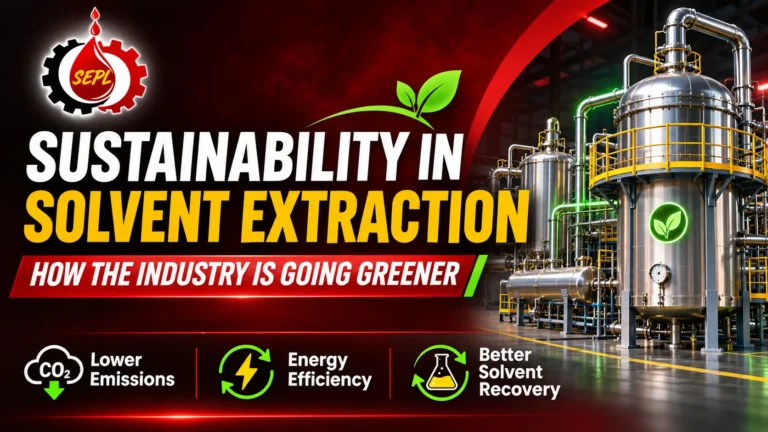
Steam is usually the biggest running cost in a solvent extraction plant. The industry response in 2027 is to recover and reuse heat wherever possible.
Common upgrades include:
- Better heat exchange between hot and cold streams. A plate heat exchanger can capture heat that older plants simply lose.
- A well-designed economizer to preheat the miscella before distillation
- Optimized evaporator and flasher stages to separate oil from solvent with less steam
- Insulation and steam trap management to stop silent losses
Actual steam use depends on the seed, moisture, plant design and operating discipline, so figures vary widely from plant to plant. What does not vary is the direction of the trend: every serious plant is now measuring steam per tonne of seed and trying to bring it down. For a deeper look, see our article on energy efficient solvent extraction plants and our notes on the boiler and steam system.
3. Smarter Hexane Recovery and Lower Solvent Loss
Hexane is both a cost and a safety concern, so every drop you lose is money and risk. Newer plants focus on recovering as much solvent as possible at each stage.
Key technologies include:
- Efficient solvent condensers with proper cooling water control
- A vapor scrubber for distillate recovery to capture hexane from vent gases
- A properly sized stripping column to remove solvent traces from the oil
- Tight sealing and good rotary valves to stop leaks at feed and discharge points
To understand how the full loop works, read about the hexane recovery system and the miscella distillation process.
4. Safety Technology Is Getting Smarter
Hexane is flammable, so safety is never optional. In 2027, we see more plants adding layers of protection instead of relying on one device.
Common safety upgrades:
- Gas detectors placed at likely leak points
- Interlocks that stop feed or shut valves when conditions are unsafe
- Flameproof electrical fittings in hazardous zones
- Emergency shutdown logic built into the control system
- Regular operator training and written procedures
Our detailed guide on solvent extraction plant safety covers these points step by step. You can also avoid common errors by reading about oil plant installation mistakes.
5. Better Desolventizing and Meal Quality
The desolventizer toaster removes solvent from the meal and also decides much of its final quality. Modern designs focus on even heating, better steam contact and proper cooling afterward.
This matters because buyers of de-oiled cake and soybean meal check protein quality, moisture and residual solvent. Upgrading to an efficient desolventization toaster (DT) together with a meal cooler can improve both quality and shelf life. Learn more in our guide to the de-oiled cake production process.
6. Extractor Design and Oil Yield
Yield is where profit is made. Modern extractors are designed for better solvent contact, even bed depth and smooth flake movement. Wear parts such as the extractor chain and reddler chain are built from tougher materials, which cuts stoppages.
Good extraction also starts before the extractor. Flake thickness, moisture and temperature all affect results, which is why oilseed preparation is a hot topic in 2027. If you want practical steps, see how to improve oil yield in solvent extraction and compare types of solvent extractors.
7. Predictive Maintenance Instead of Breakdown Repairs
Many plants are moving from “fix it when it breaks” to “fix it before it breaks.” Simple tools such as vibration checks, temperature logging and oil analysis on gearboxes can warn you early.
Why it matters:
- Unplanned shutdowns during peak crushing season are expensive
- Planned repairs are cheaper and safer
- Spare parts can be ordered in advance
A strong maintenance plan is easier to run when you keep critical spare parts in stock. Read our guides on solvent extraction plant maintenance and annual maintenance contracts to build a routine that fits your plant.
8. Cleaner Effluent and Environmental Compliance
Pollution norms are tightening, and customers and banks now ask about environmental performance. Plants are investing in better wastewater handling and air emission control. A wet scrubber helps control dust and fumes, and a proper treatment system handles process water.
See our overview of effluent treatment for solvent extraction plants for what a compliant setup usually includes.
9. Modular and Flexible Plant Design
Another clear trend is flexibility. Investors want plants that start fast and can handle more than one seed as markets shift. Modular layouts shorten installation time and make future expansion easier.
If you are deciding between approaches, compare turnkey vs modular solvent extraction plants. A good plant layout design also reduces material handling cost and keeps the process safe and easy to operate. For multi-seed use, you can explore processes for soybean, sunflower, rice bran, cottonseed and mustard.
10. Integrated Refining for Higher Value
More extraction plants now add a refinery so they can sell finished oil, not only crude oil. Modern refining uses efficient bleachers, deodorizers and pressure leaf filters to improve color, taste and shelf life. If you are weighing the idea, see how an edible oil refinery plant fits with extraction, and read about crude oil vs refined oil.
Old Plant vs Modern Plant: A Simple Comparison
Area | Older Setup | 2027 Setup |
Control | Manual operation | PLC and SCADA with alarms |
Heat use | Heat often wasted | Heat recovery and economizers |
Solvent loss | Higher, hard to track | Lower, measured and monitored |
Safety | Basic protection | Layered detection and interlocks |
Maintenance | After breakdown | Planned and condition based |
Meal quality | Variable | More uniform |
Expansion | Difficult | Modular and flexible |
How to Choose Which Upgrade to Make First
You do not need to adopt every trend at once. Use this order as a starting point:
- Safety first. Fix leaks, add gas detection and check interlocks.
- Measure. Track steam, power and solvent use per tonne of seed.
- Fix the biggest loss. This is often steam, hexane or meal quality.
- Automate step by step. Begin with critical sections.
- Plan maintenance. Stock spares and set service schedules.
If you are building from scratch, our guides on how to set up a soybean solvent extraction plant in India, plant capacity selection and solvent extraction plant cost in India will help you plan the budget. You can also check available support in our article on the edible oil plant subsidy in India.
Frequently Asked Questions
Q.1 What are the main solvent extraction plant technology trends in 2027?
The biggest trends are PLC and SCADA automation, energy efficient design, better hexane recovery, layered safety systems, predictive maintenance, improved effluent treatment and modular plant layouts.
Q.2 How can I reduce steam consumption in my solvent extraction plant?
Start by measuring steam per tonne of seed. Then improve heat recovery with an economizer and heat exchangers, fix steam leaks, insulate pipes and tune the desolventizer toaster and distillation section.
Q.3 Is automation worth it for a small or medium plant?
Yes, in most cases. Even basic automation of temperature, level and pressure improves consistency and safety. You can start with critical sections and expand later.
Q.4 How do I reduce hexane loss?
Keep condensers and cooling water in good condition, use a vapor scrubber, seal rotary valves properly, maintain the stripping column and fix leaks quickly. Regular measurement helps you spot problems early.
Q.5 Are there alternatives to hexane?
Researchers are studying solvents such as ethanol and isopropanol, but hexane is still the standard for large-scale commercial plants because of its efficiency and cost. Any switch needs careful engineering and testing.
Q.6 What is the difference between turnkey and modular plants?
A turnkey plant is delivered as a complete ready-to-run project. A modular plant is built in sections, which shortens installation time and makes expansion easier. Our comparison guide explains both.
Q.7 How much does a solvent extraction plant cost in India?
Cost depends on capacity, seed type, level of automation and scope of supply. See our detailed cost guide for a breakdown.
Final Thoughts
The best solvent extraction plant technology trends in 2027 share one idea: get more oil and better meal from every tonne of seed, with lower energy use and lower risk. You do not need a full rebuild to benefit. Small, well-chosen upgrades in automation, heat recovery and solvent recovery often pay back quickly.
If you are planning a new plant or an upgrade, talk to our team. We can review your current setup and suggest the upgrades that will make the biggest difference. Contact us today, or try our solvent extraction plant output calculator to estimate your plant’s potential.