
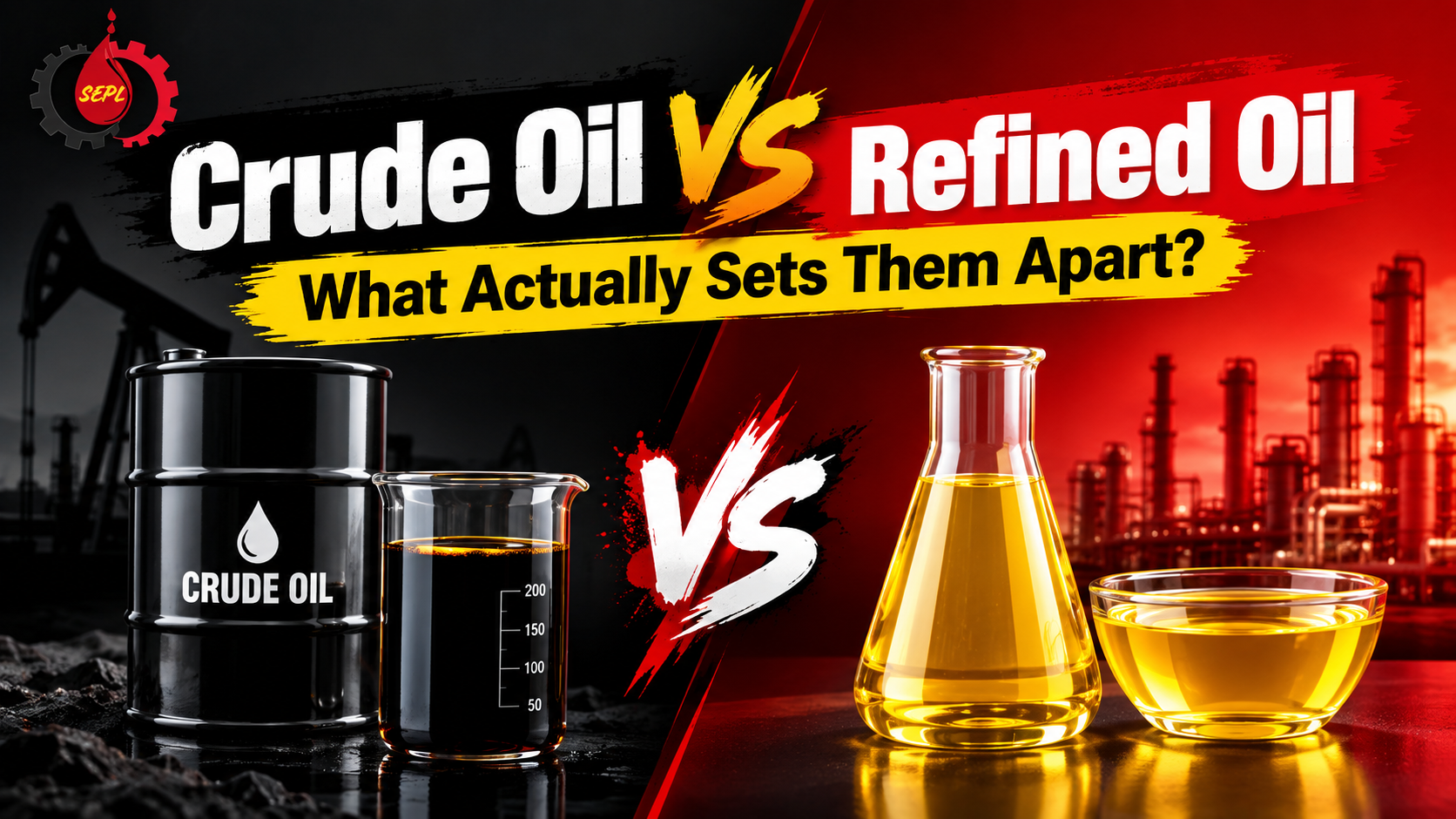
 Crude Oil vs Refined Oil: What Actually Sets Them Apart
If you have ever stood in front of two bottles of oil, one labeled “crude” and one labeled “refined,” and wondered what the real difference is, you are not alone. This is one of the most common questions people ask when they get into the edible oil business, whether they are buying oil for a kitchen, sourcing raw material for a factory, or planning to set up their own oil plant.
The short answer is that crude oil is the raw, unprocessed oil straight out of the seed or fruit, while refined oil has gone through several cleaning and treatment steps to make it safer, clearer, and longer lasting. But that one-line answer hides a lot of useful detail, and that detail matters if you are making decisions about quality, cost, or your own production line.
In this guide, we will break down crude oil vs refined oil in plain language, covering how each one is made, how they differ in taste, smell, nutrition, and shelf life, and which one you should choose depending on your needs.
What Is Crude Oil?
Crude oil, in the edible oil world, is not the same as petroleum crude oil. Here we are talking about vegetable and seed oils that have just been extracted from their source, such as soybeans, groundnuts, sunflower seeds, mustard seeds, or palm kernels.
This oil is usually obtained through mechanical pressing or through a solvent extraction plant, which pulls out the maximum amount of oil from the seed or cake. Right after extraction, this oil is far from ready for the dinner table. It still contains:
- Free fatty acids
- Gums and phospholipids
- Waxes
- Pigments and color compounds
- Trace moisture and dirt particles
- Sometimes a strong, raw smell
Because of these impurities, crude oil looks cloudy or dark, has a strong natural odor, and can turn bad quickly if stored for too long without treatment.
What Is Refined Oil?
Refined oil is crude oil that has been cleaned up through a series of controlled steps inside an edible oil refinery plant. The goal of refining is simple: remove everything that does not belong in the oil while keeping the good part, the fat itself, intact.
A typical refining process includes:
- Degumming – removing gums and phospholipids through the degumming process
- Neutralization – treating the oil to remove free fatty acids through neutralization
- Bleaching – removing color pigments using the bleaching process
- Deodorization – removing smell and volatile compounds through deodorization
- Winterization (for some oils) – removing waxes so the oil stays clear even in cold weather, done through winterization
Once oil goes through these stages, it comes out light in color, mild in smell, stable, and safe for long term storage. This is the oil you usually find on supermarket shelves.
Crude Oil vs Refined Oil: Side by Side Comparison
| Feature | Crude Oil | Refined Oil |
| Appearance | Dark, cloudy, sometimes murky | Clear, light golden or pale yellow |
| Smell | Strong, natural, sometimes sharp | Mild or almost neutral |
| Taste | Strong, raw flavor of the source seed | Light, neutral taste |
| Shelf life | Shorter, spoils faster | Longer, more stable |
| Impurities | Contains gums, waxes, free fatty acids | Impurities largely removed |
| Nutrients | Retains more natural nutrients and antioxidants | Some heat sensitive nutrients reduced during processing |
| Smoke point | Usually lower | Usually higher |
| Cost | Generally cheaper as raw material | Costs more due to processing |
| Common use | Industrial use, further processing, some traditional cooking | Direct household cooking, frying, packaged food industry |
Why the Difference Actually Matters
1. Health and Safety
Crude oil is not meant to be consumed directly in most cases. The free fatty acids and other impurities can affect digestion and are not considered food grade until treated. Refined oil, once it passes through neutralization and deodorization, is safe and stable for regular cooking.
That said, some crude oils, like cold pressed mustard oil or virgin coconut oil, are minimally processed and still safe to eat because of how they are extracted. This is different from crude oil that is meant only as raw material for further refining.
2. Cooking Performance
Refined oil usually has a higher smoke point, which means it can handle higher cooking temperatures without breaking down or producing smoke. This makes it a better choice for deep frying and high heat cooking. Crude or unrefined oils tend to smoke and burn faster, changing the taste of the food and reducing the oil’s usefulness for frying.
3. Shelf Life and Storage
Because crude oil still has gums, moisture, and other reactive compounds, it oxidizes faster and can turn rancid within a few months. Refined oil, being free of most of these compounds, can stay fresh for a year or longer if stored properly, which is one reason it dominates the packaged food industry.
4. Taste and Aroma
Some people actually prefer the strong, natural taste of crude or lightly processed oils, especially in traditional cooking. Mustard oil and sesame oil are good examples where the raw aroma is part of the appeal. Refined oil, on the other hand, is designed to be neutral so it does not interfere with the taste of other ingredients.
5. Cost and Business Use
For businesses, this difference decides the entire product line. Crude oil is cheaper to buy or produce and is often used as a base for further processing, such as making soap, biodiesel, or animal feed byproducts through processes like de-oiled cake production. Refined oil, being a finished consumer product, sells at a higher price point but needs investment in refining equipment and process control.
How Crude Oil Becomes Refined Oil: A Simple Walkthrough
To understand this better, imagine you are running a small oil business. Here is roughly how the journey looks from seed to bottle:
- Seeds or oil bearing material go through crushing and extraction, often using a solvent extraction plant for maximum oil yield.
- The extracted mixture is processed through miscella distillation and desolventizer toaster systems to separate the crude oil from the solvent.
- Leftover solvent traces are recovered using a hexane recovery system, which also helps cut production cost.
- The crude oil then enters the refining stage, going through degumming, neutralization, bleaching, and deodorization.
- The finished refined oil is filtered, tested for quality, and packed for sale.
Each of these steps plays a role in how solvent extraction improves oil recovery compared to older, purely mechanical methods, which is why most modern oil plants combine extraction and refining under one roof.
Which One Should You Choose?
This depends entirely on what you need the oil for.
Choose crude oil if:
- You are buying raw material for further processing or manufacturing
- You run a traditional kitchen that specifically wants the natural, unrefined flavor
- You are working with cold pressed specialty oils meant to be consumed close to their natural state
Choose refined oil if:
- You need oil for daily household cooking or frying
- You are supplying a packaged food business that needs consistent taste and long shelf life
- You want a product with a longer shelf life and higher smoke point
For businesses planning to enter the edible oil industry, the smarter long term move is often to set up a plant that can handle both extraction and refining. This gives you control over quality at every stage and opens up multiple product lines from the same raw material, something a turnkey oil plant manufacturer can help you plan from the ground up.
Frequently Asked Questions
Is crude oil healthier than refined oil?
Not always. Crude oil retains more natural nutrients, but it can also carry impurities that are not ideal for regular consumption. Refined oil removes these impurities but may lose a small amount of heat sensitive nutrients in the process. The healthier choice depends on how the crude oil was processed and whether it is genuinely food grade.
Can you cook directly with crude oil?
Only if it is labeled food grade or cold pressed for direct consumption. Industrial crude oil meant for refining should not be used for cooking.
Why does refined oil cost more than crude oil?
Refining involves multiple stages of equipment, energy, and quality checks, all of which add to the production cost. This is passed on to the final price of refined oil.
Does refining remove all nutrients from oil?
No, refining does not remove all nutrients. It mainly targets impurities, free fatty acids, color, and smell. Some heat sensitive vitamins may reduce slightly, but the core fat content and calorie value remain largely the same.
What is the difference between crude oil and virgin oil?
Crude oil generally refers to oil straight from extraction, often meant for further refining. Virgin oil, like virgin olive oil or virgin coconut oil, is also unrefined but is processed carefully enough to be safe and tasty for direct consumption without going through full refining.
Which oil has a longer shelf life, crude or refined?
Refined oil has a longer shelf life because the impurities that cause faster spoilage, such as gums and moisture, are removed during processing.
Final Thoughts
The debate around crude oil vs refined oil is not really about which one is better in every situation. It is about matching the right type of oil to the right purpose. Crude oil is the starting point, rich in natural character but short in shelf life and often not ready for direct use. Refined oil is the finished, dependable product built for everyday cooking and long term storage.
If you are planning to set up an edible oil business, understanding this difference is the first step toward choosing the right equipment and process for your goals. Whether you need a solvent extraction setup, a full refinery line, or both, getting expert guidance early on can save you significant cost and rework down the line.