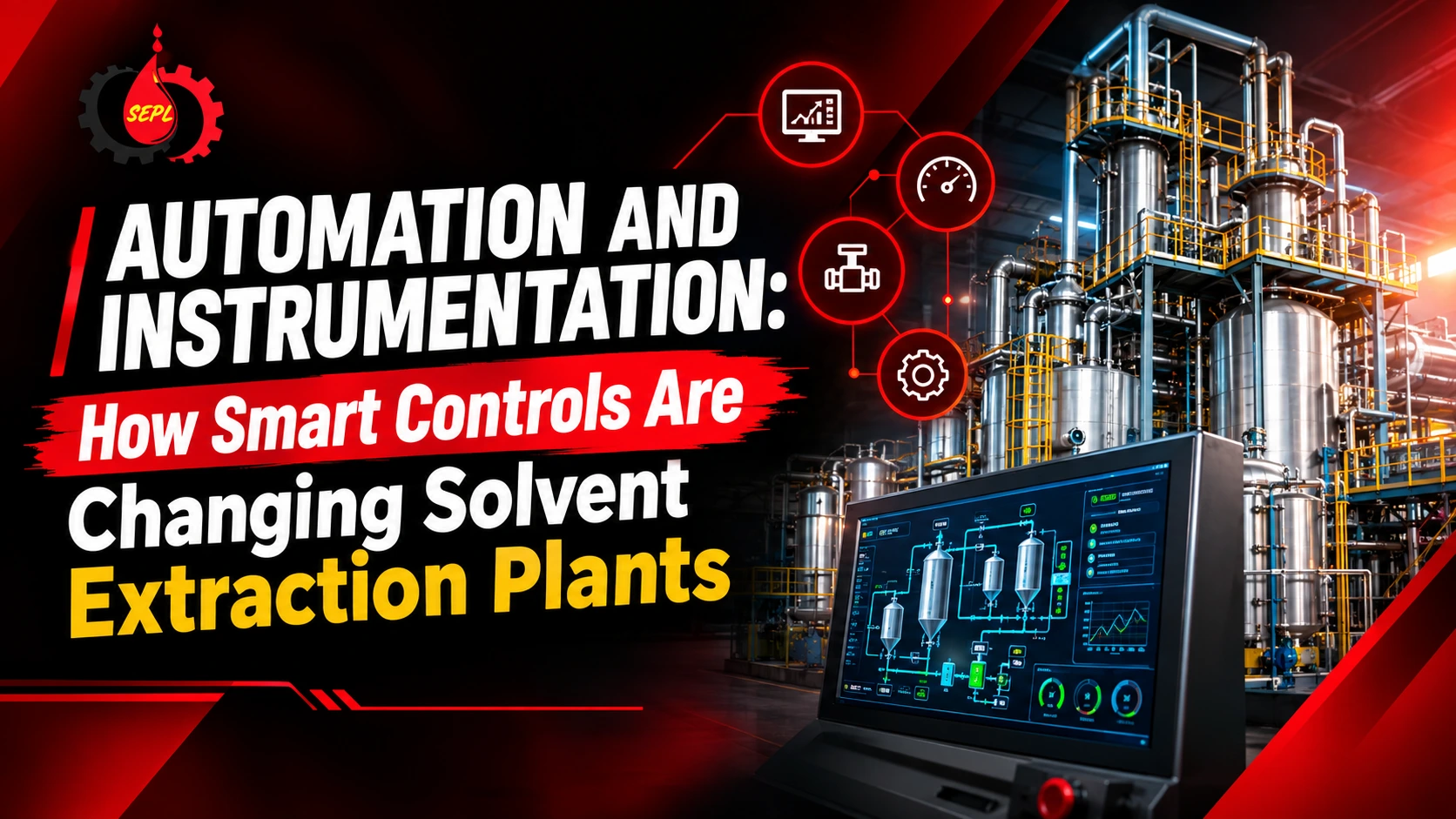
 Ten years ago, many plants ran on manual valves, hand-written logs and operators who listened for changes in the machine sound. That still works, but it leaves a lot of oil and money on the table. Today, automation in a solvent extraction plant is becoming the standard for processors who want steady output, safer operations and lower running costs.
This guide explains, in simple words, what automation and instrumentation mean in this industry, which parts matter most, and how to plan an upgrade without wasting your budget.
What Is Automation in a Solvent Extraction Plant?
A solvent extraction plant uses a solvent, usually hexane, to pull oil out of prepared seeds or cake. The process has many linked stages, and each stage depends on temperature, pressure, flow and level staying in a narrow range.
Automation means sensors measure these values, a controller makes decisions, and valves, motors and pumps respond on their own. Instrumentation is the set of devices that does the measuring and the final action. Together they replace guesswork with data.
Why Smart Controls Matter Now
Processors tell us the same problems again and again:
- Residual oil in meal changes from shift to shift
- Solvent loss is higher than expected
- Small upsets turn into long shutdowns
- Records are incomplete during audits
- Skilled operators are hard to find and keep
Smart controls address each of these. They hold the process steady, warn early and keep a clean history of what happened.
Core Instruments Used in Modern Plants
Good automation starts with good field instruments. Here is where they matter most.
| Instrument | Where it is used | What it does |
| Temperature sensors (RTD) | Extractor, desolventizer, distillation | Keeps heat within the correct range |
| Pressure transmitters | Vapor lines, condensers, vacuum systems | Prevents over-pressure and vapor leaks |
| Level transmitters | Miscella tanks, solvent tanks, hoppers | Avoids overflow and dry running |
| Flow meters | Solvent feed, miscella, steam | Controls ratio and tracks consumption |
| Gas detectors | Extraction area, pump house | Detects hexane leaks early |
| Variable frequency drives | Conveyors, fans, pumps | Matches motor speed to real load |
| Control valves | Steam, solvent, water lines | Makes fine adjustments automatically |
Reliable valves and instrumentation are the foundation. A smart control system is only as good as the signals it receives, so cheap or poorly calibrated sensors defeat the purpose.
The Control Layer: PLC, DCS and SCADA
Three terms come up often, and they are easy to confuse.
PLC (Programmable Logic Controller): This is the brain on the plant floor. It reads sensor signals, runs the logic and sends commands to equipment. You can read more about the PLC concept if you are new to it.
SCADA: This is the screen layer. It shows live graphs, alarms and trends on a computer in the control room. It also stores history for review. Here is a short note on SCADA.
DCS (Distributed Control System): This is used in very large plants where hundreds of loops need tight coordination.
For most small and mid-size plants, a PLC with a SCADA screen gives the best balance of cost and capability.
Where Automation Helps Most, Stage by Stage
1. Preparation and Feeding
Automatic feed control keeps the flow of flakes or cake steady into the extractor. A steady feed gives steady contact time with solvent, which gives steady recovery. This matters for crops like soybean and rice bran, where material properties can change from batch to batch.
2. Extraction
Here the controller manages solvent flow, bed depth, miscella concentration and temperature. Even a small improvement in contact control can raise yield. We cover the wider picture in our article on how a solvent extraction plant improves oil recovery.
3. Desolventizing and Toasting
Heat and steam must be balanced carefully. Too little heat leaves solvent in the meal. Too much heat damages protein quality. Automatic temperature and steam control inside the desolventizer toaster keeps both risks low and protects the quality of your de-oiled cake.
4. Miscella Distillation
Level, vacuum and temperature loops work together to separate oil from solvent efficiently. Stable miscella distillation means less energy waste and cleaner crude oil.
5. Solvent Recovery
This is where automation pays back quickly. A well-controlled hexane recovery system keeps condenser temperature, cooling water flow and vent conditions in range, which cuts solvent loss. Hexane is costly, so even a small saving adds up over a year.
Manual vs Automated Plant: A Simple Comparison
| Factor | Manual operation | Automated operation |
| Process stability | Depends on operator skill | Held steady by control loops |
| Response to upsets | Slow, after the problem grows | Fast, with alarms and auto action |
| Solvent loss | Harder to track | Measured and trended |
| Safety | Relies on human alertness | Interlocks and gas alarms add layers |
| Record keeping | Paper logs | Digital history and reports |
| Training time | Long | Shorter, guided by screens |
| Upfront cost | Lower | Higher |
| Long-term cost | Higher losses and downtime | Lower waste and better yield |
Automation costs more at the start, but the running cost is usually lower over the plant’s life.
Safety: The Biggest Reason to Automate
Hexane is flammable, and safety is not optional. Smart controls add protective layers that do not depend on one person noticing a problem in time:
- Gas detection alarms that warn before vapor reaches a dangerous level
- Interlocks that stop steam, pumps or conveyors if pressure or temperature goes out of range
- Emergency shutdown logic that brings the plant to a safe state in a set order
- Alarm history that helps teams find root causes after an event
Automation does not replace safe design, trained staff and regular inspection. It adds another layer on top of them. Always follow your local safety rules and statutory requirements for flammable solvent handling.
Practical Benefits You Can Expect
Results vary by plant, crop and starting condition, but processors commonly see gains in these areas:
- More consistent residual oil in meal
- Lower solvent consumption per ton processed
- Better steam and power use
- Fewer unplanned stoppages
- Easier shift handover because data is visible to everyone
- Faster troubleshooting with trend graphs
We suggest you measure your own baseline before an upgrade, such as solvent loss, steam use and downtime hours. Then compare after commissioning. That is the honest way to judge the return.
Common Mistakes to Avoid
From what we see in the field, these errors cause most automation disappointments:
- Buying the control system before fixing the process. Automation cannot rescue a badly designed plant.
- Choosing low-grade sensors to save money. Poor signals lead to poor control.
- Skipping operator training. People must trust and understand the screens.
- No plan for spare parts. Keep critical sensors and valves in stock. Our spares and equipment range can help with this.
- Ignoring calibration. Instruments drift, so schedule regular checks.
Many of these overlap with the issues in our guide on oil plant installation mistakes.
How to Plan an Automation Upgrade
Follow these steps for a smooth project:
- Audit the current plant. List every manual valve, gauge and trouble spot.
- Set clear goals. For example, lower solvent loss or reduce stoppages.
- Start with critical loops. Temperature, pressure and level in key areas come first.
- Choose open, well-supported hardware. You should be able to get service and parts locally.
- Phase the work. Upgrade section by section if you cannot stop production for long.
- Train and document. Operators and maintenance staff need simple manuals.
If you are building new, a turnkey oil plant manufacturer can design process and controls together, which avoids mismatches. Our guide on choosing the right solvent extraction plant manufacturer in India lists what to check before you decide.
Does Automation Apply to Refineries Too?
Yes. In an edible oil refinery plant, steps like degumming, neutralization and deodorization rely on precise dosing, temperature and vacuum. Automation brings the same benefits of consistency and better records.
Thinking About Cost
Cost depends on plant capacity, number of control points, the level of SCADA you want and the brand of instruments. A basic setup covers essential loops and alarms. A full setup adds trends, reports, remote access and advanced interlocks. For a broader view of project budgeting, read our article on soybean oil plant cost in India. For a quote that fits your plant, contact our team with your capacity and raw material details.
Frequently Asked Questions
Q1 What is automation in a solvent extraction plant?
It is the use of sensors, controllers and software to run and monitor the extraction process with little manual input.
Q2 Is a PLC enough, or do I need SCADA too?
A PLC runs the control logic. SCADA adds screens, alarms and data history. Most plants benefit from using both.
Q3 Can I automate an old plant?
Usually yes. Many plants are upgraded in phases, starting with key instruments and control loops.
Q4 Does automation reduce hexane loss?
It helps by keeping condenser, vent and temperature conditions stable, and by showing losses clearly so you can act on them.
Q5 Will automation replace operators?
No. Operators are still needed for judgment, inspection and maintenance. Automation takes over repetitive control and gives them better information.
Q6 How often should instruments be calibrated?
It depends on the instrument and duty, but regular scheduled checks are a good practice. Follow the maker’s advice and your plant’s quality plan.
Q7 Is automation worth it for small plants?
Often yes, especially for safety and solvent savings. Start small with the most critical loops and expand later.
Final Thoughts
Automation is no longer a luxury. For any modern automation solvent extraction plant project, smart controls bring steadier quality, stronger safety and clearer data. The best results come from good process design, reliable instruments, a sensible control system and well-trained people working together.
If you plan to upgrade or build, start with a clear audit and a phased plan. Then choose a partner who understands both the process and the controls.